Tuesday, 14 June 2022

Impressions Of Poppies

I returned to the field of wild flowers near Huckles Lane yesterday with the idea of taking some butterfly photos. The butterflies were very few in number, but the weeds had grown up to over head-height in places. I ended up taking a lot of "impressionistic" pictures of the poppies, photographing through and across the vegetation, deliberately throwing large parts of the scene out of focus. 


Take care.


Tuesday, 7 June 2022

Flowers Of Fulbourn Fen

If you want to slip out of the back door of the twenty-first century and into a calmer, less frantic world, you can do no better than to seek out one of the nature reserves run by the Wildlife Trusts.


They describe themselves as a grassroots movement that believes that we need nature and it needs us. They have 870,000 members, 32,500 volunteers and look after some 2,300 nature reserves across the country. Fulbourn Fen, just a few miles from home, is one of them.


It's fairly typical in that it has just a few parking spaces at the end of a lane and nothing more to welcome you than an information board. This one points out a few things you might see, tells you that the woods were planted 150 years ago, gives you a rough map of the reserve and then lets you get on with it. Perfect.


You might find something as small as Dog Roses growing wild in the hedgerows...


.....or grand oaks standing aloof in the meadows (these must be older than the planted woodland).


Or you might follow the narrow boardwalk across some of the wetter areas. These are what are referred to as "fen", though they are only tiny compared to the 1,500 square miles (3,900 km²) of fenland further north. But fenland they are, in that they are seasonally flooded land, with slightly alkaline water which has drained from the chalk hills to the south.


Wild iris or yellow flag like the wetter areas.


If you could magick away a few strands of barbed wire and the occasional metal gate you could easily dream yourself back into the distant past.


Here's a little hoverfly visiting the flowers of Yellow Rattle. It gets its name from its rattling seed pods, but of far more importance is its ability to parasitise the roots of grasses. Farmers may dislike this behaviour, but naturalists love it, because where the grass is less dense it allows other plants to grow.


Plants like these wild orchids. There are two sorts of Orchid flowering here at the moment: Common Spotted Orchids and Southern Marsh Orchids.


Sorting them out is not as easy as you might think. When it comes to these Orchids you can't go by the colour at all. Everything about them is variable. What's more the two species can hybridise too. 


There was a time when I used to worry my head about such things, get down on my hands and knees and peer at them from a few inches away. Even then there were frequently insoluble puzzles.


Then one day I saw the light: it really doesn't matter all that much to me. So now I enjoy them primarily for their rare beauty.


Besides, there are more interesting things to consider when it comes to Orchids. They are some of the most seriously weird plants that we have. Some have flowers that mimic bees or flies - that's been explained as an adaptation to persuade those insects to attempt to mate with the flowers and thus pollinate them. But then there's one that has flowers that look a lot like lizards! Imaginative people who look closely at the flowers have seen resemblances to little men, ladies, soldiers and even frogs. And they have some very odd fragrances too - everything from vanilla to goats! 


Then there are some species of Orchid that only flower every ten years or so. Others have a habit of springing up, completely unexpectedly in all kinds of unlikely places. The very name "orchid" derives from the word "testicle", which the tubers are said to resemble (something which so shocked John Ruskin, incidentally, that he wanted to change their name). You'd expect there to be a lot of folklore and stories about Orchids.


Richard Mabey's masterful book Flora Britannica collected just such material about every wild flower on these islands. But about the orchid: nothing. That is until modern times when tales of the unexpected appearance of thousands of orchids on road traffic islands and such places quite commonly appear in the newspapers. But in old folksongs where roses, violets, primroses and "daffa-down-dillies" appear with annoying frequency, there is never a mention of any orchids.


The early botanists recorded the various orchids right enough, but it's as though no one else had ever noticed them. And I'd love to know how all that happened (or didn't happen). So plenty for me to think about as I made my way back out through the wood.


Take care.


Sunday, 5 June 2022

Deep In The Past


We'll start today's walk deep in a ditch. Not just any old ditch. But a very old ditch. There's a stone at the entrance from the road to tell you all about it:


We're at the edge of Wheathampstead village, which itself has a long history and which we may well explore some other day. But right now we're heading out into the Hertfordshire countryside, to enjoy a taste of Britain's beauty and history on this Jubilee holiday.


We took a track alongside Beech Hyde Farm, in bright sunshine, with wild roses blooming in the hedgerow.


We reached Coleman's Green with its pub, The John Bunyan. There can't be many pubs in the land that are named after pious Puritan preachers, and Bunyan has only the most tenuous link to this one. To discover that connection you have to cross the road and find a minor by-way amongst the brambles and nettles.


Just behind the bushes you'll find "John Bunyan's Chimney". It's all that remains of a cottage where Bunyan preached from time to time. Bunyan lived through those turbulent years when many died because of their religion. At times there was an attitude of tolerance and he could preach openly, at others everything had to be conducted in utmost secrecy in remote locations, and for many years he was imprisoned for his beliefs.


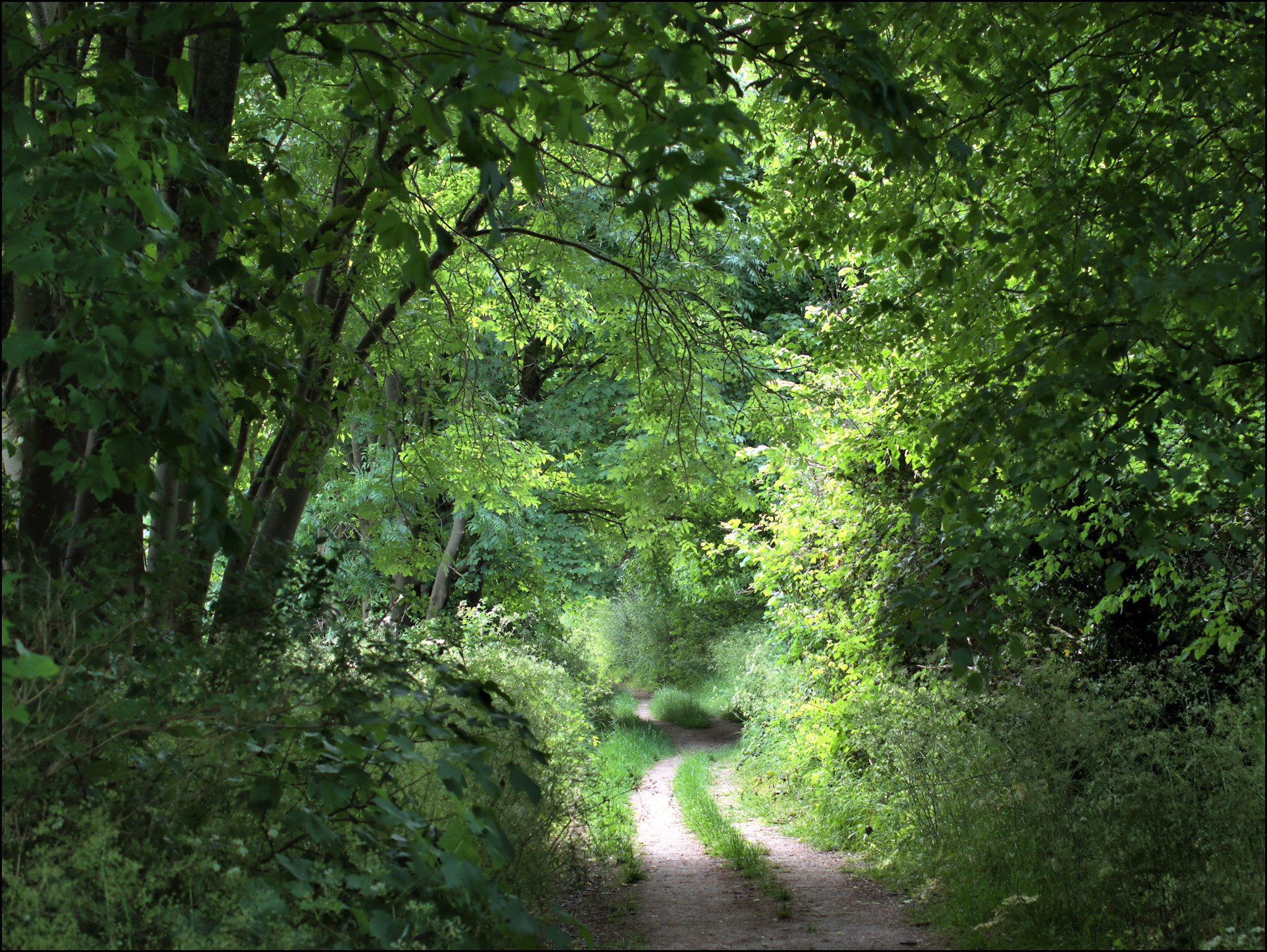
The by-way soon became a long, sunken lane, lined with trees and leading between fields. These sunken lanes can be found in many parts of lowland Britain and are very ancient tracks indeed. Many, like this one, also form boundaries between parishes. The reason they became sunken beneath the general level of the land is that in times of heavy rainfall the water ran down these tracks and, over many centuries, washed away the soil.


Following the winding track downhill, between high earthen banks with overhanging trees, felt very much like navigating a secret river; till we met the Marford Road and landed abruptly back in the present day, with its traffic and untidiness.


But another path soon led us away into an open woodland area, sloping gently down to the River Lea.


Here we encountered a curious "folly" standing on a bridge between the Ayot and Brockett estates. Such structures were all the rage at one time and indicate that this area, now thick with nettles and brambles, was once landscaped as part of the grounds of grand houses.


But then we were heading through more open ground, still in the Lea's valley but with the river hiding from sight.


At length we found a lane with a small bridge over the river. This seemingly insignificant driveway was once the route of a Roman road.


Just a little way up the road stands Waterend House, a mid-17th century mansion that was at one time the home of Sarah Jennings, who, upon her marriage, became the Duchess of Marlborough. She was a close friend of Queen Anne and as such was an influential and powerful figure.


Further along was another bridge over the Lea, and a track leading us back to the start of the walk. My brother Les surveyed the scene. 


An old galvanised trough, repurposed as a planter for flowers, stood outside a farm gateway near the end of our walk.


********

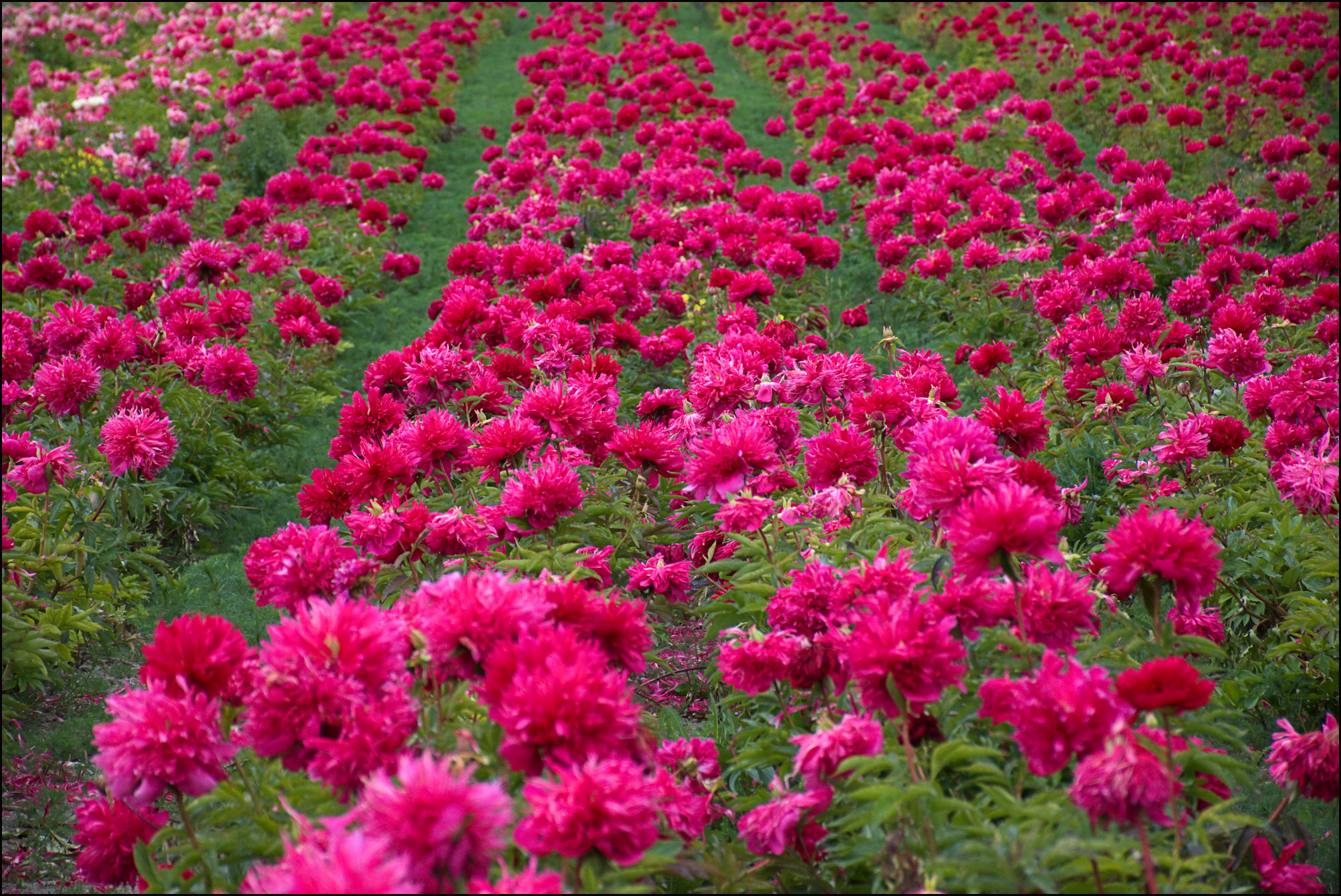
On the drive home we stopped for another look at the field of peonies that we saw a few posts ago.


Take care.


Tuesday, 31 May 2022

Huckyls

One afternoon, some years ago, I fell into conversation with an elderly gent out walking his rather reluctant dog. Somehow he ended up telling me about some houses that used to stand among the nearby fields, some distance from any road and only reachable on foot. "All gone long ago", he added.


When I got home I found some old maps online and there they were on the 1901 map, perhaps ten cottages in what were now agricultural fields. Of course I couldn't stop there; I had to comb the map for more forgotten details. I found that a track that I follow regularly was known as Huckles Lane. Maybe some locals still use the name, I don't know.


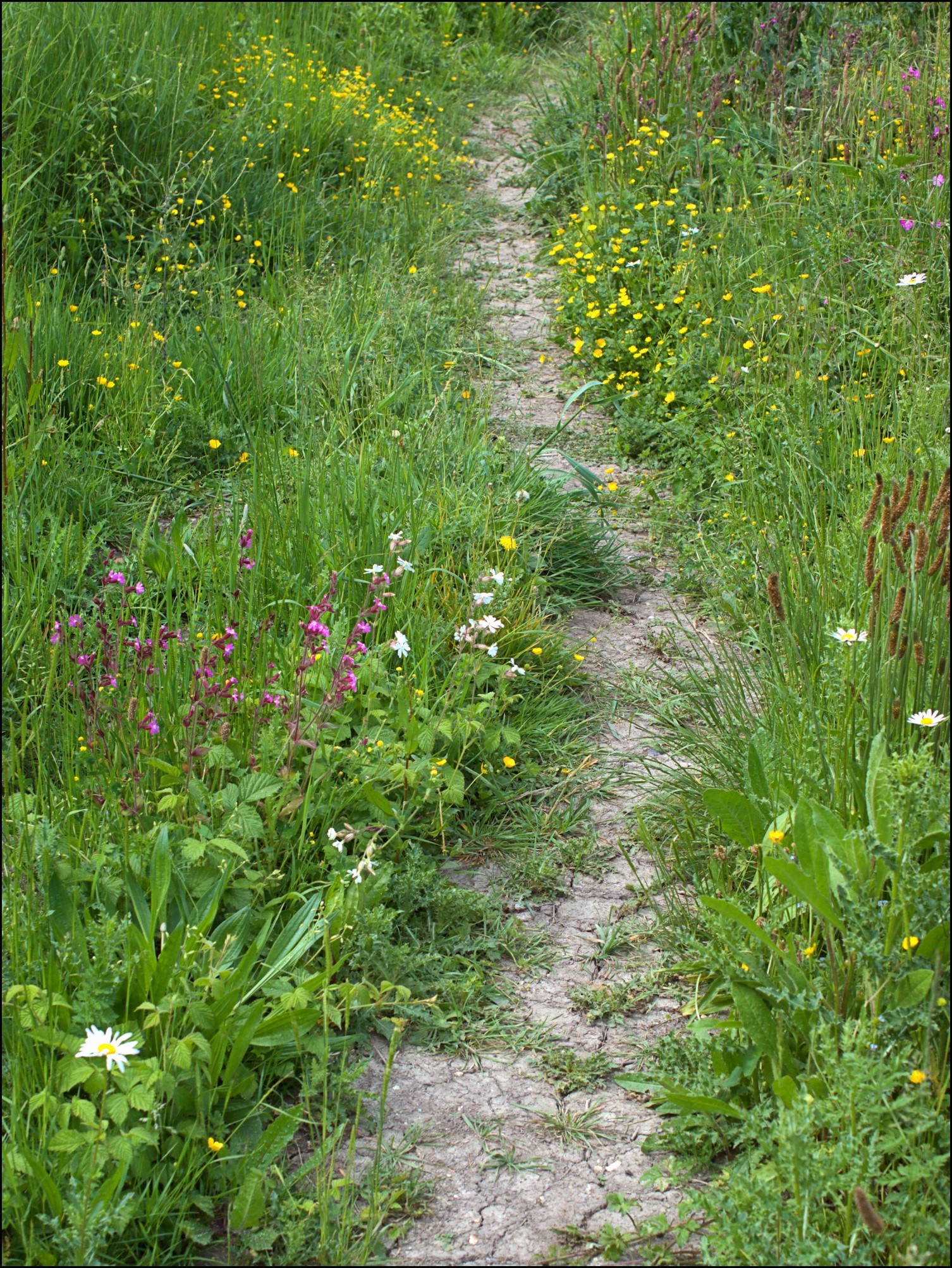
It's hardly a lane any more, and nobody now uses it to reach any isolated dwellings, but it's still a right of way for walkers, so it just about remains open.


If this little caterpillar and his mates have their way the encroaching vegetation will have a fight on its hands. This is the caterpillar of the Ermine Moth. They cover trees and bushes with this cobwebby material to discourage birds from feeding on them, then proceed to strip the tree of its foliage. This particular type feeds on Spindle trees and, devastating though it appears, the trees usually recover and grow new leaves later in the year.


There's a wide variety of trees along here which usually indicates an ancient hedgerow. That's pretty much what I'd expect; the Huckles (or Huckyls) lived in the village back in the thirteenth century. Perhaps they had a farm down here. Anyway their name was patiently passed down through generations of farmers - "George, take they sheep down Huckles Lane to graze on the moor".


And there are still sheep to be found grazing on the moor every summer. That sign, blowing in the wind on the side gate, says as much - "Dog owners, the sheep are back, keep your dog on a lead".


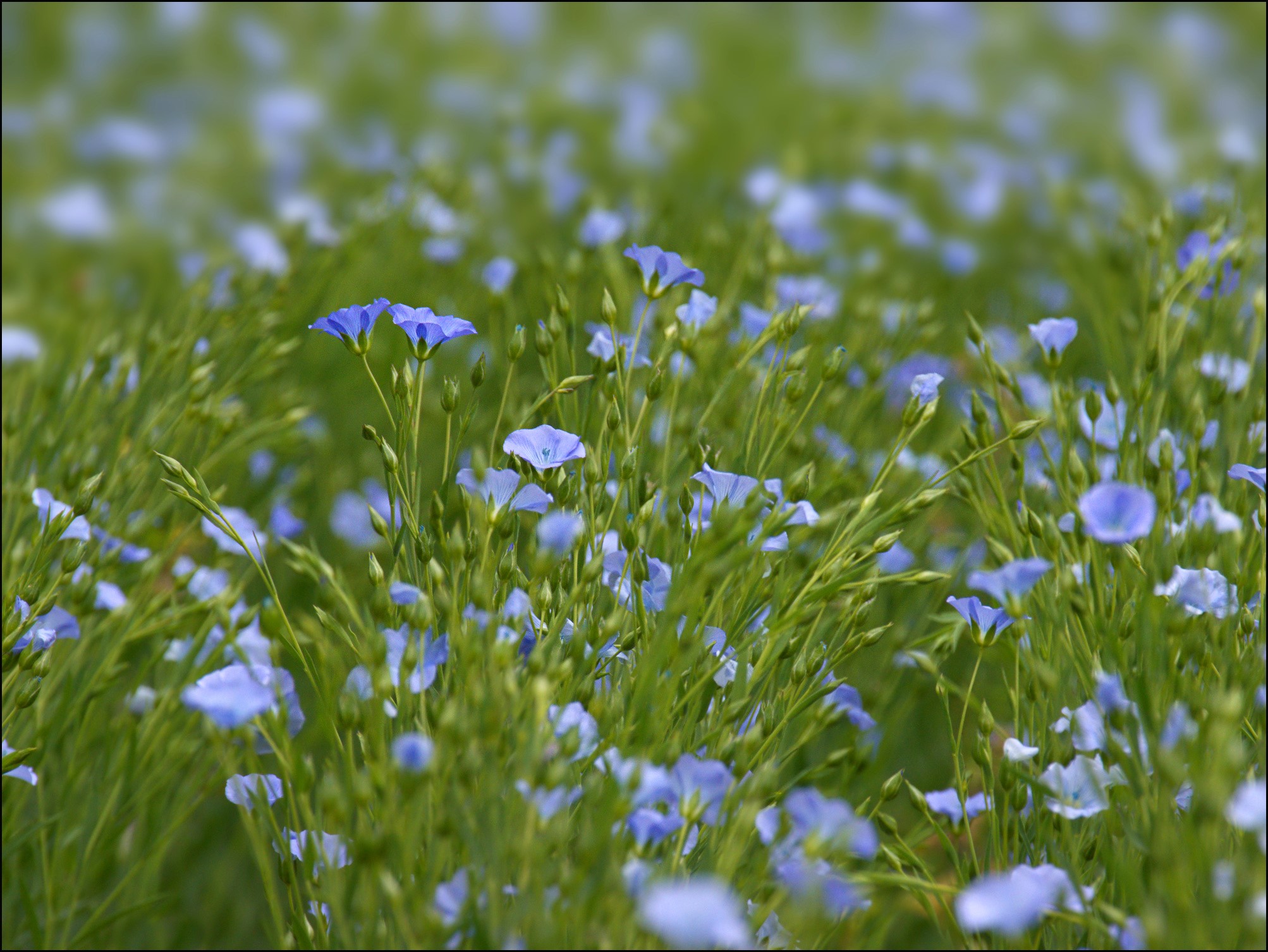
Another of the fields just off the lane contains a field of flax this year. It's probably being grown for its seeds containing linseed oil, which is nowadays is mostly used in the food industry.


It forms a smoky blue background for this fieldside poppy.


But this is where the old cottages once stood. This year it seems to have been left fallow, and wildflowers are springing up all over.


Although it wasn't my aim when I set out this morning, I couldn't resist following the footpath around the perimeter of the field.


I had no intention of tramping all over the field, even though it's not in full production this year; once one person does it then others follow and soon it becomes a complete mess. Instead I used a long lens, which I hope gave me some of the dreamy, impressionistic look that I was after.


Then I was off down the lane again, in the footsteps of ploughmen, shepherds, cottagers, blackberry-pickers and the old chap who was, a few years back, walking his reluctant dog.


Take care.