Sunday, 18 September 2016

Well, I'll Be Bloggered!

Another round-up of lost lambs that wander the forgotten fields and neglected pastures .......oh, complete the image for yourselves!


Stitches In Time


In St Albans Cathedral are the two collage/tapestry panels above, a collaborative work by the artist and calligrapher, Susan Llewellyn Elvidge and several hundred schoolchildren and volunteers. It shows the early history of the cathedral and is a very interesting read. Will these survive the centuries as so much else in the cathedral has? Will future generations marvel at a time when human beings had time enough to stand and read such stuff, let alone create such a work?


When The Rainbow Nation Was Pink


When I was little my granny asked me what I'd like for Christmas. "The world, Granny", I replied. When the grown-ups had stopped laughing they found out that what I wanted was a globe - which was more within my gran's budget. The map above shows how a small part of the world was back then. How things change!


Protection 1


Another in the occasional series of fire insurance plaques that turn up from time to time on my travels. Displaying one of these meant that the householder had paid their fire insurance premiums and, should their property catch fire, they could expect the fire brigade financed by their insurance company to attempt to douse the flames. In theory this meant that without the plaque your house would be left to burn down. 

In practice this rarely happened because the firemen were all volunteers who lived locally so would almost certainly help their neighbours, whether they'd paid up or not. And it was in everyone's interest - residents, firemen and the insurance companies - that the fire did not get out of control; if it did it could burn down several buildings costing local people their homes and the insurance companies lots of money.


Protection 2


Early fire engines were mostly hand-carts pushed along by the fire crew. They contained buckets, ladders and other items that might help put out the flames. This was a steam-driven water pump, but it would need to be pulled by a horse. The long-winded business of getting the horse harnessed and backed into the shafts would have made rapid deployment out of the question. Then you had to stoke up the boiler to get the pump going. Even so there are a few of these early fire-engines around, survivors of a forgotten age.


Cornerstones Of Faith


On the corners of the tower of St Botolph's Church in Cambridge are four sculptures. They always used to be the four evangelists, Matthew, Mark, Luke and John, and maybe they still are, but at some time the old statues have replaced by new ones that look more like some pagan deities or characters from ancient folklore. More research needed.....


....meanwhile I see that the villages of Thriplow, Foxton, Fowlmere and Shepreth have an appropriately named vicar....


A Wave Farewell


A small but perfectly proportioned work of art on a door in a Cambridge side street. Not, alas, in the hamlet of Cat's Bottom, which we visited recently.


Take care.


Tuesday, 13 September 2016

Calling In On Clare

Clare,
the little town of Clare in Suffolk


lots of old buildings,
some half-timbered,


and some with decorative plaster-work
or "pargetting"


This extravagant example
is partly a museum,
partly a holiday let.


It has a scattering of small shops,
independent traders.


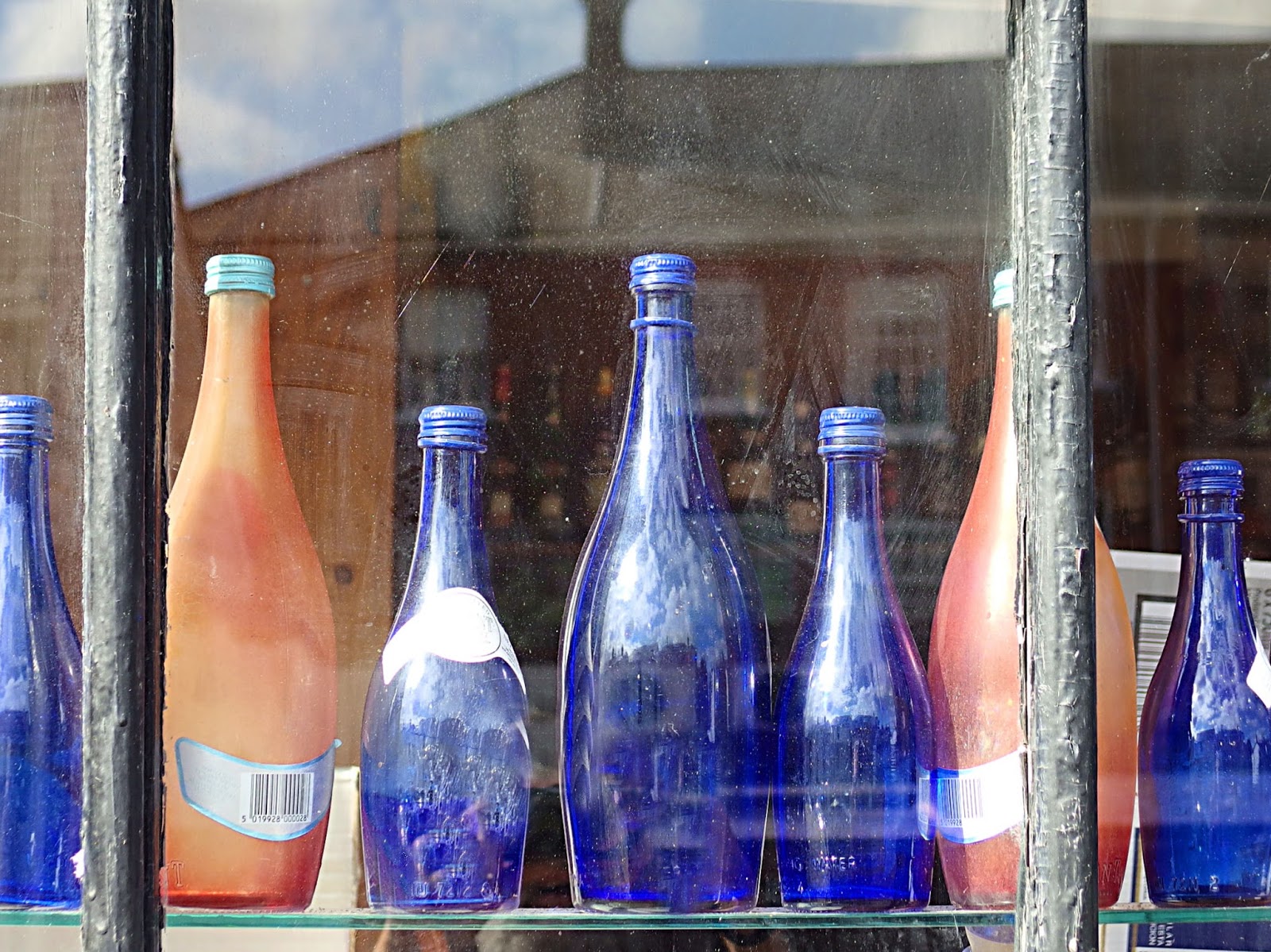
An interesting display
of old bottles.


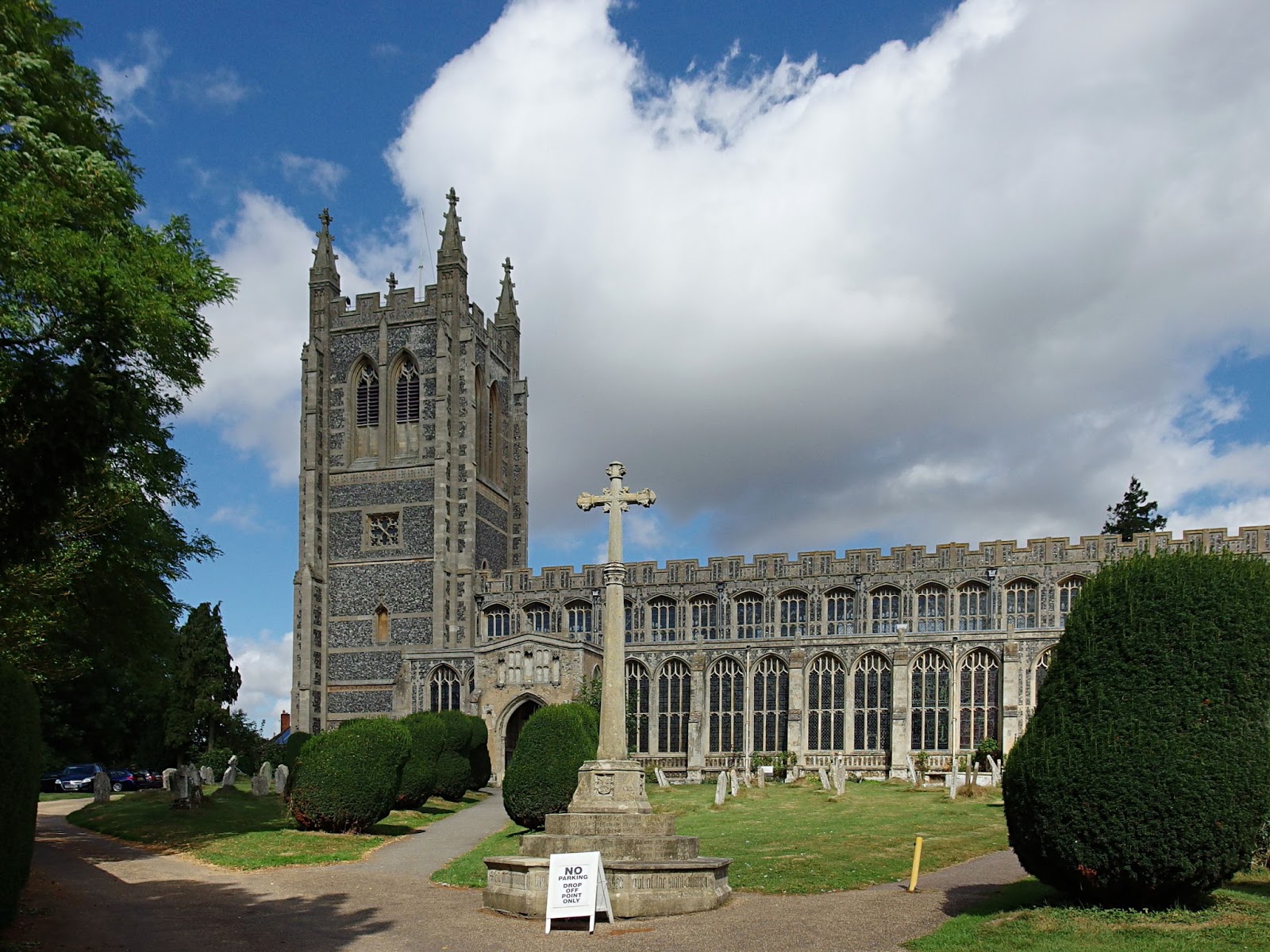
A fine old church,
built during the town's boom period,
when wool ruled everything.


Nowadays the tourist rules,
though it's still a busy little town.


The Swan pub.
Set in the wall above the pub door
is a mighty oak beam
with a carved swan and other symbols
It's thought to be the oldest pub sign
in England.


And there are still some workaday establishments,
the kind that have largely disappeared elsewhere.


And a huge ancient man-made mound,
with the remains of a castle on top.


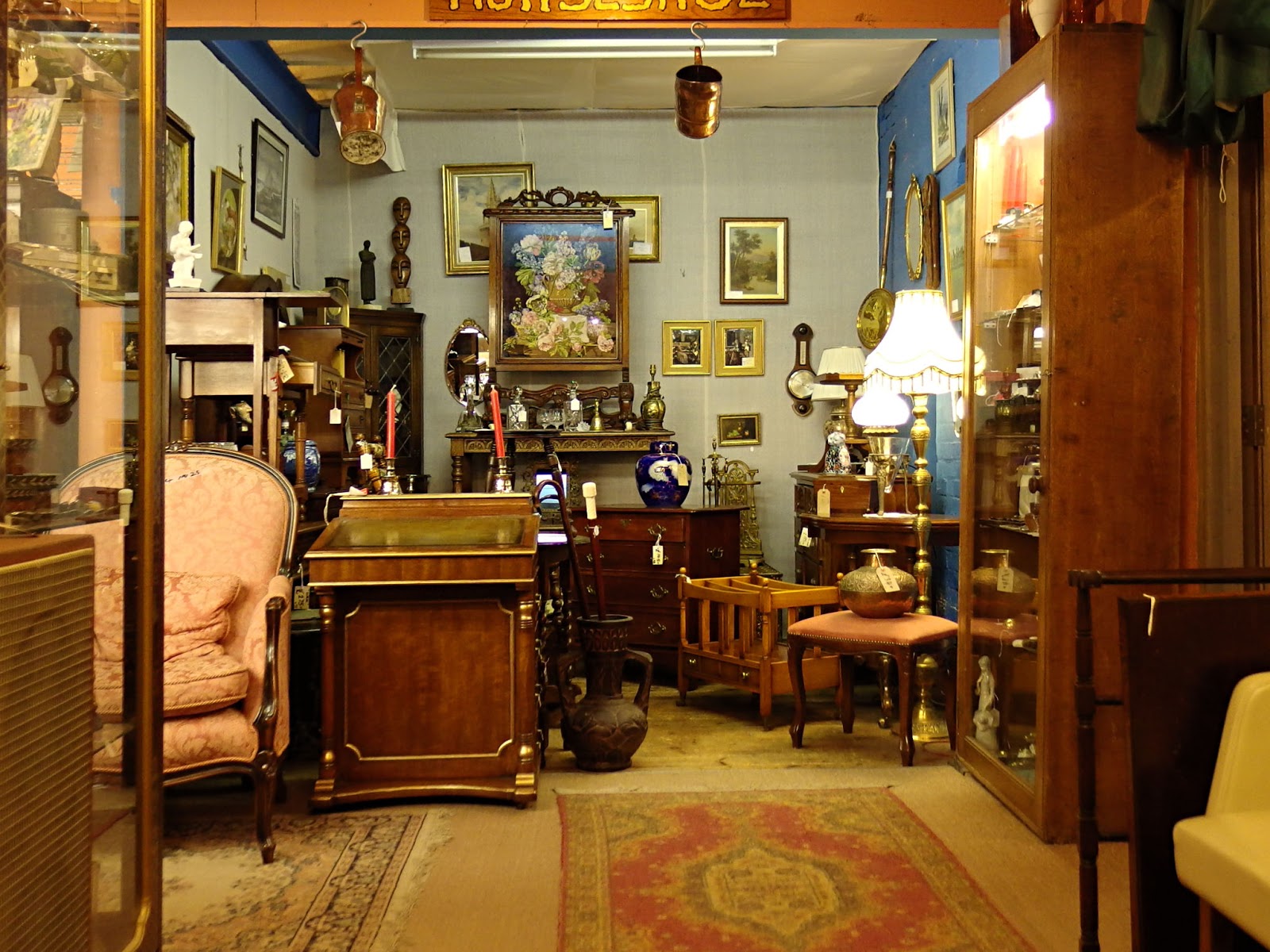
You can shop for antiques
if that's your thing,


or sit in the sun 
 and enjoy 
 a cuppa.


Take care.


Sunday, 11 September 2016

Long Church, Short Visit


Long Melford is a long village, two-and-a-half miles from one end of its main street to the other, and it has a long church as well, it's believed to have the longest nave of any parish in England. And of course it's got a long and interesting history too.


There's been a church on the site since Saxon times but the main body of the church dates from the late fifteenth century. It's immediately obvious that it's much too big for a village church, but at that time this sleepy corner of Suffolk was the economic, agricultural and industrial powerhouse of the nation. And the reason was wool. This building and others like it were financed by wealthy merchants and farmers with one eye on the hereafter and the other on enhancing their power and reputation in this life.


These "wool churches", as they are known, attract a constant stream of visitors during the summer months and this particular one even has a gift shop tucked in the corner - something you frequently encounter in our great cathedrals but seldom in a village church. The upkeep of these ancient buildings demands that all sources of revenue are utilised. 


Remarkably much of the stained glass at Long Melford is medieval and really worthy of much greater examination than I had time for. Another time, perhaps.


The reredos is a detailed and intricate piece of sculpture and on the right of the picture above you can glimpse one of the many memorials to the great of the parish.


Much more modest is this tiny but charming scene showing the Adoration of the Magi. It dates from as long ago as 1350 and is a rare survival from those times. It was discovered buried under the floor during the eighteenth century, having perhaps been hidden there at the time of the Reformation. It's worth clicking on the image to enlarge it: on the left you can see the midwife plumping up the pillows behind Mary's head and there are two calves peering out from under the bed, meanwhile on the right of the picture is, I suppose, Joseph, exhausted by the business of childbirth, and sleeping with his head on his staff.


At the east end of the church there is a small Lady Chapel which is quite separate from the rest of the church.


These ladies, on the other hand, are central to this and every other church in the land, as they are the ones responsible for the cleaning, brass polishing, flower arranging and all those other jobs which go largely unnoticed (unless nobody does them!).


The tower, which looks just right for the rest of the church, it may surprise you to learn (it surprised me anyway) is of a completely different date to everything else. It's a Victorian structure built around a seventeenth century brick tower and is the work of George Bodley whose work we've seen elsewhere, usually church and college renovations in the Arts and Crafts style. When he put his mind to it he could also do Victorian Gothic too, which blends in almost seamlessly with the Gothic Perpendicular of the nave and chancel.

And so, all too soon, farewell to one of the finest churches in the East of England.


Take care.


Friday, 9 September 2016

Pictures Of Past Times

The Museum of East Anglian Life at Stowmarket has many re-creations of rooms from the past - domestic rooms, school rooms, shops and workshops - presented to you here as if they are works of art in an exhibition, which in a way they are.  


Take care.


Wednesday, 7 September 2016

Cool Stuff

A collection of photos salvaged while in the process of clearing out a lot of unwanted pictures from my hard drive.


I've got a bike
You can ride it if you like
It's got a basket, a bell that rings and things to make it look good
I'd give it to you if I could
But I borrowed it
....so sang the late Mr Syd Barrett, of the Pink Floyd popular music ensemble, and at one time if you saw a hand-painted bike like this on the streets of Cambridge it might well have belonged to the man himself, as he lived out most of his life in troubled obscurity in his home city. This one though was spotted in the cycle racks of Peterhouse when I was supposed to be photographing the buildings and gardens.


This is the elegant, sun-lit conservatory of Abbot's Hall, which is part of the Museum of East Anglian Life at Stowmarket. Somehow it didn't fit in when I was showing you the old barns and rusty tractors.


And speaking of "rusty"......a very unusual but rather appealing pub sign spotted while out on a walk in Hertfordshire.


And this is for no other reason than that I've always wanted one. Not just a squeezebox but a Dino Baffetti one. They're not actually "top of the range" and they don't do anything that I can't do on my trusty old melodeon, which is why I can't justify owning one. But there's something about the black and red, and that white diamond on the bellows, that's pretty cool. "Well cool" as the modern idiom would have it.


And pictures with a-frame-within-the-frame are also rather stylish to my eye. This one was spotted on a wet autumn day last year. A few weeks time and we'll be back to that season once more.


As near to US design as British cars ever got, the Humber Super Snipe, if I'm not mistaken. A cool car in its day.


As for me I'm still caring for my mother and she's doing OK.


Take care.

Sunday, 4 September 2016

Certain Signs

Perhaps we should start with this sign....


....believe it or not you could once get milk from Bulls, from Bulls Dairies in Cambridge's Hills Road anyway. I used to see this sign as I made my unhurried way to school, though I think the dairy itself had already disappeared even back then. I'm told that at one time cows used to be walked from Coe Fen, where they grazed, through the residential streets and up to the dairy for milking. When the dairy ceased trading the building was still owned by the Bull family, who were rightly proud of their history, and continued to look after their enchanting sign and have it regularly repainted.


I can remember this old sign being repainted too. I'm not sure when that was, but it certainly wasn't 24th March 1857!


Recently this fine old signage has been given a lick of paint before it faded into oblivion. And a good deal of fuss it caused too. You see, the restorer took the opportunity to slightly re-size the sign to allow for building alterations which had partly obscured it. And that has opened a huge debate about whether it's right and proper to spruce up our heritage and even improve upon it. The city council have plans to restore many of the painted wall signs and have published a feasibility study and costings. 


They even have plans to re-instate signs like the one above - not just the Ernest A. Guest bit but also the large area of wall above it which allegedly once bore an advertisement. Apparently it's on some old photographs so it should be possible to reconstruct it. 


If these signs are not saved now they'll surely soon disappear. I went out with my camera to capture some "old friends", signs which I was sure were still clear to see, only to find that they've already been painted over.


I was glad however to see the charmingly-worded Kingston Arms sign is still there, though I don't know how old it actually is. Thomas Kingston, from whom both the pub and the street take their name, was known as Miser Kingston and died in 1902 at the age of 96. He had a long grey beard, dressed shabbily and usually wore slippers rather than shoes. Occasionally he was seen in boots, but never two of the same pair! He made his money from clever investments and land deals, and despite his nickname he bequeathed huge sums to the church.


I rather hope that someone will see fit to include some of the old wall-painted street signs, like these on opposite sides of Lensfield Road, in the restoration project.


I wonder if the old "Hot Numbers" record store sign will survive. The name certainly has, for there's a coffee bar called "Hot Numbers" in the old Dales Brewery building in Gwydir Street, which itself has a very fine sign in the form of an old and rather ornate clock.


And now it's time to "sign off"...


Take care.


Friday, 2 September 2016

Welcome To Crane-bridge!


Just in case anyone reading this blog thinks that Cambridge is all cobbled alleys; or that the University consists entirely of grand stone buildings; or that everyone studies Latin, Greek or ancient history; or indeed that it always rains in England, then they should study the picture above. 

It shows the guided busway and pedestrian/cycle path leading towards Addenbrooke's Hospital on the outskirts of Cambridge. As well as being Cambridge University's teaching hospital it's also the site of the Rosie Maternity Hospital and innumerable laboratories and research facilities. The cranes in the top picture are engaged in building AstraZeneca's new UK headquarters and the new Papworth Heart Hospital is also under construction nearby. Below are the new labs of the Medical Research Council.


Unfortunately I was not visiting merely to admire the architecture or sheer scale of the place but to visit my mother in Bed 3, Bay C, Ward C4. The good news is that she's now home again but still needing a lot of help and care, so posts on this blog might not be so full or frequent for a while.


Take care.