Take care.
Thursday, 15 September 2011
The Pictures On My Wall (4)
A few months ago I did some posts about the pictures I'd chosen to put on the walls of my house. Somehow this one got forgotten....
......probably because I couldn't think of much to say about it. It was taken early one morning near Santon Downham in Breckland. I love the rather mysterious light and the stoicism of the horses.
Take care.
Take care.
Tuesday, 13 September 2011
A Country Church
One of the great treasures of England is its huge number of country church. From the great "wool churches" of East Anglia (so called because it was wealth from wool production which financed their construction) to the tiniest moorland kirk every one is unique and full of interest. Lets visit the church at Grantchester near Cambridge, the village where I grew up and a fairly typical place of worship.
Grantchester church is right next to Manor Farm which is a fairly normal arrangement; the church and the lord of the manor were very much at the hub of power in village life for centuries. The tiny house just in front of the church is the gatekeeper's lodge for Manor Farm.
The first question the visitor wants to know is 'How old is the church?' which is usually impossible to answer. Churches have invariably been built and rebuilt, added to and altered throughout their life. The picture above shows various stones which were part of a Saxon or Norman church. The fragments were discovered and incorporated into the south wall when the church was extended towards the end of the 19th century.
....and more recently the ladies of the parish set about making kneelers. My mother made several including this one, dedicated to the memory of my granny who died, aged 99, in 1993.
Time to go back outside now and ponder on our mortality among the gravestones.
Take care.
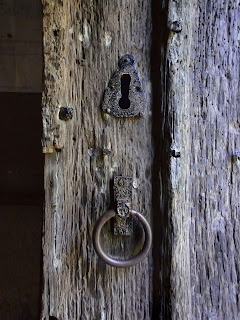
The church is entered, somewhat unusually, by a porch on the north side. (Most churches being entered on the south side). Homeless parishioners were once able to take up residence in the porch whereupon the church would re-house them. The porch dates from the early 16th century and the door, which is locked by a truly enormous key, appears to be every bit as old.
Once inside the building the eye is drawn towards the chancel at the east end. The stained glass dates from around 1900 but the window itself is early 14th century and is of unusual design.
There are a number of ancient memorials on the walls and the floor....
....but there are also memorials of a different kind - a model of the church made in the 1870s by Samuel Page Widnall, a man of many peculiar skills and enthusiasms.....
Friday, 9 September 2011
Swanwatch (6)
After a few days of chilly winds and grey skies I stepped outside the back door this morning to find it much milder. A robin was singing in the oak tree and just for a second or two it felt positively spring-like. It still had that spring feeling as I walked down the road, though the pine-cones and conkers littering the path told clearly enough that it was early autumn. As I neared the old mill I wondered if the swans might be about; they have started to frequent the area again lately. Sure enough, out on the water was one of the adult birds and some of the family. The cygnets are beginning to have a little more confidence these days and venture off a short way on their own - they are becoming unruly teenagers in fact.
One of the adults was waiting patiently in mid-stream for the offspring to re-assemble so that they could all proceed under the mill-bridge.
But what's this? The other parent bird, the female I presume, had started nest-building at the edge of the river, gathering all the vegetation she could reach and piling it up beneath her. Obviously they're not going to start nesting any time soon. Maybe she could sense the feeling of spring too, or perhaps she's indicating to her partner that it's time to start chasing away the kids.
I've been reading all the bird books in my possession but can't find any reference to this kind of behaviour. Anyone out there able to shed any light?
For anyone wanting to see the earlier posts you can now simply click on the Swanwatch label on the right sidebar to bring the earlier posts into view.
I've been reading all the bird books in my possession but can't find any reference to this kind of behaviour. Anyone out there able to shed any light?
For anyone wanting to see the earlier posts you can now simply click on the Swanwatch label on the right sidebar to bring the earlier posts into view.
Thursday, 8 September 2011
As I Was Going To St Ives.....
The one in Cambridgeshire rather than Cornwall.
Probably the most famous view in the little market town,
the old bridge seen from the quay.
You will have noticed that there's a small chapel
built in the middle of the bridge,
one of only four such bridges in England.
If you're really sharp-eyed you'll have spotted
that the arch on the left hand end of the bridge is a slightly different shape.
During the English Civil War Cromwell's men
destroyed part of the bridge
and inserted a drawbridge so that they could control the river crossing.
When the bridge was rebuilt it didn't quite match up.
The quay looks good from the bridge too.
Once an important dock
now only pleasure boats moor here.
The market cross and All Saints Church.
The area known as The Waits.
Two explanations of the name;
a) derived from an ancient Anglo-Saxon word of unknown meaning
b) it's where boats used to wait!
A hidden side street -
there are lots of little passages and alleys.
A quiet backwater.
Some dogs are fans of live music.
He's got a while to wait!
A collectors paradise -
Hyperion Auction House.
Finally back to the old bridge.
Take care.
Tuesday, 6 September 2011
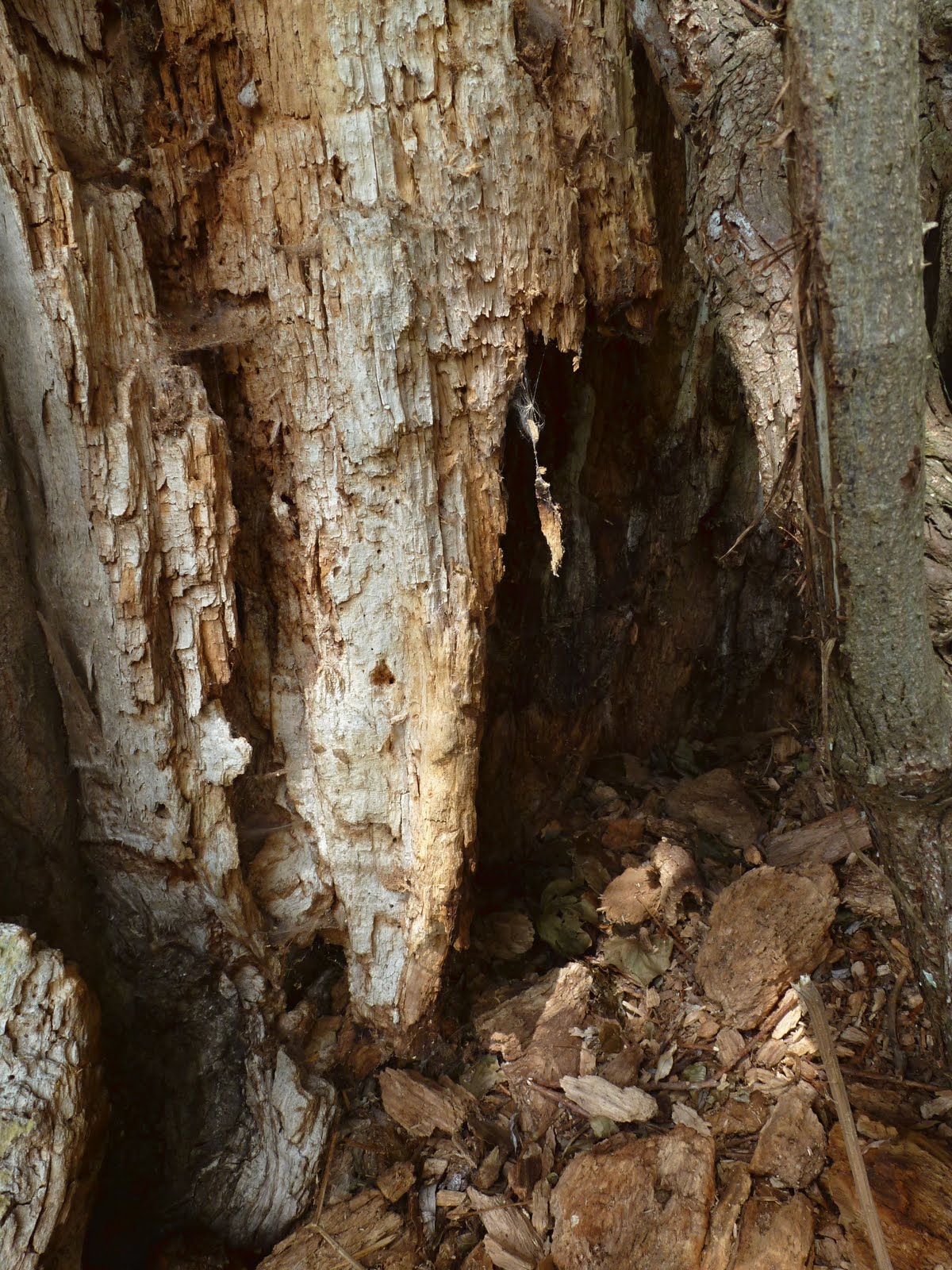
The People Of Wood
there's a path
a secret
path
the sign's got lost
and the path will soon lose itself
too
ivy and fallen branches
are taking over
at the end of this path is an ancient meadow
volleys of goldfinches
explode into the air at every step
the magpie cackles
and
the rabbits scurry
here stand the oldest
people of wood
twisted and broken
they endure
in the meadow
beside the quiet water
their heart a cave
dark and sheltered
softwood
sympathy
then over your shoulder catch a glimpse
of rugged laughter
the merry old king
of the riverbank
stand up, m' boy,
look at me square and honest,
a fine caper
and no mistake
square
and honest
but villains came creeping
in night time and malice
in fire and torture
flame
and shadow
but
on this broad afternoon
let us spread wide our gladsome, welcoming shadows
said
the great lady of the willows
for we have in our hollow bones
new
life
springing
the blackbird is singing
thistledown twirling
the people of wood are silent
waiting
and
your path may look
so
very
different
when it
take care
Sunday, 4 September 2011
Of Birds And Buses
As some of you may be aware Cambridgeshire has a new "guided bus" service. If you go to the link you can discover the whole sorry tale of frustrating delays and increased costs which have dogged the scheme. To put things in a nutshell it should have opened in early 2009 but was delayed till August of this year and from an original estimate of £54m the cost rose to £181m (so far!). But lets be optimistic - we now have a Busway and it makes it very easy for me to get to the RSPB reserve at Fen Drayton Lakes, which is exactly what I did recently.
Despite the prophets of doom the bus gave a smooth and pleasant ride and lots of other people were making use of it to travel to St Ives or Huntingdon. However I was the only person to get off at the nature reserve. The stop, which resembles a miniature railway platform, is right near the centre of the reserve so birdwatching can begin straight away. I can see that it has now become a viable destination for me to make an evening's jaunt.
The site itself used to be known as Fen Drayton Pits since it is exactly that; a large group of disused, flooded gravel pits. But then the RSPB took over, changed the name and set about upgrading the facilities. They also seem to have tried to involve local schools in the project. I couldn't help but notice the tiles (on the left of this paragraph) which have been made by pupils at nearby Swavesey Village College and which depict some of the birds that you might see on a visit.

The site itself used to be known as Fen Drayton Pits since it is exactly that; a large group of disused, flooded gravel pits. But then the RSPB took over, changed the name and set about upgrading the facilities. They also seem to have tried to involve local schools in the project. I couldn't help but notice the tiles (on the left of this paragraph) which have been made by pupils at nearby Swavesey Village College and which depict some of the birds that you might see on a visit.
I certainly saw the Little Egret, as promised, and Magpies and Blue Tits were there in abundance, but I was there at the wrong time of day for the Owls which were obviously so popular with the young artists. However I also saw a pair of Hobbies hunting for dragonflies over Oxholme Lake and Common Sandpiper and Green Sandpiper on the islands in Moores Lake. A Wheatear also put in a brief appearance.
There is now a spanking new hide overlooking Moores Lake. At the moment, because of its newness, it doesn't blend into the scene at all but a winter of weathering and some vegetation growing up around it in the spring should fix that.
A few more photos of my day:
Take care.
Thursday, 1 September 2011
Moundtop Ruminations
Carolyn H of "Roundtop Ruminations" said recently that sometimes she felt that her photos only had a tenuous link to her writing (though both photos and writing are always excellent, in my opinion). So in that spirit, the above picture (of a place called Chapel Hill) has only the slightest bearing on what I'm about to write about, namely somewhere else called Grinnel Hill.
For anyone who's followed me this far, Grinnel Hill is the site of the Bronze Age burial mound that I wrote about in a recent post entitled "A Local Landmark". It seemed to spark a lot of interest from those who read it, more than I expected to tell the truth; I thought my enthusiasm for things ancient and obscure was just a personal eccentricity. Among the comments was a question from Carolyn H - you see how this is all fitting together! What she wanted to know was "Have these mounds ever been excavated?"
The mounds are thought to have been the grave sites of the Beaker people who were so named from the elaborate earthenware beakers which were found in their graves. They are thought to have been a quite different and more technologically advanced people than the earlier inhabitants. The greatest achievement which they brought with them was the ability to work in metal - bronze in fact. Their arrival in Britain in about 2000BC marks the start of the period known as the Bronze Age.
Our evidence for the kind of lives these people might have led comes in no small measure from what has been recovered from their burial mounds. In the south of the county of Cambridgeshire many of these sites were excavated, often led by enthusiastic historians from the University of Cambridge, while in the fen country to the north of the county many were ploughed out without being fully investigated; we only know of their existence because their position can still be seen from crop-markings which are often only visible from the air.
In some ways the enthusiasm of the early investigators was unfortunate as they may well have destroyed much evidence which could have yielded more detailed information to more modern scientific methods. On the other hand, without their intervention many of the sites would have simply disappeared.
What they found was quite varied. Usually the mounds were the burial place of just one individual's cremated remains. However some sites were then used later for subsequent burials and in some mounds skeletons have been discovered rather than cremated remains. This is hardly surprising as the Bronze Age lasted for around 1,500 years and in that time different customs may have developed.
Cremated remains were sometimes found in a earthenware vessel but at other times left in a bag - only the clasps of these bags are ever found, the bag having rotted away. Grave goods are sometimes included to help the deceased on their journey to the next life. In this area pots and flint tools are quite commonly found but more elaborate items occasionally turn up. These have included highly decorated pots, necklaces, shale buttons, daggers, bronze pins, pendants and urns.
From the items, which have been found in burial mounds and elsewhere, archaeologists believe that these people traded over a wide area, certainly with other parts of England and possibly with the rest of Europe.
Well, that's probably a longer answer than you were expecting Carolyn. Oh, and there is another burial mound on Chapel Hill (photograph at top of page) in case you were wondering what the tenuous connection might be!
Subscribe to:
Posts (Atom)