Showing posts with label Birds. Show all posts

Monday, 22 July 2024

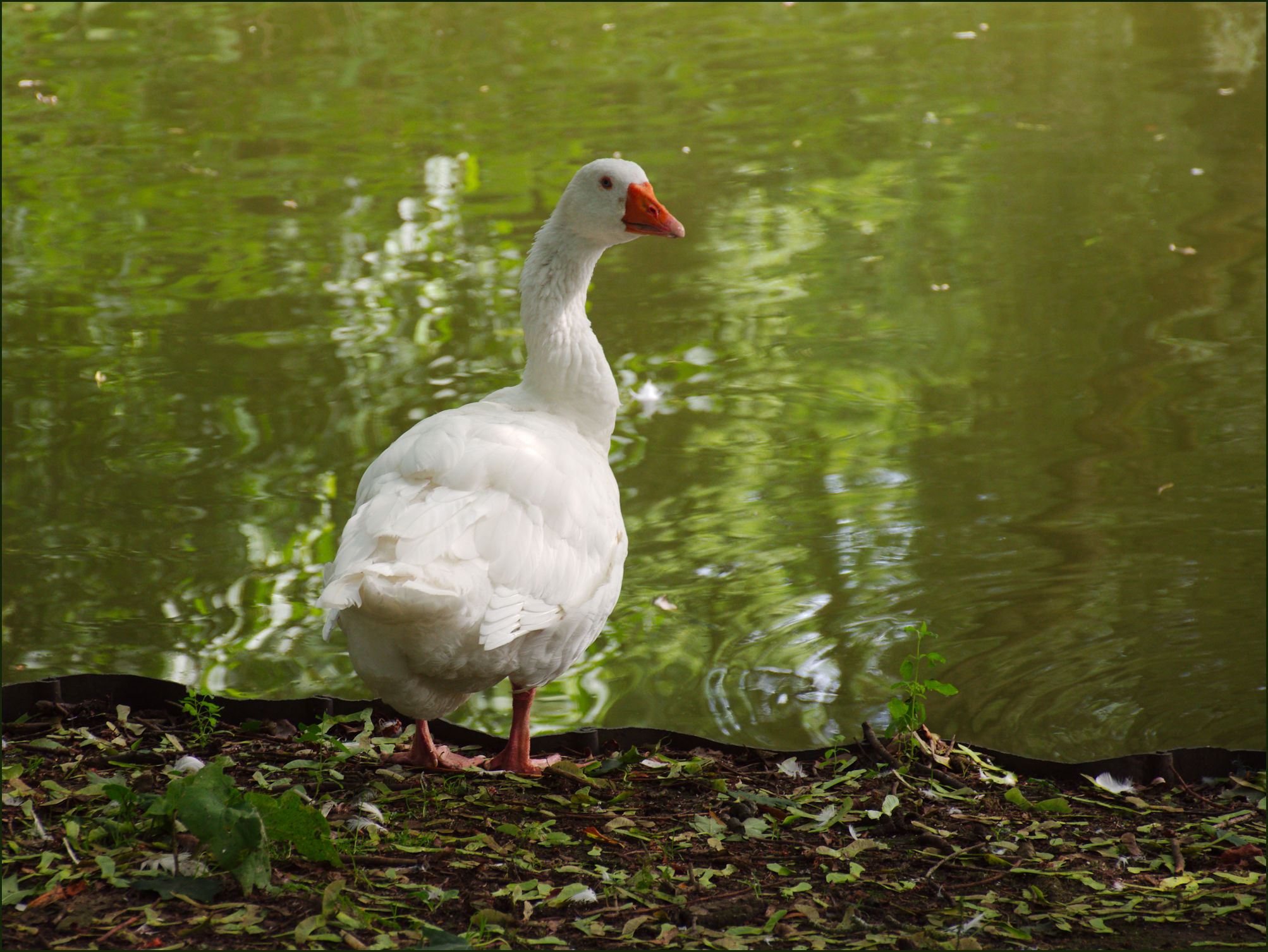
No Peace For The Geese

A little altercation spotted on the way to our next destination....


"Ours is a very superior pond, ours is"


"Plenty of room for everyone, and all so peaceful this morning,
just one man fishing and a couple of chaps taking photos"


*Absolutely perfect, ain't it?*


*Oh no, what's that I can hear?"


"COME ON, GUYS, THERE'S  A GREAT PLACE OVER HERE"


"NEVER MIND THE CARS. THEY'LL WAIT"


"IS THAT EVERYONE? ALL PRESENT AND CORRECT!"


"THIS WAY. QUICK MARCH!"


"NOT MUCH FURTHER NOW"


"OK, we're off!"


"SEE, PLENTY OF ROOM FOR EVERYONE!"


"But we'll be back, we'll be back"


Take care


Wednesday, 20 December 2023

Edge Of The Fens

Just a brief interlude in this rainiest of Decembers allowed us a trip to the familiar landscape of Fen Drayton Lakes; except it wasn't quite as familiar as usual.


All the lovely rain has returned this little area on the very edge of the Fens to something like its pre-drainage glory. It's easy to understand how medieval outlaws and rebels could hold out in a watery maze like this and how those without detailed local knowledge could soon get hopelessly lost.


It's all rather a long way from the summery days of freedom and fun which the RSPB (Royal Society for the Protection of Birds) promises on the welcoming sign. Water levels can rise quickly here and they'd taken the precaution of closing the car park which can get cut off. That was no surprise as the RSPB tends to be very safety conscious these days - signs recently seen include advice that muddy paths might be slippery,


We parked in a safe place on the approach road and walked from there, making sure to be careful on the muddy path. 


All the expected birds were present, but none of those occasional rarities that add a little spice to the day's observations. It soon began to drizzle and the camera was cradled inside my jacket like a spoilt little dog!


Just a faint blush of sunlight lit the land (and water) as we got back to the car, but we'd already decided to head elsewhere.


Whenever you explore this dead-flat area your eye is inevitably drawn to the array of church towers and spires that punctuate the endless horizon. I'm sure the Fenmen of old must have oriented themselves in the watery waste by those same landmarks. It may even be that these dominant features were built to guide ships on their way - this is not so daft as it sounds for quite large vessels could at one time navigate the fenland waterways.


The church at Fenstanton is dedicated to St Peter and St Paul, and Peter's keys and Paul's sword are shown over the porch door.


The church dates from the thirteenth, fourteenth and fifteenth centuries, much of the best building stone having been brought from Barnack by boat. We visited Barnack Hills and Holes, the site of the quarrying, back in June of this year. Many of the churches along the Fen Edge owe their grandeur to the availability of this excellent stone. But it's the chancel and in particular that huge East window that draws the eye.


It's worth pausing to admire the early 16th century pulpit and a Christmassy display of candles.


And here's the window itself. The "tracery" - that's the network of carved stone that holds the glass - is exceptional. It's unusual to see such a large window in a village church.


The stained glass dates from 1876 and is by Henry Hughes of the firm Ward and Hughes. It depicts scenes from the life of St Peter.


Also in the chancel stands a memorial to Lancelot "Capability" Brown who was Lord of the Manor here from 1768-1783. Brown was the father of English landscape gardening and designed the grounds of many grand stately homes. The inscription reads as follows:

Ye Sons of Elegance, who truly taste 
The Simple charms that genuine Art supplies, 
Come from the sylvan Scenes His Genius grac’d, 
And offer here your tributary Sigh’s. 

But know that more than Genius slumbers here; 
Virtues were his which Arts best powers transcend. 
Come, ye Superior train, who these revere 
And weep the Christian, Husband, Father, Friend.

Although he owned the manor Brown only lived here for a very short time, but it's thought that he intended to retire here, however he died suddenly before that could happen. His son, also Lancelot Brown, did inherit the manor and is also buried in the churchyard.


Lancelot, the son's, wife Frances is not recorded on the large memorial but has a separate, much prettier, memorial in the corner of the chancel.


Another plaque records that Henry Howland lies buried in the churchyard. He was the father of John Howland, one of those who sailed on The Mayflower. There's also a sketch of the Howland House in New Plymouth, Massachusetts. Many claim to be descended from John Howland including Franklin Roosevelt, Winston Churchill, Richard Nixon and the two George Bushes. The Pilgrim John Howland Society paid for the plaque and one of the church bells. Maybe someone should point out to them that this building is a symbol of the very intolerance which forced Howland out of the country.


There's also a modern wall-hanging by Ian Thompson, apparently the coloured silks change hue as the light changes. He also designed a very striking modern stained glass window, which I can't show you because the good people of Fenstanton have decided to stand a large and rather scruffy Christmas tree right in front of it.


If you want to celebrate Christmas you could always look at the beautiful scene depicted by Clayton and Bell in one of the windows. Lets have a look outside.....


In the churchyard there's the base of an old preaching cross. It's difficult to date these, but it almost certainly pre-dates the church building.


There are a number of old tombs and gravestones which seem to have acquired an odd pinkish patina, presumably some kind of lichen.


On the north side of the church I found this attractive old door. But what I was looking for was this....


No one seems to be quite sure where "Capability" was buried. But did they once?

Snooping around online I found this peculiar story....

The author of the piece claimed to have met the last person alive to have seen Capability Brown. Michael Behagg, a well-respected member of the community, recounted that many years ago the church needed a new heating system. The only place to site the oil tank was on the grave of Capability Brown and Bridget, his wife. The remains were therefore respectfully disinterred and buried nearby, but the site of the burial was unrecorded. Mr Behagg was the last to see the remains before they were covered up.

Strange.


Take care.


Sunday, 9 July 2023

Chasing Dragons

This time of year is not always the best for watching birds - some are on nests, some hidden away with their youngsters, some moulting and only a few non-breeding migrants returning just yet. But it is the time to go searching for other treasures of nature.


They won't all be rare, of course, but who could ignore the fiery flash of a Red Admiral butterfly skittering among the thistles?


And who could pass by the poise of a Banded Demoiselle? And the photo reveals that this particular demoiselle has notably hairy legs!


There are still some birds to be found at the two reserves my brother and I visited last week. A watchful Grey Heron poses in one of the shallow pools of the reedbed. Nothing escapes that piercing yellow eye.


Great Mullein is a plant of roadsides, railway lines and waste places. It's impressively tall but only a small section of its flower spike is in bloom at any one time. When you look closely it's rather pretty; I've seen a lot less showy plants that are tended lovingly by gardeners.


Here's what I was really hunting for - dragons! Well, dragonflies anyway. This is the female, or perhaps an immature male, of the Ruddy Darter. 


Here's the male, which looks quite different. They are a common species around the reedbeds, flooded gravel pits and slow-moving rivers that feature heavily on our local nature reserves.


What's the collective noun for a group of Seven-Spot Ladybirds? 4 x 7 = 28! though there were actually far more of them than the picture shows.


A Painted Lady butterfly. The first one I've had a chance to photograph this year. They fly here from mainland Europe most summers and every few years we get a sizeable influx. I'll not tell you how many pictures I took before it agreed to turn to the right position.


While I was busy photographing the insects a young Muntjac deer tiptoed across the marshy ground. Even if the lack of little horns didn't give away that it was a very young individual, its complete innocence and heedlessness would have betrayed its youthful naivety. 


Damselflies everywhere! Two Common Blues and a Blue-Tailed Damselfly soak up the morning sun.


This is the Maiden Pink, a speciality of the sandy soils of Breckland - but a very uncommon one these days. It is threatened by both over-grazing and under-grazing of the heathland. Too much grazing and the plants are devoured by sheep, too little grazing and scrub encroaches, overwhelming the tiny flowers. These were growing in a small garden of native plants near the visitor centre at Lakenheath Fen RSPB reserve.


Back to the dragonflies. A Four-Spotted Chaser perches on its favourite reed. The dark spots on the wings give it its name. There are two spots on each of the four wings, 2 x 4 =  4 ? Hmmm...


One little yellow triangle just behind the wings though definitely equals a Norfolk Hawker. These were once restricted to the Norfolk Broads but, happily, they have now spread to other places - though they are still a threatened species and I always feel privileged to see one. And, indeed, all the other treasures found on my rambles.


Take care.


Monday, 19 June 2023

Hills And Holes

Funny title for a blogpost; funny name for a nature reserve. But here we are at Barnack Hills And Holes National Nature Reserve, in the very north-west corner of Cambridgeshire.


This was actually our main reason for visiting the Barnack area and we spent the morning wandering through this strange landscape, before we looked at the village and church.


I had a mental list of what I hoped to see - it didn't work out like that, of course, some things I found, some things I missed out on and, most interestingly, some photos of quite everyday things, like these Dog Roses, reminded me of just how wonderful they were.


If you hadn't already guessed, the hills and holes are what were left behind after the Barnack Rag building stone had been removed. The choppy undulations were too bumpy to plough and, with heaps of quarrying waste spread around, not very fertile. You might graze a few sheep, I suppose. Leave it alone for a few centuries and it's the perfect place for wild flowers.


Some birds like it too, like this dapper male Yellowhammer. When I worked on the farm, in the 60s and 70s, there were flocks of them hanging around our grain silos, though even then there were fewer of them each year.


Bird's Foot Trefoil is a common enough plant. It has some interesting names; "eggs and bacon" from its yellow flowers and red-brown buds, or, less appetisingly, "Granny's toenails" from the shape of the seed pods.


There are some attractive birch trees scattered around. Quarrying was being carried out here at least from Roman times, maybe earlier.


Lots of butterflies were promised but all we could find were a couple of very skittish blues, the odd Meadow Brown and many Small Heath butterflies, like the one above. They belong to that annoying bunch who always settle with wings closed, hiding the more colourful orange top surface.


We found several of these strange plants. Broomrapes have no chlorophyll of their own and parasitise the roots of other plants for their nourishment.


The most beauteous, and numerous, of the orchids were the Chalk Fragrant Orchids, which not only look pretty but give off a pleasant scent.


Although the stone was used for local houses, barns and walls, the main customers for the best building stone were the great medieval abbeys of the area. Barnack is only a short distance from the rivers Nene and Welland and from there the stone could be transported via the Fenland waterways.


Above is the tallest Man Orchid I've ever seen. Its rarity makes up for its lack of spectacular colour.


If you get down and look closely there is a little bit of colour and you can imagine that each individual flower looks like a tiny figure with a big head and puny arms and legs. 


The pale lemon flowers of Mouse-Eared Hawkweed growing amongst the Bird's Foot Trefoil.


A Common Blue Damselfly added a spark of electric blue to the greenery.


And the Dog Roses looked even more stunning when lit from behind.


Most of the best building stone was extracted by the late fifteenth century, though it's been recycled since as buildings have been demolished, and inferior stuff has been quarried for roadstone. Perhaps we'd better finish off with one of my old photos to remind us of the magnificent buildings that came about as a result of all this digging and delving. Here's the soaring form of Ely Cathedral, built almost entirely of Barnack stone....


Take care.