Last year, for the first time ever, I kept a list of all my reading. It turns out that I read the nice round number of 52 books, which suggests that I read one a week, though I'm a much more irregular than that. In August I read seven, while in December I only managed one. 20 of the books were fictional, either novels or collections of short stories, while the rest were biography, memoirs and factual books. It's this latter group that I'm concentrating on here.
Thursday, 18 January 2024
A Year's Reading
Monday, 8 February 2021
Novel Ideas
I wasn't at all surprised to hear recently that reading has increased in popularity over the last year. Books not only fill time in a pleasant way but have the ability to whisk us away into other worlds (many of which would be a lot less comfortable than our present existence if we experienced them in reality), and they also allow us insight into the lives of others in a much deeper way than a Zoom call.
Last time I wrote about books, I'd been reading biographies and didn't include any novels, so we'll remedy that this time - though in reality I rarely read two books of the same genre in succession.
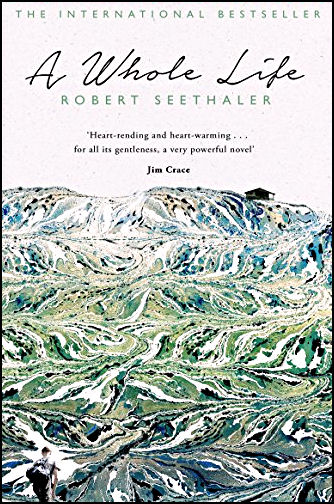
A Whole Life - Robert Seethaler
A while ago Mary (at A Breath Of Fresh Air) recommended Robert Seethaler's novel A Whole Life which I ordered and read that very evening (Aha! You can do that with a Kindle!). From that you may be able to reach two conclusions: firstly that it's a short book, but also that it's one that's not easy to put down.
It is, as it says, the account of a man's whole life. Apart from the war years he never strays far from his mountain home, nor from the morals and truths of the hard life into which he was born. But such lives are important nevertheless, more important than is generally acknowledged in this age.
So we follow his progress through the unkindness inflicted by others, through the loss inflicted by an avalanche, surviving a war which he doesn't fully understand and wrestling with the changes brought about by the modern age....."Scars are like years, he said: one follows another and it’s all of them together that make a person who they are."
But more than that it's the light which shines through the troubles and afflictions that really define a "whole life".
Remarkable Creatures - Tracy Chevalier
Here's another book which describes a whole life and one which starts off in similar poverty but goes on to attain a measure of fame - though, because the subject is a woman, it's never the level of recognition that she deserves.I'm usually uncomfortable with books about real people which include the kind of speculation and invention which are presented here in addition to the true facts, especially when it's about a person that I already know something about - it gets difficult to know where truth ends and fantasy begins. This book about the fossil-hunter Mary Anning is however an exception.
If you've never heard of her, she was a young girl from a poor family who scraped together a meagre existence by searching for fossils in the cliffs along what became known as the Jurassic coast of southern England. She seemed to have an instinctive understanding of fossils as well as an uncanny knack of finding them. Many of the great men of science owe much of their reputation to Mary's finds but until recently she had received little credit.
She did have one person who helped her and fought for her, a rather odd spinster called Elizabeth Philpott, herself a self-taught geologist and equally shunned by the male establishment.
Most of what appears in the book is true, all that has been added is is a little romance, and that is largely based on rumours which circulated at the time. There is one event which occurs in the book which seems preposterously far-fetched, involving an incredibly generous gesture by someone acting entirely out of character - it is however completely factual!
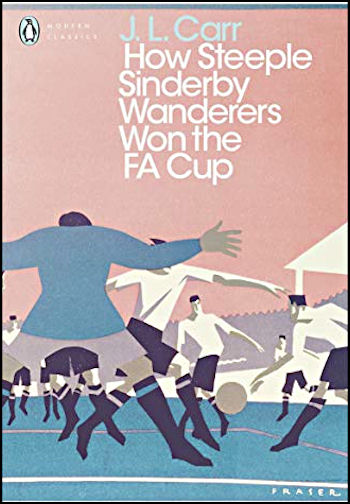
How Steeple Sinderby Wanderers Won The FA Cup - J L Carr
For those from foreign lands I should explain that the FA Cup is (or at least was; it's lost some of its glamour in recent years) England's premier football knock-out cup. It's charm lies in the fact that almost any football (soccer) club is able to enter it, including teams made up of milkmen, teachers, bricklayers and the like who play the game just for the fun of it.
Every year a few of these part-time hopefuls manage to progress to the stage where the footballing millionaires of the biggest teams in the land join in. And most years there are one or two "Cup upsets" where bigger teams get beaten by those who should really have no chance.
But what if one of these little teams were to manage to get to the Final itself? And what if they won it?
The whole idea is ridiculous and the football-loving J L Carr knows it, but that doesn't prevent him having a great deal of fun with the idea along the way, as well as drawing some conclusions about "the beautiful game" and life in general.
Incidentally this is the same J L Carr who wrote "A Month In The Country" which I recommended some time ago, though you'd probably never guess they were both by the same author.
A Change Of Climate - Hilary Mantel
I keep reading excellent books by this author, but so far have avoided immersing myself in her best-known works, the double Man Booker Prize winning Wolf Hall trilogy. It's just their sheer size that keeps putting me off, but it'll happen.....one day.
A Change Of Climate is a modern-day family saga mostly taking place in rural Norfolk. Now rural Norfolk is not so far from rural Cambridgeshire, where I live, and I've known families very like those in the story - well-educated, very liberal, sort-of-Christian folks. And every twist and nuance of the tale rings true.
It concerns long-buried secrets and unfollowed dreams and how they re-surface and affect those living years afterwards. Apart from that I don't want to say anything about the plot which might spoil it.
It's a complex and multi-layered story with a multitude of characters but such is Hilary Mantel's skill as a story-teller that it's never confusing. It's a book I shall definitely be re-reading for the sheer pleasure of it.
This Is Happiness - Niall Williams
Here we are on the west coast of Ireland in the little village of Faha when something remarkable happens - it stops raining!
Young Noel Crowe is living here with his grand-parents, having recently left the seminary and turned his back on religion. Into all their lives comes Christy, a wandering labourer with a rich and colourful past, who is here to help with "the coming of the electricity", for progress is about to encroach on this rural backwater.
The story is told by Noel Crowe as he looks back on his life from the perspective of old age. He takes his time relating what happened, as he remembers it, and the language is often reminiscent of the poetic style of old ballads.
Here we find Noel and Christy reeling home from the pub after an evening of music. Now they're whitewashing an forgetful old lady's walls for reasons which Noel doesn't understand. Here come the doctor's three beautiful daughters. Grandfather is now deliberately wrecking old bicycles so he has an excuse to visit the old German who is able to fix them. Then there's the man from the electric company trying to sell the new-fangled gadgets to the disbelieving old folks of the village. Next Christy's singing loudly outside the bedroom window of the chemist's wife.
So it goes on with its own beautiful but crazy logic, weaving an intricate mythology of Ireland's past and its charismatic inhabitants.
Take care.
Friday, 18 December 2020
Books For The Curious
If there is anything good about having to stay home more than I would choose, it's that it has made more time for reading books. Here are just a few that have interested, intrigued and entertained me over the past few months...
That's Count Basie sitting beside the piano - I think he understood, not sure about the man doing the introduction though!
Saturday, 29 August 2020
Outside Of A Dog....
"Outside of a dog, a man's best friend is a book. Inside of a dog it's too dark to read" - Groucho Marx.
A selection of the books I've read in the last few months:
Sometimes it's necessary to step off the normal path and explore something new. Here are three books in which the authors do exactly that.
The Seafarers: A Journey Among Birds - Stephen Rutt - Britain's seabirds occupy a difficult space. Of course they are not "our" seabirds at all; they merely visit us for a few weeks each year in order to raise their young. They cling (sometimes quite literally) to the cliffs, sea stacks and islands around our coasts, often in some of the least hospitable places. When Stephen Rutt tires of life in London he sets off to seek out these remote locations and get to know the birds that briefly reside there. It's not so much an ornithology book (though I certainly learnt much from it) as a travelogue to the remarkable edges of these islands.
Common Ground - Rob Cowan - Edgelands of a different sort are the destination of Rob Cowan; he explores an odd bit of wasteland on the edge of an urban location. It's become an almost "trendy" idea to regard these unattractive sites as havens for nature in recent years, with several books championing the cause. "Common Ground" makes the most complete and satisfying job of all of them, weaving nature, history, politics and his personal life into a beautiful whole.
Under The Stars: A Journey Into Light - Matt Gaw - Matt Gaw's untrodden ways are into the night-time darkness of these islands. You have to warm to Gaw for his complete honesty, whether he's recounting his irrational fear when spending a night in the forests of Northumberland or trying to interest his children in the stars (the ones in the sky rather than the ones on Twitter). Along the way he makes a powerful argument for preserving darkness from artificial lighting and appreciating its attractions.
Three novels that worked their way into my consciousness in different ways:
Fludd - Hilary Mantel - I should really have read at least one of Mantel's Booker Prize winners, but I'm always deterred by their sheer size. This little tale is more manageable for a slow and steady reader like me. The story revolves around a small church, hidden away in a moorland valley. It's supposed to be set in the 1950s but at times you'd think we were back in the Middle Ages. Fludd is the rather mysterious curate who appears to help out the crusty and difficult old vicar, though Fludd is clearly more than he first seems. Hilary Mantel says that its style is influenced by her childhood when all sorts of strange things seemed possible. What evolves is something akin to a modern morality tale that is full of sly, wicked humour.
The Island - Ana Maria Matute - When a book turns up on Penguin Modern Classics and I've never heard of it, or its author, I see it as my duty to investigate. On the surface it's a little coming of age story set against the backdrop of the Spanish Civil War, though the unrest is just a shadow that falls across the island on which the action takes place. The writing is superbly evocative, especially the powerful portrait of the elderly aunt who seems to pull the strings of everything that happens on the island, and I've been looking for translations of other books by the same writer, though none seem to be available.
And now three about the evolution of new ideas in different centuries:
Darwin's Most Wonderful Plants - Ken Thompson - Charles Darwin was also a scientist who had to wrestle with the religious implications of his work, most obviously in The Origin Of Species. But Darwin was interested in a wide range of other topics, in fact he could not prevent himself from investigating anything which grabbed his attention. Darwin did not have the technology to answer many of the questions that he posed for himself, but was ingenious in his approach to botany by what was little more than the intelligent and obsessive pursuit of gardening.
Where Do Camels Belong? - Ken Thompson - Not the deserts of North Africa and the Middle East; they're relative newcomers there. They evolved first in North America, of all places. Most members of their family can now be found in S America (llamas, alpacas etc). The only Dromedaries living wild nowadays are in Australia. From this bewildering series of contradictions Dr Ken Thompson goes on to investigate the science of "invasive species". To people like me who've grown up (and grown old) believing that "invasives" are always a "bad thing", this is a refreshing and enlightening volume.
The Rosie Trilogy - Graeme Simsion - Don Tilman, the fictional central character in these three books, is also a scientist. Like many outstanding brains, his is firmly on the Autistic Spectrum, a fact that is obvious to everyone else in the story - except to Don himself, of course. At the age of 39 he decides that he ought to find himself a "life partner" and he sets out on his project. His logical brain suggests to him that the most effective way of doing this is to prepare a questionnaire which he will distribute to potential partners, he will then apply scientific method to the answers to find the most compatible person to be his wife. What could possibly go wrong? While pursuing the ideal partner he falls in love with Rosie, who may be the least compatible person in the world. I must admit that romantic comedies are not my usual reading matter, but I found these brilliant, not only for the comedy (which was hilarious) but also for the serious points which it makes about our attitudes towards people who have Autism as their superpower.
Take care
Friday, 20 March 2020
A Few Books
Gods Of The Morning - John Lister-Kaye
Monday, 22 July 2019
The Lost Words: Spell Songs
Early in the afternoon three people appeared on the Acorn Stage. They had no instruments with them and were not about to burst into unaccompanied three-part harmony. On the left was the writer Robert Macfarlane. In the centre, the artist Jackie Morris. And interviewing the pair of them was the broadcaster Matthew Bannister.
(just what the Scottish harpist and singer, Rachel Newton, and others who follow have got to do with this will become clear later. Back to the interview...)
The Oxford Junior Dictionary of 2007 made a decision to exclude certain words from its pages to make room for other words which they deemed more relevant to today's children.
The missing words included "dandelion", "acorn", "bluebell" and "otter", all words to do with the natural world, left out in favour of words to do with the internet and computers.
The loss of the words from the dictionary was of course not the fault of the publishers; they merely reflect what's going on in the world. But if children do not know the names of these things how will they know how important it is to protect them?
I can't recall the exact details of how it came about but the landscape writer Robert Macfarlane and wildlife artist Jackie Morris came together to produce the book "The Lost Words" to celebrate the beauty and mystery of the very words left out of the dictionary.
Somehow I didn't get a picture of Jim Molyneux apart from where he sneaks into the left-hand edge of the band shot above. Kerry Andrew, who was also part of the group, was not at the event but does appear on the CD. So here they are, The Lost Words book and CD, floating ethereally above the festival site surrounded by a golden glow....
Friday, 1 June 2018
A Handful Of Books
Before his sickness he'd been a fisherman and it was scenes of the sea and ships that formed much of his work. He was not a trained artist of course and not taken seriously by the establishment, though he was championed by several people such as the poet John Betjeman and the singer Peter Peers.
Julia Blackburn pieces together the few precious facts about Craske's lfe - and they are very few indeed - but also lets us in on the process of the writing such a book. We wander off down all kinds of sidetracks - conversations with old fishermen - Einstein on the Norfolk coast - prisoners who do embroidery - Robert Hales, the Norfolk giant. All these episodes throw some kind of oblique side light on to Craske's life, but the man remains as elusive as ever.
I'd known something about John for most of my life: in the early years of the twentieth century he lived for a few weeks on Grantchester Meadows (near where I lived later in that century). He had a gypsy caravan, two "wives", several raggedy children and got into fights in the pubs of Cambridge.
Michael Holroyd chronicles (over 700 pages) the rest of Augustus John's eventful life, which turns out to be no less colourful. One would have liked to have been a peripheral character in his circle, able to observe his erratic, fizzing progress. But you wouldn't want to be too closely involved!
For those of you who don't know, I spent the last twenty-odd years of my working life looking after very vulnerable young people, many of whom were considered "autistic". At first this was hard going but in time I got to appreciate and enjoy their company and friendship. So it won't surprise you to learn that I enjoyed this story of an autistic boy who's obsessed with climbing trees and who attempts to save a tree from being felled.
Just because someone sees the world differently from most people, it doesn't always mean that they're wrong.
In an earlier book John Lewis-Stempel wrote about the wildlife of a meadow over the year, this time he turns his attention to a small arable field.
Like many of us he is horrified by the lack of wildlife on the huge fields of a modern arable farm but, instead of just moaning about it, he sets about cultivating his little plot as near to the traditional way as possible.
The writing covers history, farming, wildlife, landscape, country lore, science....but through it all runs the author's beautifully poetic turn of phrase.
This is an old paperback that has lived on the little bookshelf near my bed for many years and has been pulled out at regular intervals, sometimes read right through but more often just dipped into for a bit of reading before sleep arrives.
Not that it's a boring book in any way, but it is calm and restful. The American author sets out to follow Spring's progress through Britain, from Land's End up to John O'Groats.
Monday, 31 October 2016
A Message From Pumpkinland
In this strange alien world - 1950s small town America(!) - things are never quite as they seem; the story has a Fairytales Grimm atmosphere to it, the innocent commit crimes, the crazy speak the most sense, those who try to help cause untold trouble, the wicked help and the reclusive see the world more clearly than those on the outside. It all reads like some elaborate metaphor or fable whose exact meaning is just beyond ones grasp.
The writing is entirely beautiful even if some people find the plot rather lacking in substance. I didn't, though I did find myself suddenly at the end of the book wondering if I'd missed some vital clue. Which of course makes me want to go back and read it again.
Meanwhile back in Pumpkinland....
we don't do it very well!
Take care.