Showing posts with label Churches. Show all posts

Tuesday, 19 September 2023

Cars, Gravestones And All That Jazz

I'm sometimes asked how the churches which I show you manage to raise enough money to pay for their upkeep. It's always a struggle and many organise money-raising events over the year. But there can't be many that have car shows in their churchyards, like my local church does every year.


Lets have a wander around and see what we can find.


Morgan Plus 4 Flat Nose - 1951


MG owners' corner
in the centre an MG TC from 1949


Inside an MG
I love that dashboard


Rolls Royce 20/25 Sports Saloon - 1935
designed to be driven by the owner rather than a chauffeur


"All that jazz" was provided throughout the afternoon
by these fine musicians


There were a few motorbikes too
like this 1950 Ariel 500 with sidecar
and a Triumph Trident 750cc from 1975


This Blackburne 550cc bike dates from 1924


This 1973 Ford Mustang was found rotting in a field...


...it's had a lot of work done on it since then!


Strange reflections in a highly polished headlamp.


Jaguar E-type 1966


A glimpse of a 1960 Austin Sprite...


...and inside the Sprite

MG WA 2.6L Saloon
Only 297 of these were ever produced,
this is one of just two still on the road in the UK


An Ultima GTR
its 7 litre V8 engine makes it capable of
0-60 mph in 3 seconds
and 0-100 mph in just 6 seconds


At the other end of the scale
this Austin 7 Special from 1937 has an engine of just 747cc
- about the same as the Triumph motorbike we saw earlier.

I'm no "petrol-head" and the details I've given here are from the programme we were given when we paid for entry. But I love to see the cars I remember from my youth, I enjoy the stylish design of the classic models and I can't help but admire the single-minded enthusiasm of those who dedicate thousands of hours of their lives to restoring these wonderful machines.

Take care.


Sunday, 20 March 2022

Remnants Of Past Glories

Have you ever wondered what it would be like if the idea of the seaside had never caught on? How about if people never came with buckets and spades, or wealthy city folk didn't come to live in the country? What if the countryside had just been left unchanged for the last century or two? Come and take a stroll around Waxham, it might be as near as you ever get to an un-tampered-with coastal village.


This is the Hall, nowadays a rather over-sized farmhouse, but once home to the wealthy Woodhouse and Calthorpe dynasties. It dates from about 1570 and still retains the grandeur of a garden wall with octagonal corner turrets. There's even a gatehouse, but the opening is blocked up and the whole is submerged beneath a dense blanket of ivy.


Some of the once state-of-the-art farm buildings have also deteriorated considerably. That's how much of East Anglia might have looked after one of the periodic agricultural slumps.


But what is that rather grand gable-end seen behind the old tractor?


At around the same time that they were building the Hall, Sir Henry Woodhouse decided he needed a big barn - that's one end of it in the photo above. And when he said "big" he meant BIG. It's 178 feet long (54 metres) with flint walls and a thatched roof. It was built just after the Dissolution of the Monasteries and may well contain materials salvaged from these religious buildings - one of those buttresses seen above looks like it might come from there.


It's the biggest ancient barn in East Anglia and was probably built as a "vanity project" meant to compete with (and ruthlessly defeat) barns built by other landowners in the district. But he also had reason to invest in such a huge structure; his family had become wealthy by supplying food for the army and navy. However Sir Henry liked spending money so much that he "utterly consumed the estate" and his son had to rebuild the family fortune from scratch.


By the 1990s the wealthy families had long left the scene, the barn was in desperate need of repair and was purchased by the county council who restored it. You can clearly see where some of the beams have been replaced. The barn is now used as a venue for weddings, but is open for public perusal at all other times. One of the associated buildings now houses a café. There were several people sitting outside the café, but no one else took the opportunity to take a look inside this Grade I listed building. Sad.


Tucked away in a dusty corner of the barn, with no explanatory notice, was this elderly piece of equipment which, unless I'm greatly mistaken, is a hand-turned quern of the type used in farmhouse kitchens for grinding flour.


Time to step outside again and continue our stroll around this tiny village.


This end of the barn is walled off internally from the rest of the building and I suspect it may have been used as a granary. Those slits in the gable wall are to allow air to circulate and the central round holes are to let owls enter and leave; they were vital for vermin control in old barns.


St John's Church dates in part from the twelfth century, but has been patched up and added to, with varying degrees of success, over the years. Photos I've seen online show a nicely dilapidated interior which hasn't been ruined by the heavy-handed restoration of the Victorian era. Unfortunately the building was locked - perhaps they open it in summer when more people are about.


This ivy-clad, or perhaps we should say "ivy-swamped", chunk of wall is all that remains of the church's chancel. It's been unused for centuries and you can still clearly see how the chancel-arch has been infilled.


Gorse is becoming a recurring theme in this blog lately, and it shone brightly against the cold grey stone of the church tower.


What else is there to see? Well, just a handful of houses scattered around an irregular quadrangle of narrow roads. In high summer these roads get clogged up with parked cars - people have discovered that they can park here for free and find their way down to an uncommercialised stretch of beach.


Oh, and you can buy half-a-dozen eggs, just pop your money in the honesty box.


Take care.


Sunday, 19 December 2021

Three More Things.....

...that are well-worth seeing before leaving the Horsey area, where we'd been visiting the Grey Seals


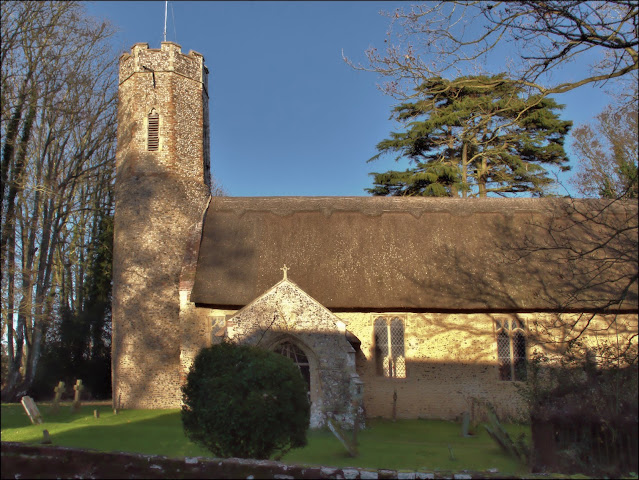
All Saints' Church at Horsey


The tiny settlement of Horsey stands just outside the Norfolk Broads national park and feels quite different from that nearby watery world. The strong, low-angled sun and the tree-shadows made photographing the building very tricky, but I thought you'd like to see it anyway. It's a very traditional Norfolk church with its round tower and thatched roof and seems to date from around the eleventh or twelfth centuries.


If this ornate door is unlocked we can take a peep inside.


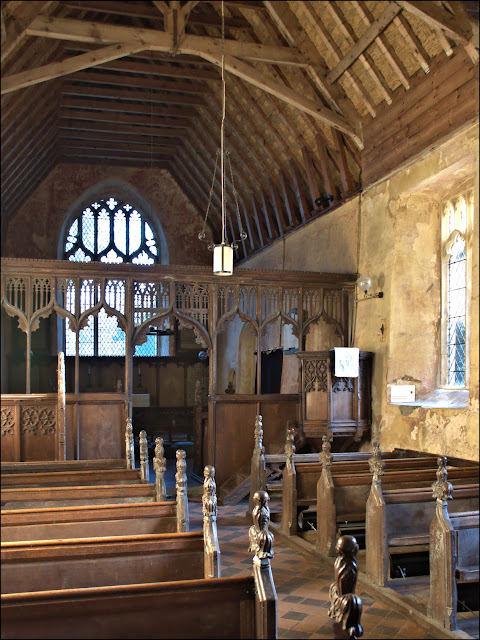
Everything is as old-fashioned and rustic as one would hope, almost as if it has grown up from the rich Norfolk soil; a refuge from the modern world. 


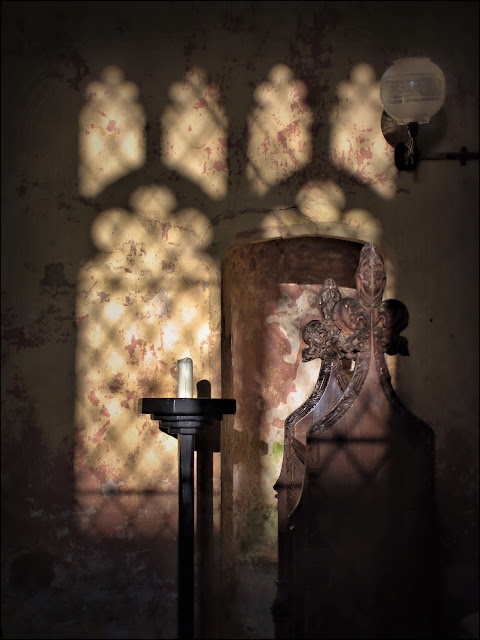
Sometimes old churches like this feel damp and gloomy, but with the bright sun coming in through the many clear-glass windows the interior had a warm and welcoming glow.


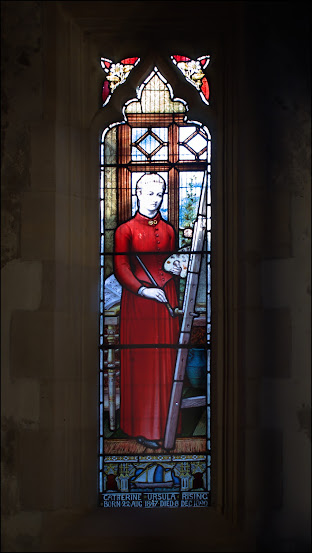
There are just a few stained glass windows which were added during the Victorian era, including this charming memorial to Catherine Ursula Rising, a local artist, pictured at her easel.


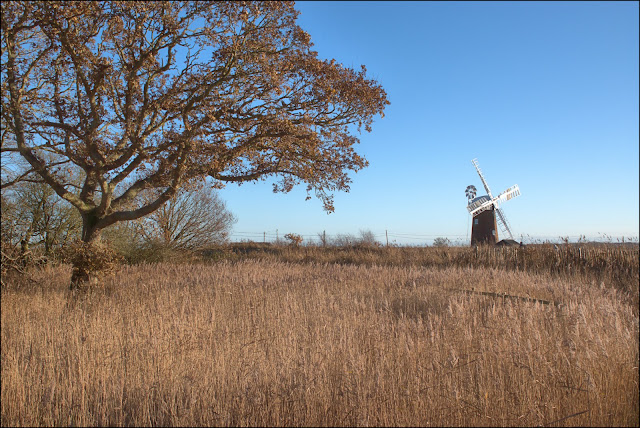
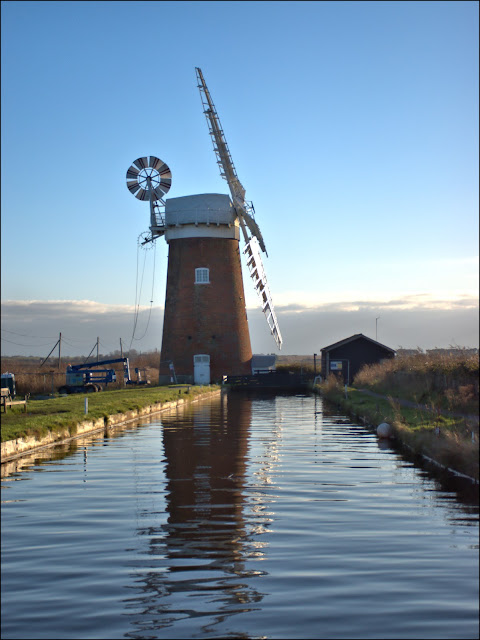
Horsey Wind Pump


The whole of the Norfolk Broads is studded with what appear to be windmills of varying ages and states of preservation: except that they are not mills at all but wind-driven pumps concerned with the drainage of this difficult land.


As we got nearer I spotted an interesting reflection in a puddle.
The wind-pump is not as ancient as you might imagine, dating from 1912. But it replaced a much older pump, the bottom few courses of brick are still in place. The flat, windswept land here and gales coming off the sea, meant that these structures were constantly being repaired or replaced. In fact the National Trust, who look after the structure, are still carrying out frequent renovation work, even though the pump is no longer in use, having been replaced by diesel power.


In less contagious times you can climb up to the top to enjoy the view and there's also a small café alongside for visitors.


St Mary's Church, East Somerton


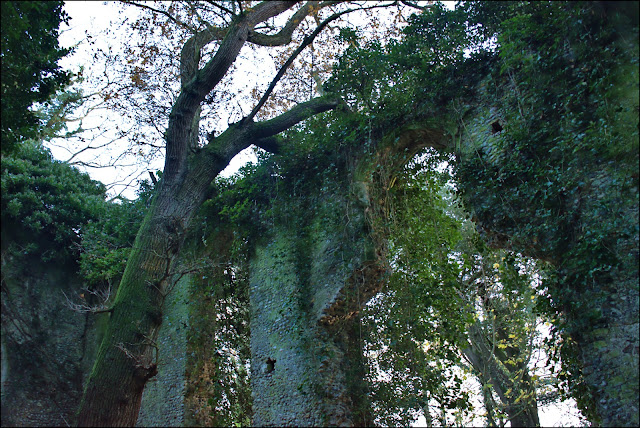
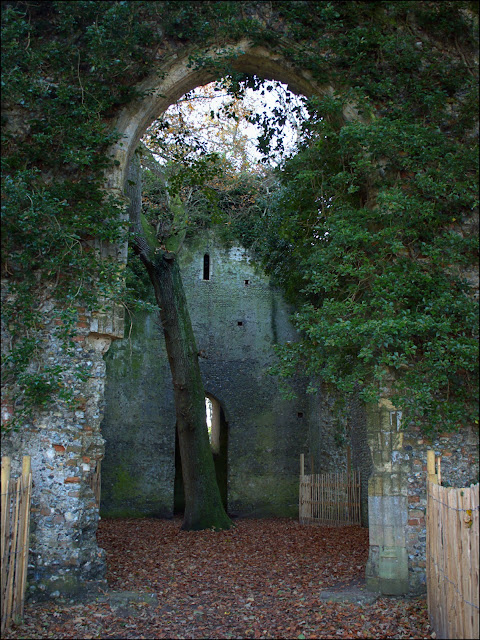
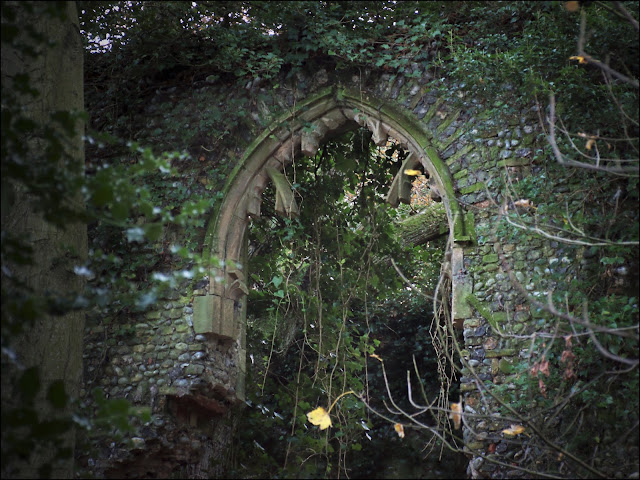
Just two or three miles down the road from Horsey, hidden away among trees, is the magnificent romantic ruin of St Mary's church.


It must once have been a very large church but has been ruinous since the seventeenth century, by which time the parish had been subsumed into the larger parish of Winterton. This huge building then became a private chapel to the inhabitants of nearby Burnley Hall, who presumably could not afford the upkeep of such an enormous building.


Having feasted our eyes on the ivy-clad ruin we climbed into my brother's car to travel the ninety miles or so back home.


Take care.


Saturday, 11 September 2021

Shonks

We'll start today's walk in the village of Brent Pelham in Hertfordshire.... 


And this was once the communications hub of the little settlement! I don't know how many people still post letters rather than firing off emails, but they certainly take good care of their post-box, freshly-painted in bright red with the details picked out in gold. The telephone box, however, now houses a defibrillator rather than a telephone since everyone now carries a phone in their pocket.


The remaining cottages have been spruced up for modern living, though they retain their picturesque charm. And there are other reminders of the past...


Here are the stocks and whipping-post, left from a time when justice was handed out more brutally than today.


So lets go for a walk in the surrounding fields, where harvest has been gathered in once again as it has been throughout the centuries, albeit with rather less sweat and toil in these mechanised times.


Even now it's just about possible, from time to time, to glimpse the mystery and magic of this ancient landscape; for this whole area is woven together with myths and legends, the texture of which still shows through in some places, despite our attempts to gloss everything over with our modern preoccupations.


Just over the fields in Anstey there's the legend of the Blind Fiddler, who walked off into a secret tunnel playing his violin. Screams were heard but the fiddler was never seen again. They still call the local pub "The Blind Fiddler".


And a little further afield they speak of Jack O'Legs, a friendly giant who robbed the rich to give to the starving poor. Nearby, Jane Wenham was the last person in the country to be convicted of witchcraft.

(I wrote about Jack O'Legs and Jane Wenham here)


The mystery we were struggling with on this drizzly morning was where exactly the footpaths were; if they weren't plunging us into waist-high vegetation, they were vanishing without trace as they crossed newly-ploughed fields. But we did see a ghostly figure ahead of us at one stage....


....an unusual white pheasant. These occur occasionally as the birds are reared to be released for what some people call "sport". Helpful, I suppose, for very short-sighted marksmen!


We completed our circuit and arrived back at the church. If we go inside we can hear about Piers Shonks, the subject of Brent Pelham's very own legend.


Piers Shonks lived around here back in the eleventh century - you can still find "Shonk's Moat" marked on modern maps. Now, around that time the district was much troubled by the existence of a dragon who lived in a hole in the ground. In 1830 farm labourers engaged in felling an ancient tree found the very lair (or at least that's what they thought). 


The brave Shonks slew the beast only to find that it was the Devil's favourite dragon and Old Nick was naturally displeased with Piers. "I'll have your soul, whether you're buried inside the church or outside", he hissed. When Shonks neared his death he asked if he could have his bow and arrow; wherever the arrow landed was where he was to be buried. The arrow flew through the air, passed through the window of Brent Pelham church and buried itself in the wall.


And there Shonks was buried, in the church wall, neither inside nor outside, and thus cheating the Devil.


The carved stone, which lies in the niche, is richly carved and, whatever the exact details of its history, must have been to commemorate a rich and powerful individual. It's also very old.  What's more it's horrible to photograph, being at an awkward angle and badly lit. I was down to about half a second exposure time.


The enigmatic verse above the stone was added much later. The legend and how it's been added to and re-invented over the centuries is the subject of a book (Hollow Places: An Unusual History of Land and Legend by Christopher Hadley) which attempts to unpick the various strands of story-telling, superstition, misunderstanding and facts.


Whatever the truth behind the story of Piers Shonks it's always interesting to consider how our ancestors' lives differed from ours - and how many similarities there are.


Take care.