Tuesday, 23 March 2021

Old Tracks And New Growth

Wandlebury Country Park is equidistant from the homes of my brother and I, so makes an ideal venue for an early spring walk.


There are still no leaves on the trees in March, though there is a slight suggestion of leaf-buds on the upper branches. It was also warm enough to sit on one of the many benches - but not this one, we've only just started!


Violets are already flowering in the meadow.


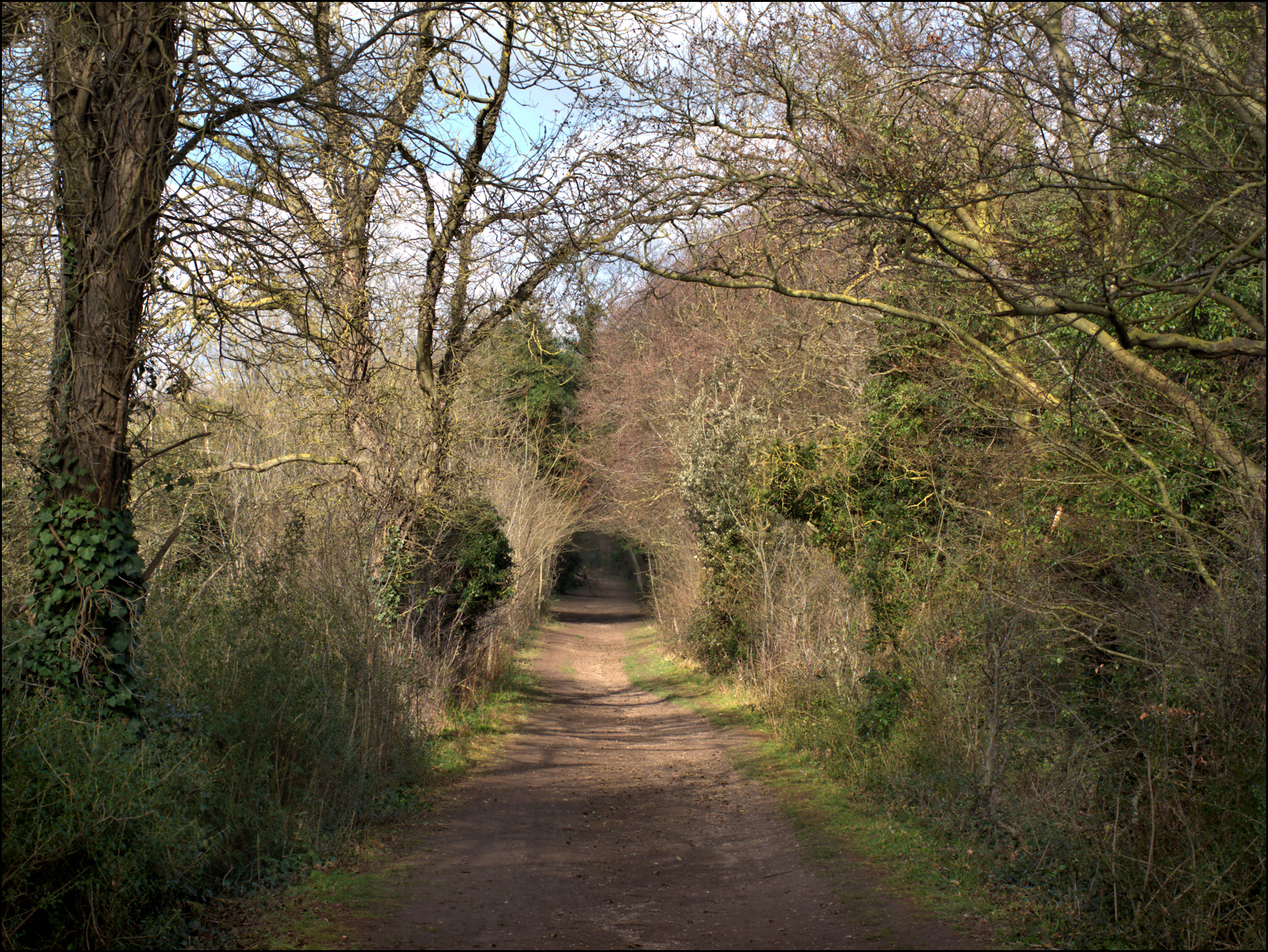
This track runs alongside the Country Park and is popular with dog-walkers as they can let their dogs off-lead, something which is not allowed on the park's paths. In fact, you're even free to drive a car up here as, according to the maps of the Ordnance Survey, this is a "by-way open to all traffic" and the posts are inscribed "Highway Boundary". Apart from farm vehicles, nothing else much passes this way.


This is the Roman Road, which runs as a semi-forgotten track from the south-eastern outskirts of Cambridge. Like most of their roads it's straight as an arrow, completely ignoring the lie of the land. I think this indifference to the countryside they sought to conquer is part of the reason I've never much liked the Romans - the other part is the two years of my youth I spent wrestling with their infernal language!


There are a few patches of daffs among the Wandlebury woodlands, adding a splash of colour.


An unusual tree: the tangle on the left is the root system of the original tree which was blown over in a storm. Most of the tree was removed, as they did in those days. Some of the roots were still embedded in the soil and what was left of the old trunk began to sprout shoots. Now there are seven or eight new "trees" soaring skywards. And another tree or two have fallen between them. A regular tree soap-opera!


I wish I could say that this Grey Squirrel was living a free and blameless life in the wood, but alas it's hanging around the bird-feeders, eating up any spillage and making occasional sorties to try to knock the feeders down.


Don't be worried about this smart little fellow though, there's plenty left for him. I say "him", but to our human eyes the male and female Blue Tits are virtually identical, though I read once that to the birds themselves the difference is obvious, which is just as well I suppose. The reason is that they can see the ultra-violet part of the spectrum which makes them look very unalike.


This is Sammy and a sign tells us that Sammy is a "she". Unfortunately Sammy's got a sore foot at the moment, which is why she's been separated from the rest of the herd.


Layers of history: the dip is part of the ditch which runs around the Iron Age hill-fort. More recently a house was built on the site and I think the section of stone wall may once have been part of a bridge which was a feature of the garden. And the exposed root system bears witness to the passage of time.


I didn't even know there was an old orchard here, but we could see white blossoms frothing over the garden wall and Les spotted a door leading us to this beautiful, secluded place.


I'm pretty certain these must be old plum trees to be flowering so early in the year.


If that little Blue Tit's dapper plumage was not enough to attract a partner then this "honeymoon suite" should seal the deal! 


Despite the summery-looking blossom, the skies had clouded over and a chilly wind had got up. It was surprising how sheltered it was behind the orchard walls, which is why they were built here, to protect the trees from any spring frosts.


Take care. 


Sunday, 21 March 2021

Fungus And Mirrors

A month has ticked by since I last posted anything. This part of England has been mostly overcast and grey, with just a little light relief in the form of drizzle and rain; I've been out and about but haven't even bothered to take the camera a lot of the time. To spare you my moans and groans I've been leaving the blog well alone!


But I did find this astonishing fungi-clad log lying in the local woodland and luckily I had my camera in my coat pocket on that morning.


The log was around six feet (2m) long and pretty much covered with fungi throughout its length. Coincidentally I'd been reading Peter Wohlleben's excellent The Hidden Life Of Trees, in which he pointed out that a tree's useful work goes on, even after it is dead.


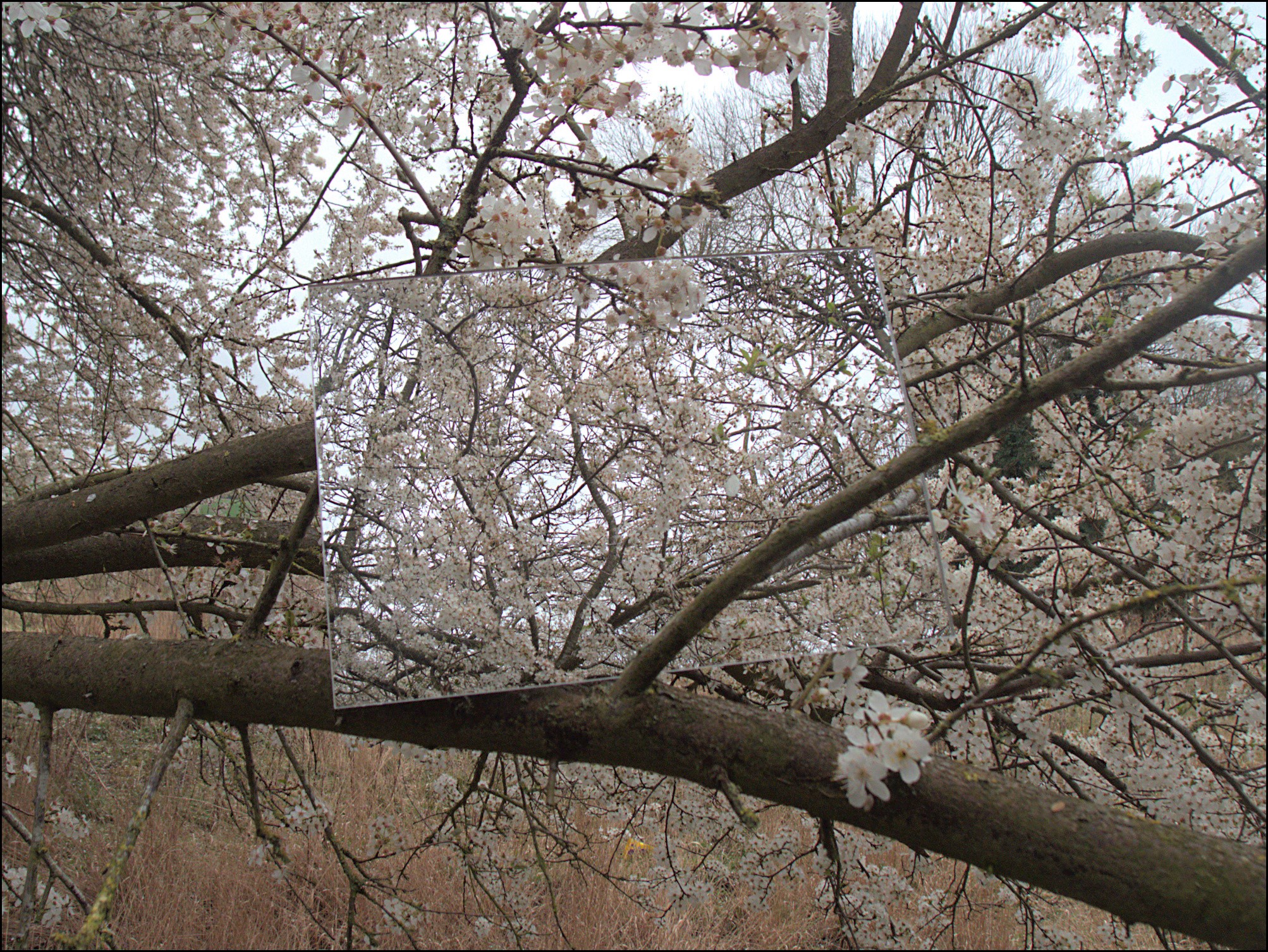
That's probably enough fungi for now, but I've had another idea in mind for years, which centres on using a cheap A4 size acrylic mirror in my photos....


I've no idea where the idea came from (I hope I haven't stolen it from anyone else, though there's very little that's truly new in photography). I hope that it combines looking up at flowers and the trees above, with a view of the woodland floor. Or maybe I'm just crazy!


These are not wild daffodils, though they are growing wild in the village's little wood. They were probably planted, or maybe thrown out, by some past gardener.


The blackthorn is in blossom just now, beneath a rare glimpse of blue sky.


I rather like my "mirror idea", though it's not without its challenges, photographically speaking. Getting the correct exposure and focus for the reflection and the reality is not easy.


Unless you wedge the mirror in the branches, of course!


I didn't mind a few petals falling on the mirror - I think autumn leaves might also work pictured in this way. In fact I rather wish that I'd started on this project in January, then maybe I could've made a calendar based around mirror reflections.


We live with a dream that this latest lockdown will end soon, as the vaccination programme continues apace. Then I hope to travel further afield, rather than wearing out the few miles of paths around my home.


Take care.


Thursday, 18 February 2021

Y.I.T.T.O.Y.A.

 .....or Yes, It's That Time Of Year Again.


That time of year when a rather scruffily-dressed old fellow goes stomping off into the local woodlands in search of the first signs of Spring.


It seems incredible that only a few days ago I was crunching along frozen pathways with frost on every branch and a chilly breeze penetrating the nether regions.


But great armies of Snowdrops were biding their time, just waiting for the weather to warm up.


There were even a few golden flowers of Winter Aconites shining through the shady woodland.


Just a week ago I looked in at the lovely little Snowdrop wood at Frog End, which we've visited in previous years on this blog, but there were just a few buds struggling into flower. 


Maybe I made the Frog End site sound as though it was something special, but beautiful as it is, it has equals in so many woodlands and copses in this area, including the little wood in my own village.


I hadn't even intended to take these pictures when I left home; I just wanted to get a bit of exercise before it started to rain again. I left my DSLR camera at home, but as I unlocked the back door to go out I grabbed my SLC (silly little camera) instead.


On a whim I took the path beside the tiny River Mel, now gurgling happily on its way after the recent rains.


After taking more than enough photos there I went to the churchyard where there's also a good show of Snowdrops and Aconites at this time of year.


Parts of the graveyard are left in a semi-wild state to encourage wildlife.


Although neither Snowdrops or Aconites are reckoned to be native to these islands, they have been here so long that they've gained the status of honorary members and nothing looks more natural to my eye than these little gold or white sparks of optimism glowing in the February gloom.


Then I returned the way I'd come - and of course took more photos.


There was even a stray beam of sunlight piercing the clouds and the bare branches.


I hadn't been expecting to see quite such a show of flowers, nor take so many photos. And I certainly wasn't expecting to see a bee out and about....


He must have got the calendar completely wrong! I hope he remembers to.....


Take care.


Sunday, 14 February 2021

Sharp Frosts And Chilly Winds

 .....and not too many people about on my early morning walks.


Some mornings I've been pulling on my boots before daylight, though not every day, I'll admit.
On the days I've viewed proceedings from the kitchen window, while preparing my porridge, the sky has performed some technicolour acrobatics, though when I've been out the shades have been subtle and hard to capture - it's tricky to maintain the faint pinks in the sky and the bluish tinge of the pre-dawn light while still showing the whiteness of the hoar frost.


Some of the recent flooding remains and passing traffic has thrown spray over the roadside vegetation, giving some exotic ice-sculpture. I used to see this sort of thing alongside waterfalls in the days when I used to lead Christmas holiday walks in Wales.


The familiar farm track near Moor End gave chilly views to the south.


Plants and bubbles were trapped under the thin ice in this sheltered spot.


Passing the "tractors' graveyard", I noticed a hole in the hedge and poked my camera through to take a few pictures. The composition, with the two disc-harrows in the foreground, is pure chance; I was able to choose the framing but not the viewpoint. I keep hoping I'll one day see the farmer and ask if I can go in and photograph some of these rusting machines.


On the way back I took the frozen, muddy track alongside Shepreth Moor, which is still largely under water - or under ice, to be more accurate. The frost was still persisting, as it would all day.


And those are the only satisfactory photos I have to show you of my recent wanderings.


*******

We haven't had many music selections recently so here's a little tune that sums up our lives at the moment.

There are many forms of protest music apart from the obvious protest movement of the sixties. A lot of old blues music is a protest in that it remains jaunty, despite the terrible conditions at the time. For decades there were few black people willing to sing the blues at all, as it was seen to be representative of their past enslavement. But there have always been a few who were willing to celebrate this music, and one of the more recent ones to appear is Jontavious Willis, here singing his adaptation of a 1950s song for the modern day (the original was about dangers from Communists).


You could be having a good day
As jolly as you can be
I bet you'll get the blues when you turn on the TV...


Take care.


Wednesday, 10 February 2021

Kicking My Heels And Keeping On My Toes

So here we all are, kicking our heels and waiting for the invitation to have a needle stuck in our arms. Travel outside the local area is not allowed so my footsteps are confined to the roads and footpaths around home. Funnily enough, it's been OK.


Early morning walks have been the best, especially when the sun rises to an accompaniment of pretty pastel shades. The other advantage has been that, after a clear cold night, the muddy paths are frozen hard, making progress rather easier. And we've had plenty of rain lately.


This is the infant River Cam as it passes Malton Farm. It's usually an insignificant little stream, just a couple of metres or so from one bank to the other, but recent rain made the road impassable to traffic for a while.


The flooding meant that I could walk the mile or so along the road in splendid isolation, without the need to leap out of the way of cars. The farmhouse, which stands right next to the river, kept its feet completely dry by being on a slight, almost imperceptible, rise - another indication of how well the people of the past understood their land.


On another day I set out, by a devious and circuitous route, to photograph an ancient petrol pump (!). The garage to which it was attached has closed down recently after decades in the same family and this old pump may be due to vanish soon.


On my way I passed an old oil tank of unknown origin which is frequently graffitied and slowly rotting away in the English weather. Its surface is full of interesting colours and textures. 


Once I get started on this sort of thing I find it hard to stop!


I was just about to persuade myself to move on when I spotted that the end of the tank was even more decayed....


..... and there I found a miniature mountain range, in the rust at the base of a big hole that had been punched into it. Yes, that's a little snow in there, forming a mini-glacier.


I moved on towards a place where I knew there were some old farm trailers and machinery stored and found this little scene which, with its snow, red paint and ivy, had a faintly Christmassy look.


I rarely walk this footpath for the very good reason that it doesn't lead anywhere - it goes so far and then just stops. It's called Water Lane so maybe there was once a spring or well up here - if so it's long gone now. But it did give a nice view of the snow-speckled fields and the bare winter trees.


So that's how I've been spending my time,

Take care.


Monday, 8 February 2021

Novel Ideas

I wasn't at all surprised to hear recently that reading has increased in popularity over the last year. Books not only fill time in a pleasant way but have the ability to whisk us away into other worlds (many of which would be a lot less comfortable than our present existence if we experienced them in reality), and they also allow us insight into the lives of others in a much deeper way than a Zoom call. 

Last time I wrote about books, I'd been reading biographies and didn't include any novels, so we'll remedy that this time - though in reality I rarely read two books of the same genre in succession.                       

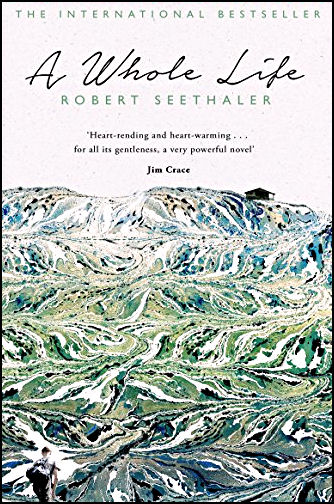
A Whole Life - Robert Seethaler

A while ago Mary (at A Breath Of Fresh Air) recommended Robert Seethaler's novel A Whole Life which I ordered and read that very evening (Aha! You can do that with a Kindle!). From that you may be able to reach two conclusions: firstly that it's a short book, but also that it's one that's not easy to put down.

It is, as it says, the account of a man's whole life. Apart from the war years he never strays far from his mountain home, nor from the morals and truths of the hard life into which he was born. But such lives are important nevertheless, more important than is generally acknowledged in this age.

So we follow his progress through the unkindness inflicted by others, through the loss inflicted by an avalanche, surviving a war which he doesn't fully understand and wrestling with the changes brought about by the modern age....."Scars are like years, he said: one follows another and it’s all of them together that make a person who they are."

But more than that it's the light which shines through the troubles and afflictions that really define a "whole life".


Remarkable Creatures - Tracy Chevalier

Here's another book which describes a whole life and one which starts off in similar poverty but goes on to attain a measure of fame - though, because the subject is a woman, it's never the level of recognition that she deserves.

I'm usually uncomfortable with books about real people which include the kind of speculation and invention which are presented here in addition to the true facts, especially when it's about a person that I already know something about - it gets difficult to know where truth ends and fantasy begins. This book about the fossil-hunter Mary Anning is however an exception.

If you've never heard of her, she was a young girl from a poor family who scraped together a meagre existence by searching for fossils in the cliffs along what became known as the Jurassic coast of southern England. She seemed to have an instinctive understanding of fossils as well as an uncanny knack of finding them. Many of the great men of science owe much of their reputation to Mary's finds but until recently she had received little credit.

She did have one person who helped her and fought for her, a rather odd spinster called Elizabeth Philpott, herself a self-taught geologist and equally shunned by the male establishment.

Most of what appears in the book is true, all that has been added is is a little romance, and that is largely based on rumours which circulated at the time. There is one event which occurs in the book which seems preposterously far-fetched, involving an incredibly generous gesture by someone acting entirely out of character - it is however completely factual!


How Steeple Sinderby Wanderers Won The FA Cup - J L Carr

For those from foreign lands I should explain that the FA Cup is (or at least was; it's lost some of its glamour in recent years) England's premier football knock-out cup. It's charm lies in the fact that almost any football (soccer) club is able to enter it, including teams made up of milkmen, teachers, bricklayers and the like who play the game just for the fun of it. 

Every year a few of these part-time hopefuls manage to progress to the stage where the footballing millionaires of the biggest teams in the land join in. And most years there are one or two "Cup upsets" where bigger teams get beaten by those who should really have no chance.

But what if one of these little teams were to manage to get to the Final itself? And what if they won it?

The whole idea is ridiculous and the football-loving J L Carr knows it, but that doesn't prevent him having a great deal of fun with the idea along the way, as well as drawing some conclusions about "the beautiful game" and life in general.

Incidentally this is the same J L Carr who wrote "A Month In The Country" which I recommended some time ago, though you'd probably never guess they were both by the same author.


A Change Of Climate - Hilary Mantel

I keep reading excellent books by this author, but so far have avoided immersing myself in her best-known works, the double Man Booker Prize winning Wolf Hall trilogy. It's just their sheer size that keeps putting me off, but it'll happen.....one day.

A Change Of Climate is a modern-day family saga mostly taking place in rural Norfolk. Now rural Norfolk is not so far from rural Cambridgeshire, where I live, and I've known families very like those in the story - well-educated, very liberal, sort-of-Christian folks. And every twist and nuance of the tale rings true.

It concerns long-buried secrets and unfollowed dreams and how they re-surface and affect those living years afterwards. Apart from that I don't want to say anything about the plot which might spoil it. 

It's a complex and multi-layered story with a multitude of characters but such is Hilary Mantel's skill as a story-teller that it's never confusing. It's a book I shall definitely be re-reading for the sheer pleasure of it.


This Is Happiness - Niall Williams

Here we are on the west coast of Ireland in the little village of Faha when something remarkable happens - it stops raining!

Young Noel Crowe is living here with his grand-parents, having recently left the seminary and turned his back on religion. Into all their lives comes Christy, a wandering labourer with a rich and colourful past, who is here to help with "the coming of the electricity", for progress is about to encroach on this rural backwater.

The story is told by Noel Crowe as he looks back on his life from the perspective of old age. He takes his time relating what happened, as he remembers it, and the language is often reminiscent of the poetic style of old ballads. 

Here we find Noel and Christy reeling home from the pub after an evening of music. Now they're whitewashing an forgetful old lady's walls for reasons which Noel doesn't understand. Here come the doctor's three beautiful daughters. Grandfather is now deliberately wrecking old bicycles so he has an excuse to visit the old German who is able to fix them. Then there's the man from the electric company trying to sell the new-fangled gadgets to the disbelieving old folks of the village. Next Christy's singing loudly outside the bedroom window of the chemist's wife.

So it goes on with its own beautiful but crazy logic, weaving an intricate mythology of Ireland's past and its charismatic inhabitants.


Take care.