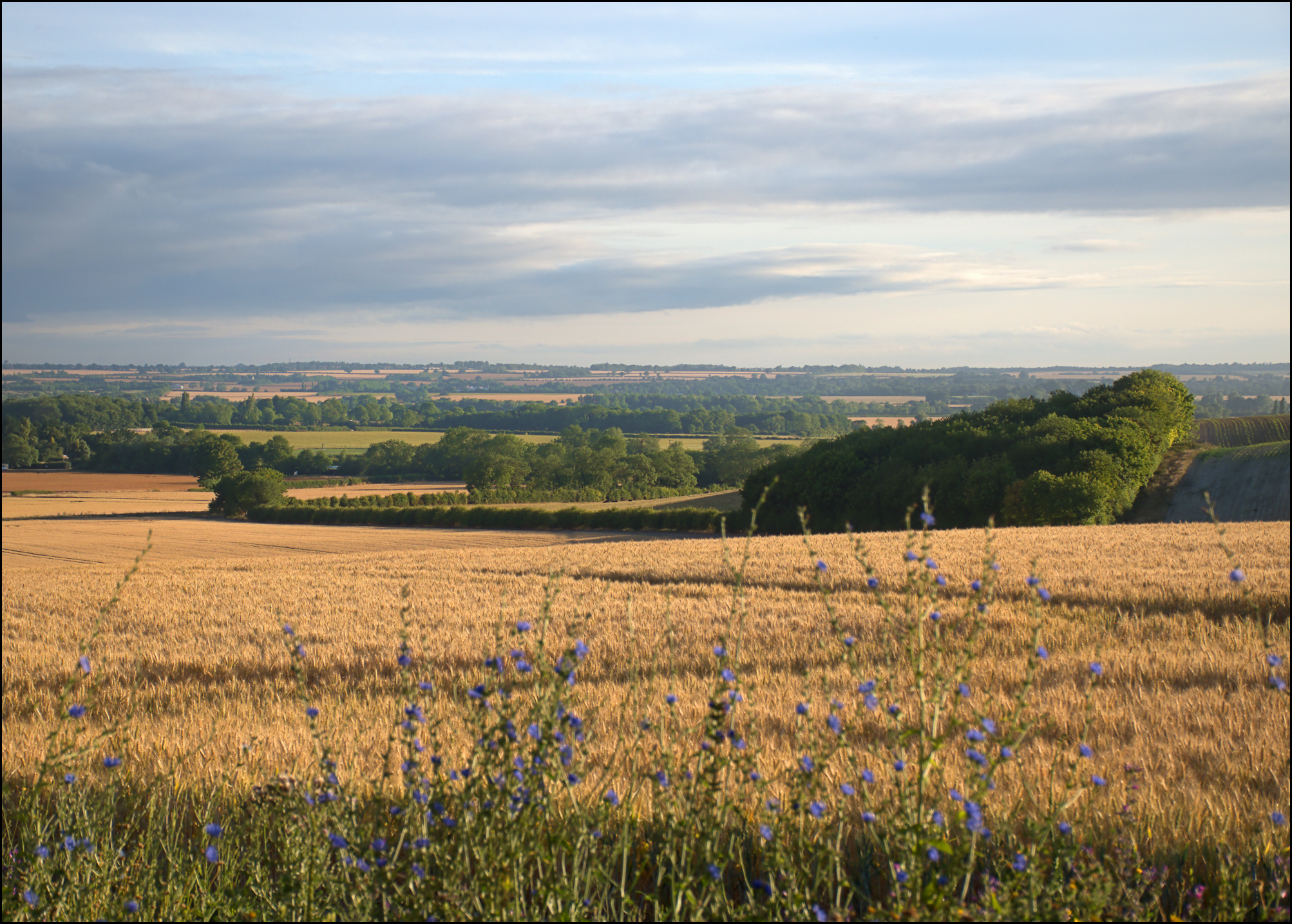
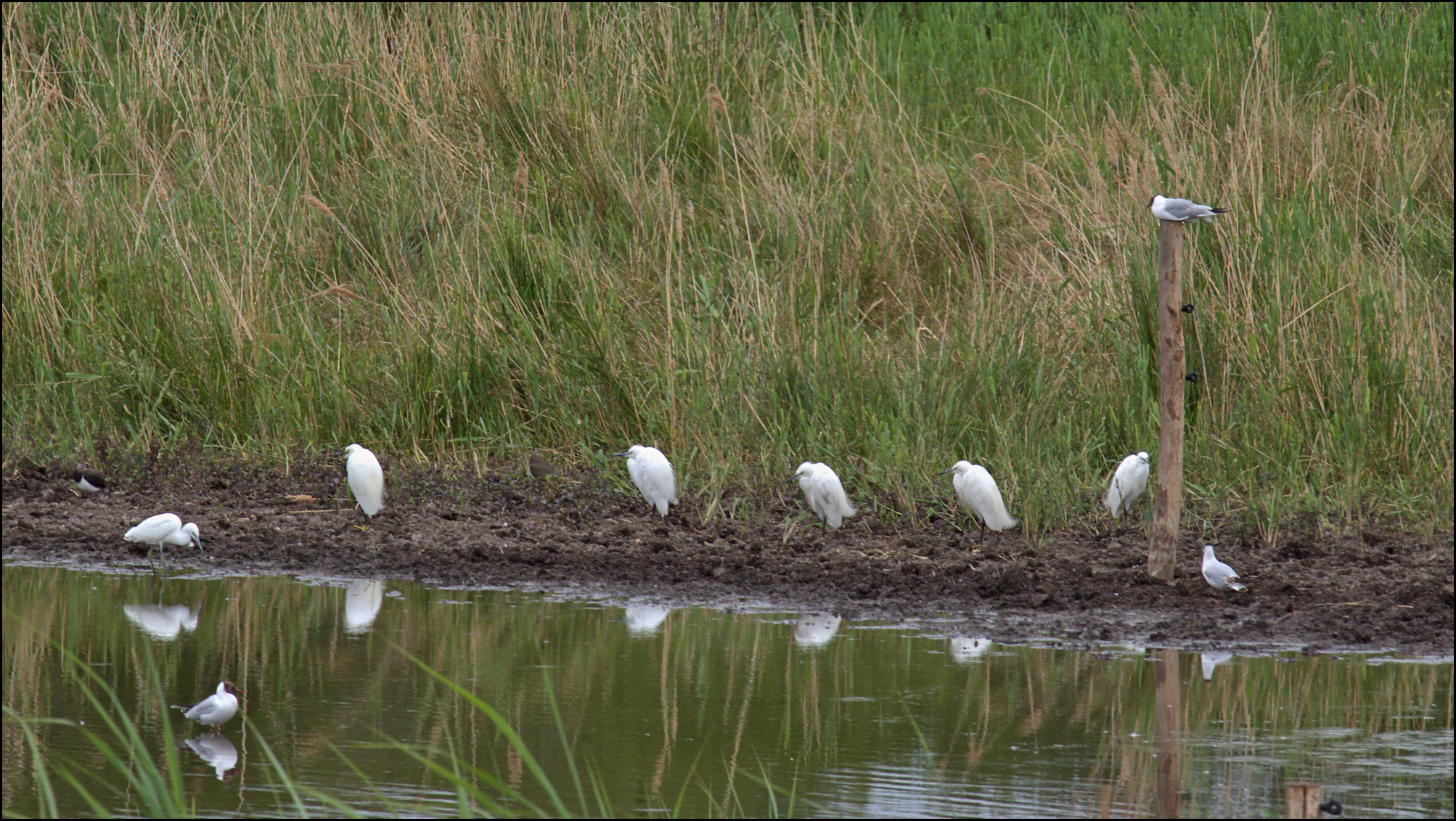
Heading down the M11 motorway, turn on to the A120, and then (because many of the best things in life lie hidden off the main thoroughfares) take to the minor roads and byways.

In Copford Green you might come across this seventeenth-century "cart lodge". Carts and equipment could be kept underneath, right next to the road, and hay was stored in the loft above.


Down a narrow track, turning right at the cricket ground, then down a road marked "private", brings us to a gravel parking area beneath the trees. Suddenly we've disappeared down a rabbit-hole and into the depths of rural England - and all just over a mile from roar of the A12 road with its heavy lorries, heading to and from the container port of Harwich. Lets explore a little.

The proper way to explore a church is to have a look around the outside before going in, though I don't think I've ever done it that way round. I mean, you always try the door to see if it's open and if it is....But, with a quick shuffle of the pictures I took, we can do things the right way round. You can see it's got a charming little porch and one of those tiny wooden belfries that are a feature of many churches across Essex and Hertfordshire.

Round the back, on the north side, there's a door with a semi-circular arch; a sure sign that this is a Norman church, built about 1130 AD - though it's been altered and repaired over the centuries, but nevertheless some of the frailest features have survived for centuries, as we shall see.

At the east end there's a curving apse, an unusual survival on a Norman church. Notice also that there's lop-sided extension on the left of the building as we see it here. Lets wander round to that porch now and take a look inside.

Instead of the austere, white-washed interior you may have been expecting we find a building aglow with rich colour. This is how our churches looked back in the medieval period before the puritans decreed that all should be lime-washed over and hidden from view. Lets travel back through time to when the church was built in about 1130.

Shortly after the building's completion the whole church - all its walls and its stone-vaulted ceiling as well - were covered with bright frescoes. The section seen above has been cleaned, but has had little else done to it since it was first painted back in the twelfth century. It is therefore the purest example of medieval art in the church.

Now, you remember that rather lop-sided extension we saw from outside? That was begun in 1190 and a hole was knocked through to create an arch to give access: the size of the church was increased but a substantial area of painting was lost. Two further arches were made later, losing more artwork and also weakening the south wall to some extent. By 1400 the stone-vaulted ceiling either collapsed or was demolished, having become unsafe. If you look at the photo above you can see the "stumps" of two of the great stone arches of the original vaulted ceiling.

In 1547 the paintings which remained, disappeared under a coat of lime-wash, only seeing the light of day very briefly in 1690, when a workman preparing the surface for a fresh coat of lime-wash, uncovered them.

They then remained hidden until 1871 when changing fashions within the church allowed them to be revealed and restored by Daniel Bell. Bell couldn't resist some re-painting and additions of his own invention.

Whatever criticism may be made of the details, it seems to me that that overall impression would have been much the same if we were entering the church back in 1200.

The area beneath the arch bears the signs of the zodiac. The quality and extent of these murals suggests that this must have been more than a normal small parish church - though that's exactly what it serves as nowadays. The Bishops of London once owned much of the surrounding area and it seems that this may have once been their private chapel.

The stained glass windows are more recent than the painted walls, dating from the Victorian era.

There's a rather magnificent George I (ruled from 1714 -1727) coat of arms.

And a very cute modern carving of a Koala on one of the bench ends.
(If you want to know more about the church visit the Copford Church website)
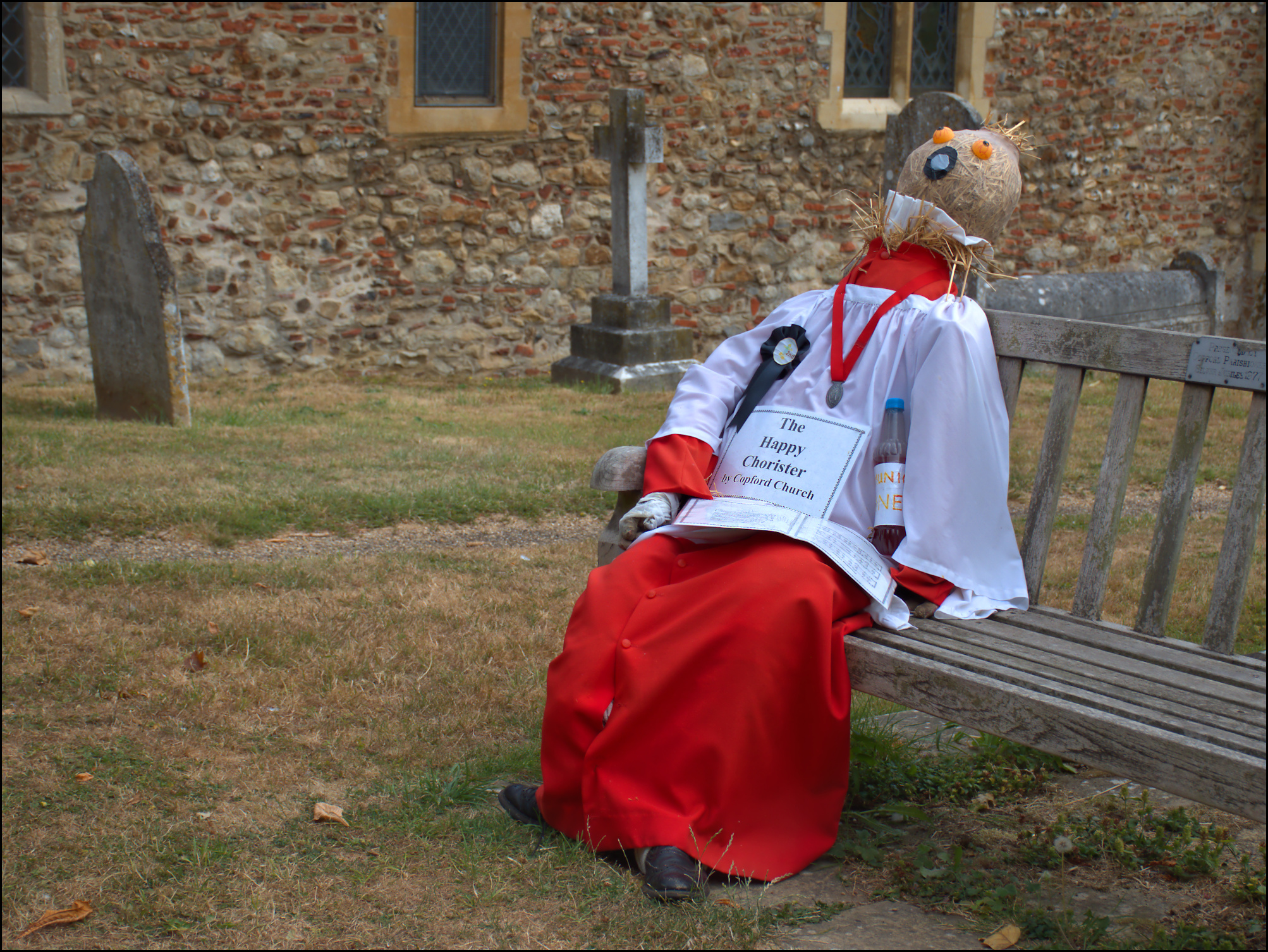
Outside we met another refugee from the Scarecrow Festival - the Happy Chorister, complete with bottle of Communion wine!

Take care.