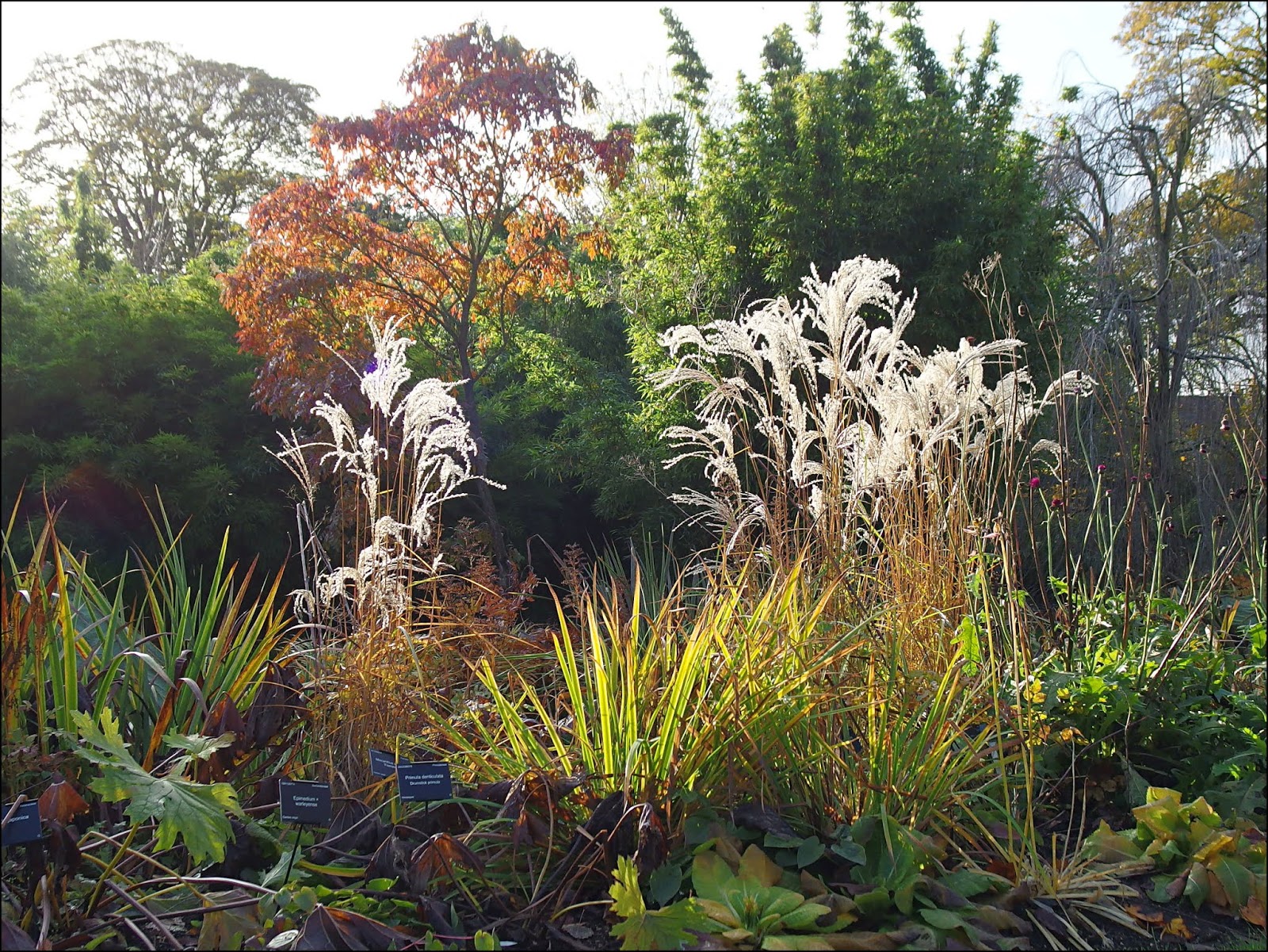
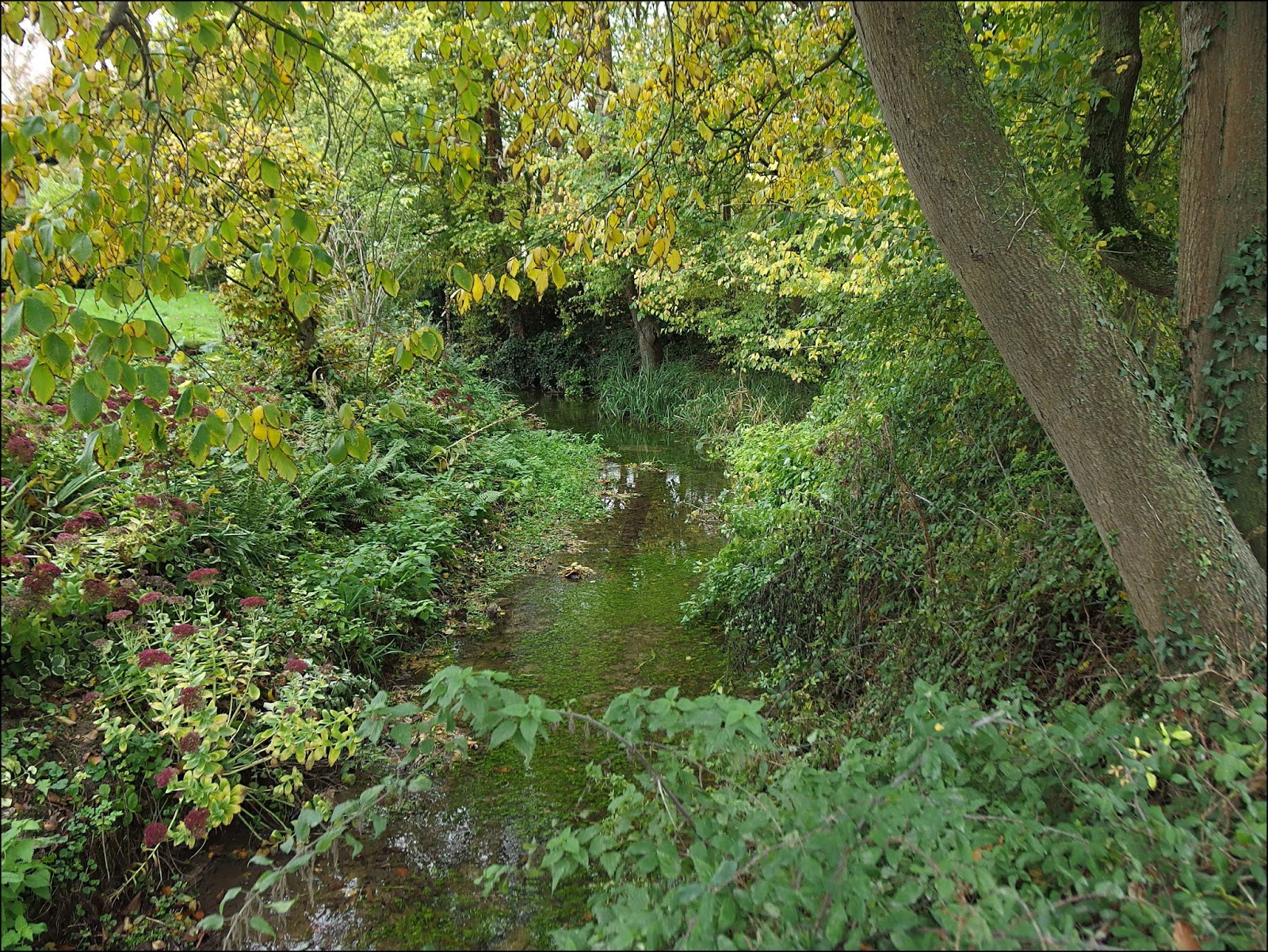
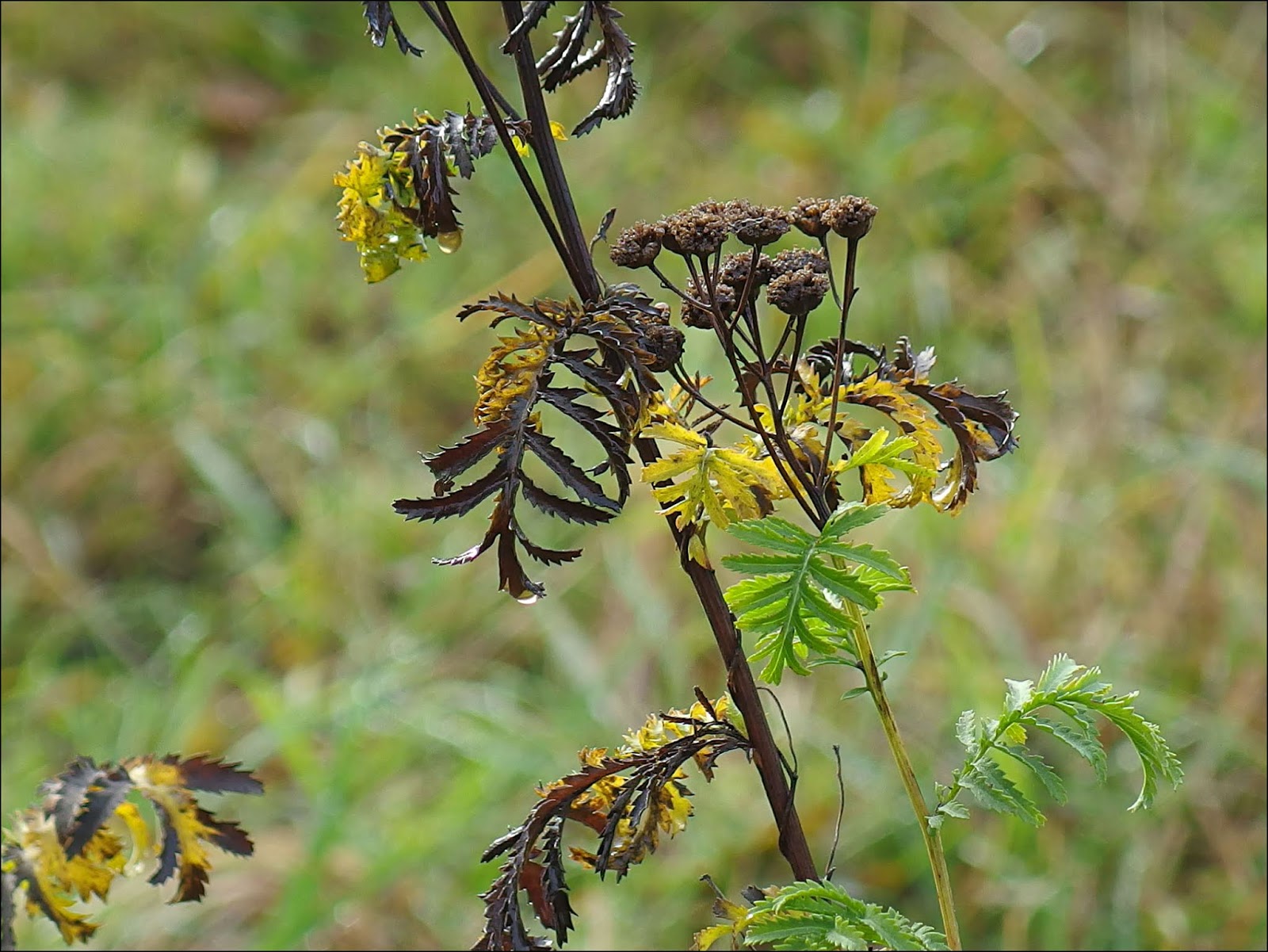
Yesterday afternoon I made my way to the Botanic Garden in Cambridge to catch what may be the last of the Autumn colour, though it is possible that some trees may hang on to their leaves into December as they did last year. Here are the pictures I found, in roughly the order I found them. Some are quite subtle shades, while others, like the Japanese maple in the first photo are truly spectacular.
I published this photo some years ago. It's message to us is no less relevant today.
The stone stands in the little churchyard at Langley in north-west Essex. It says so much in just a few fading words. Less than two weeks after his death the Great War came to an end. Take care.
This morning when I clicked on my Blogger Reading List I found that Robin Andrea, over on New Dharma Bums, had posted a music video, the start of a series aimed at introducing readers to the music she and Roger like to listen to. And would we like to share some of our favourite music? One aspect of my life which I haven't written much about are the concerts at The Junction in Cambridge which I go to. One is asked not to take photos and in the intimate atmosphere of the J2 concert space I wouldn't really want to. At the strange and wonderful event that I went to back in May there was hardly enough light in the venue either.
We entered in subdued light with gentle green lights playing on the performance space. The sounds of evening birdsong floated on the air and hushed the usually talkative audience. After a while a tall, carelessly dressed young man appeared from the shadows - the English folksinger, Sam Lee. He immediately silenced the first signs of applause with a finger to his lips. He explained that the birdsong we'd been listening to was being beamed live from woodland deep in the English countryside. Last spring Sam had been leading groups of people into those woods in darkness to hear the song of the Nightingale and to quietly sing folksongs, many of which make mention of the bird. Now he was attempting to bring the experience to audiences in small venues across the land. In case you don't know here's what the Nightingale sounds like (turn it up Nightingales are LOUD):
You can leave it playing if you like, that's what I'm doing as I write this. Sam meandered in relaxed fashion through stories and anecdotes about nightingales, including Beatrice Harrison's historic performance of cello pieces along with singing nightingale in a Surrey garden in 1924, the first live broadcast of wildlife by the BBC. Sadly he also had to tell us of the decreasing numbers of Nightingales in Britain in recent years. He asked how many of us had heard them singing in the countryside and seemed surprised that most of the audience had - all of us at Paxton Pits Nature Reserve, though there are less of them there than in former years. In between talking he also sang us some of the old songs, either unaccompanied or very sparsely accompanied, in his easy, tuneful style. Like the Nightingale Sam Lee is unafraid to use the silences in the song. Later in the evening he recieved a phone call (his phone on silent mode, of couse) from his sound recordist out in the woods to tell him that the Nightingales had commenced their nighttime song. By the wonders of technology we were able to listen in as Sam sang and his two musicians improvised along with the singing birds. The evening came to an end with the human performers withdrawing quietly while the audience continued to listen to the birdsong coming in from the darkness. An unforgettable and unrepeatable evening. There are some videos on YouTube that attempt to convey some of the magic but they fall short of doing it justice. We can however enjoy Sam Lee's honest and sensitive singing as he records the song Lovely Molly along with the Roundhouse Choir.
Not a major expedition to unexplored continents, just a minor excursion on foot along familiar footpaths - except that if you look closely they are different every time. It's an out-and-back journey of about ten miles which I've made many times from my back door to Fowlmere Nature Reserve . I started out in a grey drizzly dawn but things brightened up during the morning, so the cloudy pictures were on the outward leg and the sunnier ones as I made my way home. Along the River Mel
Here's the River Mel as she approaches the road running through the village. Despite the recent rains the water level remains rather low.
I've shown you this old shed before as I can rarely pass by without taking a picture of it. I recently was told that its original purpose was as a kennel for the Meldreth Otterhounds. The hounds haven't been seen for many decades and neither, sadly, have the otters. They are making a slow and tentative comeback to our rivers though. They are certainly seen at Fowlmere where we'll be going later, though I've never been lucky enough (and perhaps not persistent enough) to see one. Across the L-Moor
One of the Wildlife Trusts' nature reserves that are dotted around the country. It's not really a moor in the normal sense, but an L-shaped piece of undrained pasture land. It looks as though they've been busy clearing some of the scrub that encroaches occasionally despite the efforts of a flock of Manx Loghtan sheep. In summer there are increasing numbers of orchids growing here.
Fungi are steadily re-cycling the stump of a fallen tree. By Moor End and Huckle's Lane
This little footbridge leads from the L-Moor to a field-side path which gives unusually far reaching views across this flat landscape.
Flat countryside in grey, flat light is not easy to photograph. This is the best I could do. I think it gives a feeling of what it can be like out here with winter approaching, but with the clouds gradually breaking up.
On the return trip it was considerably less bleak. This little area, stuck out amid fields, was once the site of a handful of houses known as Moor End, which now exist as little more than a rumour, verified only by a brief mention on a few old maps. The name of Huckle's Lane is recorded on those same maps. Along the River Shep
The most delectable section of the walk is a narrow footpath running right alongside the River Shep. It's another of those tiny rivers in which this area specialises; they have just risen from a line of small springs along the edge of the gentle chalk escarpment and have not yet had time to gather other tributaries to increase their volume.
The waters of these chalk streams is extremely pure, though it won't stay like that unless the flow can be increased to flush out the debris which inevitably accumulates.
Mrs Pheasant was also making her way along the path, just a little too far ahead of me to get a proper portrait showing her attractive brown markings.
Around Fowlmere Reserve
When I get into photography mode I'm sure I miss seeing many birds; similarly when I go out birdwatching with my brother I often fail to take anything apart from the most obvious photos. At this time of year when I visit Fowlmere RSPB reserve I usually become fascinated with the light on the dying grasses.
Sometimes I find something that attracts me in the most mundane subjects.
There are even tinier streams here threading their way through the tangle of scrub and woodland. Though it feels as if you can see all this small reserve by following the encircling path or ascending the steps of the Reedbed Hide there are still secret places. Last week when I visited a rutting fallow deer could be heard bellowing but seeing him was another matter altogether.
The reedbeds form another sanctuary for birds like Water Rails and even an occasional Bittern. Sometimes in summer Marsh Harriers choose to nest here.
So here I'll leave you and turn to walk the long miles home (always slightly longer than the miles that brought me here!) You'll miss seeing the three dazzlingly white Little Egrets that ascended gracefully from the River Shep and settled in the tree tops during my return journey - yes, I was in "birdwatcher mode" by that time and only saw them through my binoculars. Take care.
Hallowe'en is not such a big deal in England as in some other parts of the world, but there are of course always those who will party for whatever reason, and also those who will try and make a profit from it! I saw some teenagers in startling fancy dress on their way to a party, but no children came knocking at the door for trick or treat. Next morning I found this survivor from the night's shenanigans lying forlornly in the fallen leaves. Windy
The beginning of November was WINDY with occasional breaks in the cloud allowing sunny periods. How can you capture the wind in a still picture? I went out to try.
Hand-held camera with a nice slow shutter speed showing the movement of the wind-tossed leaves, gave a pleasing result.
It's amazing how long you have to wait for that big gust of wind, even on windy days. It's probably about as long as it takes to let the breeze die down on a still day when I'm crouching to take close-ups of flowers.
Wind in the willows....along the riverbank.
And blowing the reeds and grasses. But the wind soon brings clouds and rain, which makes for very different photographs.... Wet
All that wind brought down a lot of leaves which are rapidly turning to mush after the rain. But before they lose their individual identities there's a brief period when their colours sing out brightly in the early morning gloom.
There are also a surprising number of leaves hanging on despite what the weather does.
Even the occasional flower is still blooming in the village gardens.
A lone leaf on the rain-jewelled grass.
There's a good crop of berries in the hedgerows, a waiting feast for the birds that come to pass the winter here, as well as those who choose to stay and populate our woodlands and hedgerows.
So that's what it looks like here in this first week of November. Tonight is of course Guy Fawkes night and there is the usual huge firework display on Midsummer Common in Cambridge. I used to have the "pleasure" of going there with groups of wheelchair-using children from the school where I worked, till the crowds got so large that we had to look for smaller events elsewhere. And I doubt I'll be going out tonight, now that I've retired, as the rainy weather is set to continue. Just to finish on a more cheerful note: One of the first alternative firework displays we investigated, when the big event in Cambridge became too big for comfort, was at a nearby Army base. I phoned up to check that it would be suitable. I asked if the site was wheelchair accessible and was put through to the Commanding Officer. "What?" he said. Then after a little thought which seemed to indicate that it had never crossed his mind, "Yes, I suppose it is. Why not?" When we arrived at the gates we were met by two young squaddies who told us to follow them past the other cars queueing for the car park. They ran ahead of us, a distance of a good half mile, and took us to a prime spot where there was a hastily painted sign "Disabled Parking". We enjoyed a superb display at the end of which we were offered another escort to the gate. Take care.
I got rather carried away taking Autumnal photographs around some of the Cambridge colleges the other day so here's some more fall-out from those Fall pictures...….
And a couple more of those strange reflections that look like they must be double- or triple-exposures, but are actually just straightforward snaps. Look back to the last post if you want a full explanation.