Tuesday, 12 February 2019

February's Garden


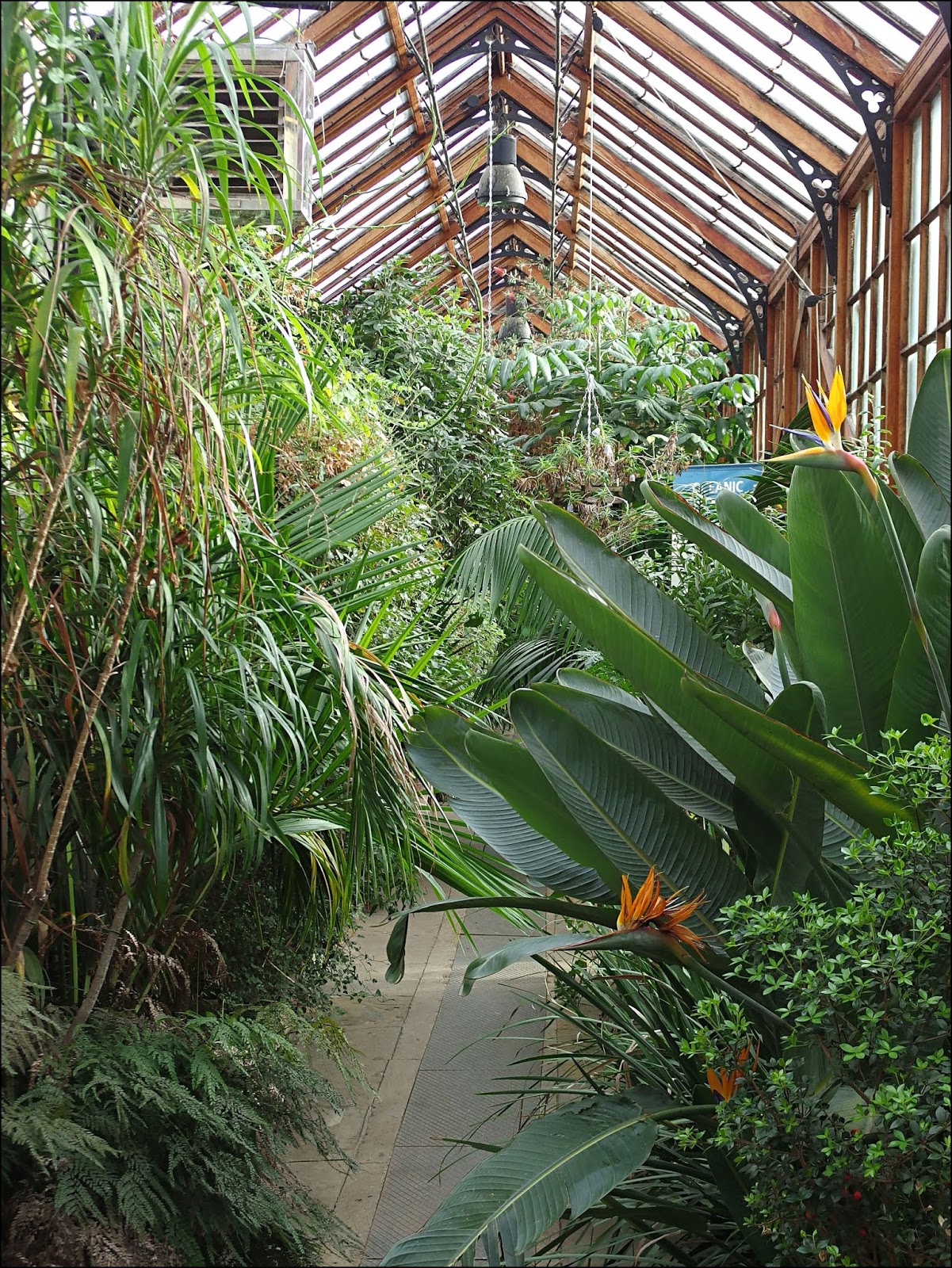
February can be a bit chilly in the garden, but refuge can always be found in the Glasshouse Range at the Cambridge University Botanic Garden. The glasshouses are arranged with various bays to house plants from different parts of the globe, all kept at the correct temperature and humidity for the plants to thrive. 

The Corridor


This is the corridor which links the different bays. As you can see there are many plants making their homes here and they, rather grudgingly, allow access to the intrepid explorer.


Continents Apart


The first bay we come to is dedicated to plants from South-West Australia and Southern Africa, two of the richest and most diverse botanical areas of the world.


Oceanic Islands


Plants arrived on isolated islands when their seeds were carried on ocean currents, by the wind, or by birds. Once established they then followed their own evolutionary course, over thousands of years, diverging from the mainland species from which they descended. 


Mountains


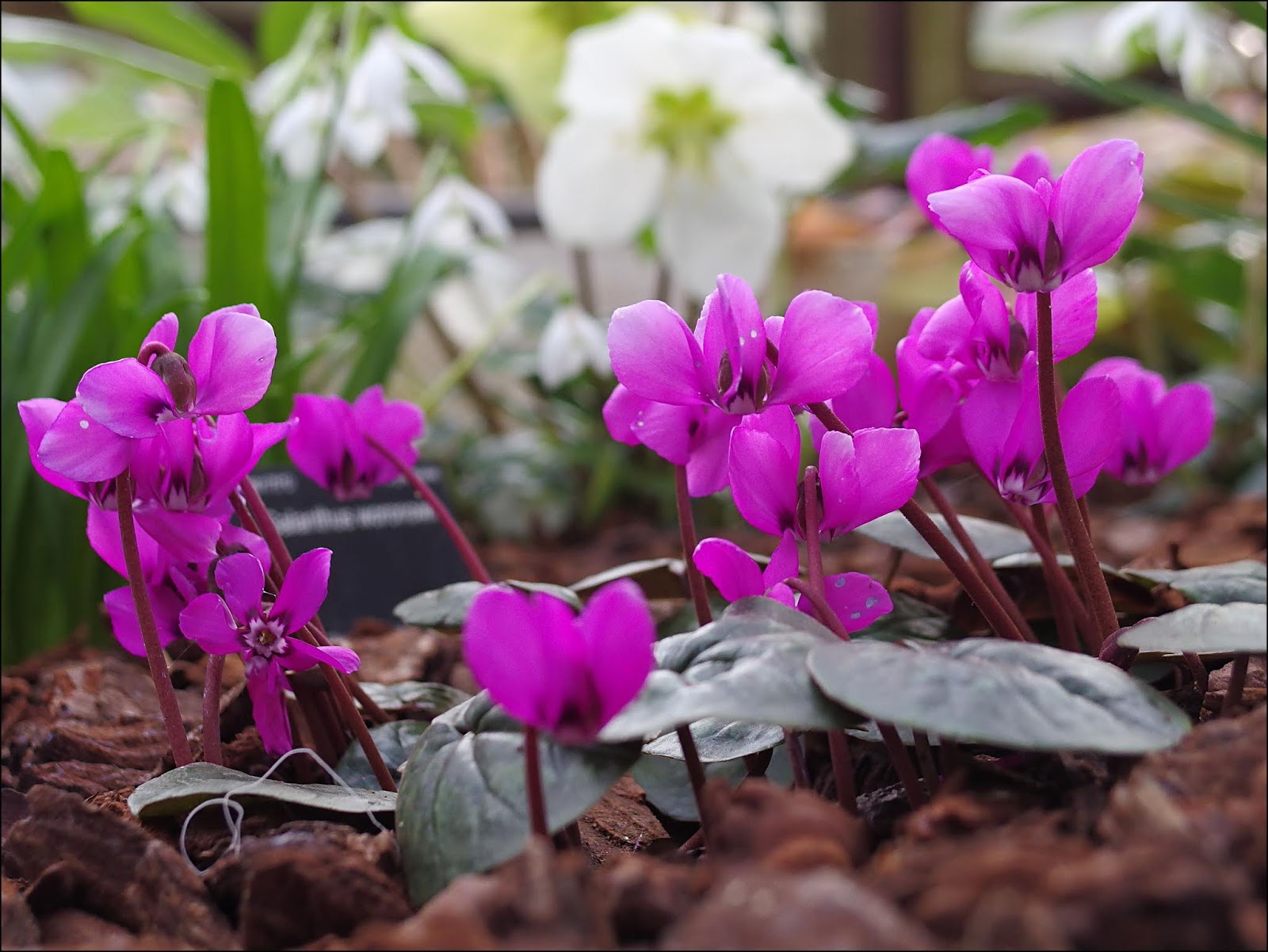
In here all is cool and calm. These mountain plants are small, neat and colourful - and some of my favourites.


Tropical Rainforests


The central part of the Glasshouse Range is taller and more spacious, as it attempts to enclose the rampant growth of the rainforest plants. Children love being "in the jungle" and a few junior botanists were in attendance this morning. Meanwhile a much older photographer was trying to prevent the lens fogging up in the warm, humid air.


Tropical Wetlands


No respite from the humidity in here! Besides the rampant greenery there was also this striking Bromeliad in flower.


Arid Lands


The final bay contains plants from deserts including many types of cacti. Then you can either go directly back out to the garden, or you can fight your way back through the plants in the connecting corridor.


Take care.


Wednesday, 6 February 2019

The Fair-Maids Of Frog End


If you should ever find yourself in the village of Shepreth, - which is pretty unlikely for most of you, I know - and more particularly in that part of it called Frog End, then look out for a footpath leading off at an angle from the road. As footpaths go this one is pretty useless, as it takes you through a field, then back to the same road you've just left. Not only that but it crosses a field that is often occupied by a large bull. It's not a popular route.


But between the road and the bull pasture there's a small (very small) triangular wood. And that's where the fair-maids hang out at this time of year.


Yes, February Fair-maids is just another name for Snowdrops and this little wood has more than its share of them.


It's an odd plant in that no one is really sure if it's a native British species or not, though they certainly look as natural as any wild flower and they seem to thrive in our climate.


The thing that makes botanists doubt their natural occurrence is that they hardly ever spread by producing seed, but mostly by subdividing as bulbs. There's just not enough insect life around to pollinate them in February.


They have long been regarded as symbols of purity by the Catholic Church, and many places where snowdrops are plentiful were the sites of old nunneries and priories. As these were abolished during the reign of Henry VIII the snowdrops have certainly been on these islands for many centuries.


This little wood though has been planted more recently. A small sign tells us that it's called Caroline's Corner and was planted in December 1987. More than that I can not tell you.


There are Winter Aconites here too. They are certainly not native to these shores, coming from Southern Europe, but have escaped from gardens and have made themselves very at home in our woodlands.


In Suffolk they are sometimes known as "Choirboys" from the collar of greenery surrounding the flowers like choirboys' ruffs. Fair-maids and Choirboys it is then.


Take care.


Monday, 4 February 2019

In Praise Of Old Wood

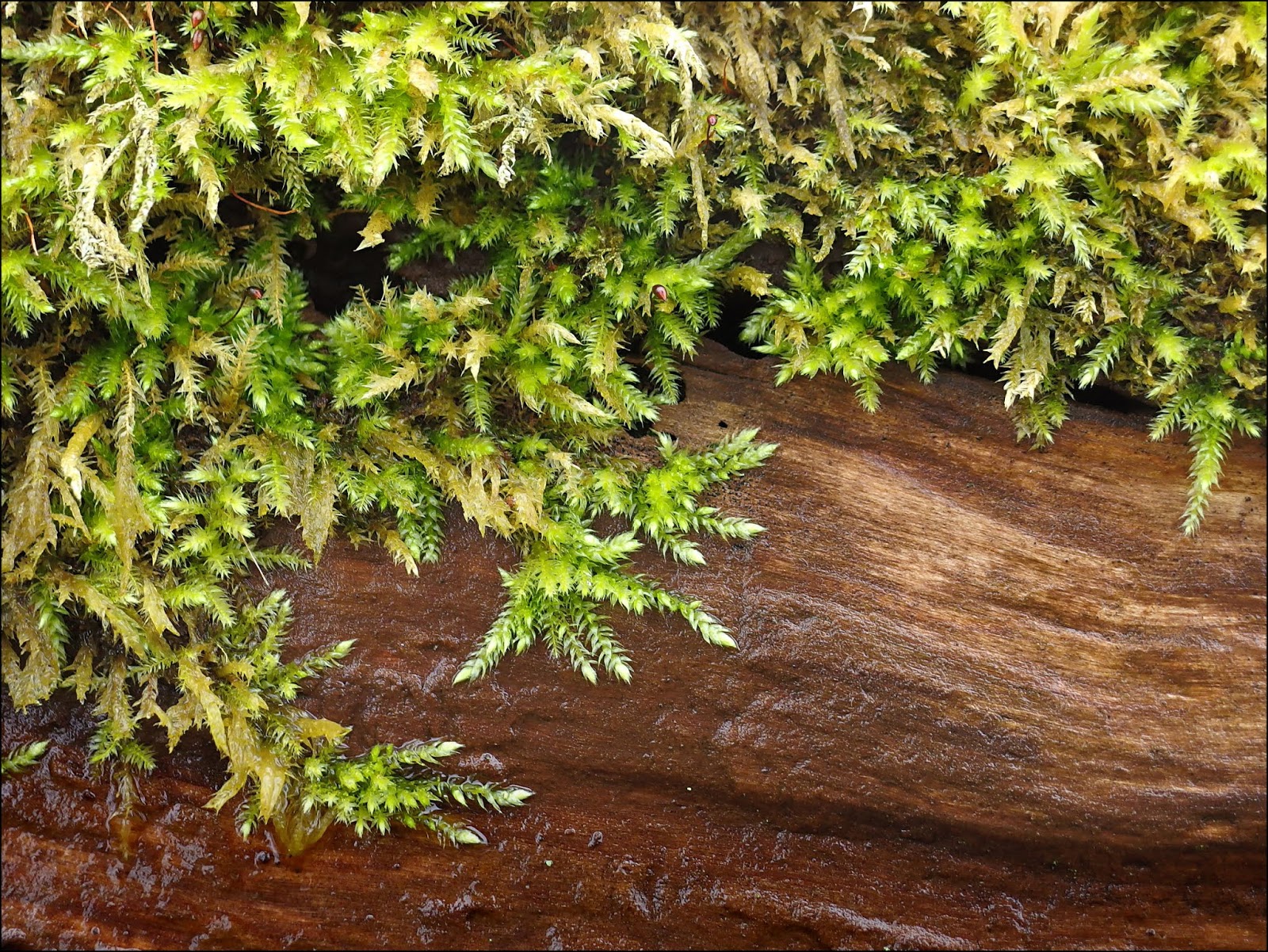
The snow and frost departed this morning, leaving in their wake muddy paths, wet grass and puddles. As I slithered along the forgotten lane I spied an old friend still lying on the field-edge. This old tree has been here for several years and is slowly returning to the earth from whence it came. At some time men came with saws and removed some of the branches, but they abandoned the task and left the bulky trunk behind. Now it's home for beetles and spiders. Various fungi have moved in and increasingly plants are growing from the decaying wood.

I made some photos of its contorted, rotting form some years ago and couldn't resist having another go today. Here are a few photos - intimate portraits or small landscapes - of old wood.


As you can see from some photos someone has tried to set fire to part of the old tree at some time but they've scarcely made any impression other than blackening some of it. If I remember I'll try to come back in Summer to see just what plants have managed to colonise the old wood.


Take care.


Friday, 1 February 2019

On A Winter's Morn

On Thursday morning the thermometer read -6 degrees C, fairly mild compared with the havoc being wrought by the Polar Vortex elsewhere in the world, but cold enough to add a sparkling frost to the remains of Wednesday's light snowfall. The low sun angled through the trees and illuminated the mist rising slowly from the little chalk-stream. Here are some suitably wintry scenes - and a hint of optimism in the last shot. Maybe Spring is on its way after all.


Take care.


Thursday, 31 January 2019

A Little Exploring

I had a bit of time to spare before the Molly Dancing began outside the Cutter Inn on Saturday, so why not do a little exploring?


My wandering footsteps soon rewarded me with this view of the magnificent Cathedral soaring above the other buildings. Unsurprisingly the Cathedral is a Grade I Listed Building, but perhaps a little less obviously the red telephone box in the foreground is also listed. And quite right too; it's one of the icons of England and was designed by Giles Gilbert Scott. Interestingly a lot of the nineteenth-century work to preserve the Cathedral was overseen by Giles's grandfather, Sir George Gilbert Scott.


However, a building being listed does not guarantee that lots of work will be undertaken to preserve it, or that anyone will go and look at it, or indeed that anyone cares. I was making my way through the streets of Ely to seek out something that 99.9% of visitors never see.


Ely has plenty of historic listed buildings, 197 of them in all, and 191 of those are within the central square mile. Most of them are domestic dwellings, but there are also many important buildings which are part of the Cathedral complex - oh, and that telephone box!


As I walked along I noticed this old wall. It's patched and battered appearance tells of a long and interesting history. It may surprise you to learn that this is a Listed Building too. It's the first sign that we are entering a small area that is rich with history.


Here a former gate or door has been blocked up using large, square-cut building stone. Now the Isle of Ely has many wonderful things but, being composed of clays and gravels, it doesn't have any good quality stone. These have clearly been brought here from elsewhere, not to block up and old gateway, but as part of a building which has been demolished. And an important building at that.


Peering over a gate and between the high hedges you can just see a building known as St John's Farmhouse. Although it's been converted into a farmhouse you can clearly see an infilled arch which looks like part of a religious building. The Ordnance Survey map shows, in its fancy Gothic print with which it denotes historic sites, "Hospitals remains of".


The Knights Of St John seem to be a curious lot, dividing their time between fighting crusades and building hospitals, which gives them their other name, the Knights Hospitaller. These two aims came about from both protecting pilgrims on their way to Jerusalem and tending for any who were sick or injured. And that's what we have here - the remains of two hospitals, St Mary's and St John's, which were united in the year 1240.


Just around the corner you'll find this building which, although it seems to be used as a barn today, is actually the former St John's Chapel. St John's Farmhouse, that we saw earlier, is believed to be part of the Chapel of St Mary. Presumably, in the absence of medical knowledge, the monks who ran the hospitals did a lot of praying for the souls of those they tried to care for.


In the mid-sixteenth century Henry VIII seized all the lands of the Knights Hospitaller along with every monastic foundation in the land, even though he had no use for the buildings and many fell into ruins, or, as here, were repurposed as agricultural buildings. You can clearly see the lancet windows of the chapel, albeit that they've been rather crudely bricked up. The door beneath has a much more workaday look to it.


This door, on the other hand, is obviously part of the old chapel. Both buildings, the farmhouse and the barn, as well as two other buildings on the site which can't be seen from the road, are listed as Grade I, because of their age and historical importance. And if you look carefully there's a strangely carved stone above that door arch. 


Here's a close-up of it. It's rather weathered but experts who have examined it reckon that it shows a man sitting astride an ox and blowing some kind of horn. To me it looks as though he's sitting on the ox backwards which makes it even stranger. No one has any idea of the significance of the carving, but it's thought by some to date from as long ago as the eighth century. Worth going a few steps out of your way to see.


Take care.