Friday, 18 October 2013

Lavenham - Half-Timbered Heaven

This post comes with a health warning for anyone who is either in love with - or who can't stand - half-timbered houses of picture-book perfection. What you're about to witness is but a fraction of the 250 photos I took today. You have been warned.


Lavenham in Suffolk is one of those places that you don't really believe till you visit it yourself - "OK so there are some old houses there, but I bet there's not as many as the photos make it look. Like it's probably only part of one street or something." Wrong, I'm afraid. There are over three hundred listed historic buildings in this tiny town, most of them worth a photograph. Not that this is some historical exhibit; it's still a busy little community and at this time of year there was hardly a tourist in sight - except me!


Here's how conservation is done:
The modern approach - we knock nearly everything down then we start to feel nostalgic for what we've lost and we pour huge amounts of money into maintaining impractical buildings.
The historic angle - when there's an economic boom people build the most elegant and sophisticated houses they can afford. Then when the bust comes they go on living in these buildings because they can't afford to build anything new.


Both kinds of conservation have taken place in Lavenham. But what kind of economic boom could have taken place here in sleepy Suffolk? A gold-rush? Growing narcotics? No, growing wool. Back in the fifteenth and sixteenth centuries wool made this the fourteenth richest town in England. It paid more taxes to the government than the much bigger cities of York and Lincoln. Local merchants made vast fortunes.


And the first thing they did with the money was to build grand houses in the tradition of the day. First they built a sturdy oak frame and then the spaces between the massive timbers were filled in with wattle and daub, a framework of wooden laths in-filled with clay. If you ever go inside one of these buildings and examine the amount of timber they used for the beams you'd think they might as well have made a completely wooden house!


In many of the buildings the upper storeys are "jettied", that is they stick out above the lower floor. All very much the height of sophistication at the time. Then Flemish refugees settled in Colchester in the neighbouring county of Essex; they were willing to work for less money and undercut the Lavenham producers. Along with the availability of cheap imports this led the market to collapse. Building of such fine houses ceased and no one in Lavenham ever had that kind of money again, so they just went on living in and repairing the old buildings.


 There seems to be a rule in Lavenham that no two buildings should be the same colour.


Perhaps the finest building, certainly the most photographed, is "The Guildhall". There were two kinds of guilds in Medieval Britain; the craft guilds which were associations of tradesmen, and the religious guilds which were a combination of fund-raising committee, insurance company, the welfare state and an amateur dramatics club. They did much good work on behalf of the whole community. Strangely this Guildhall is not built near the church, as was usual for religious guilds, but right next to the market place.


As befits such an important building there are beautifully carved windows and doors. The Guildhall now houses a museum, but more of that another time.


Nearby stands Little Hall which is also usually  open to the public, but not today.


At every turn yet more beautiful old buildings simply begged to be photographed! Many had interesting old doors or windows. Regular readers will have guessed that I spent a lot of time entranced by the windows! And, yes, you'll probably get to see some of them in the fullness of time!


There's only one thing to do when motorists insist on parking in front of the building you want to photograph - use the well-polished roof to provide an interesting reflection!


This fine old building has had the wattle and daub replaced with fancy brickwork. Brick noggin is what they call this kind of infilling. I think it's wonderful! (So did the people making the Harry Potter movies who used it as his childhood home, though I didn't know that when I photographed it).


Now I've been so busy taking these photographs for you that, despite passing the pub, I haven't had a drink all morning. But that building on the right makes me feel distinctly tipsy! I think I'd better steer clear of alcohol and get a nice cup of tea; which, as chance would have it, can be had in that rather wonky looking building. I bet it's a bit weird inside too.....


.......thought so.


Take care.


Tuesday, 15 October 2013

England The Green

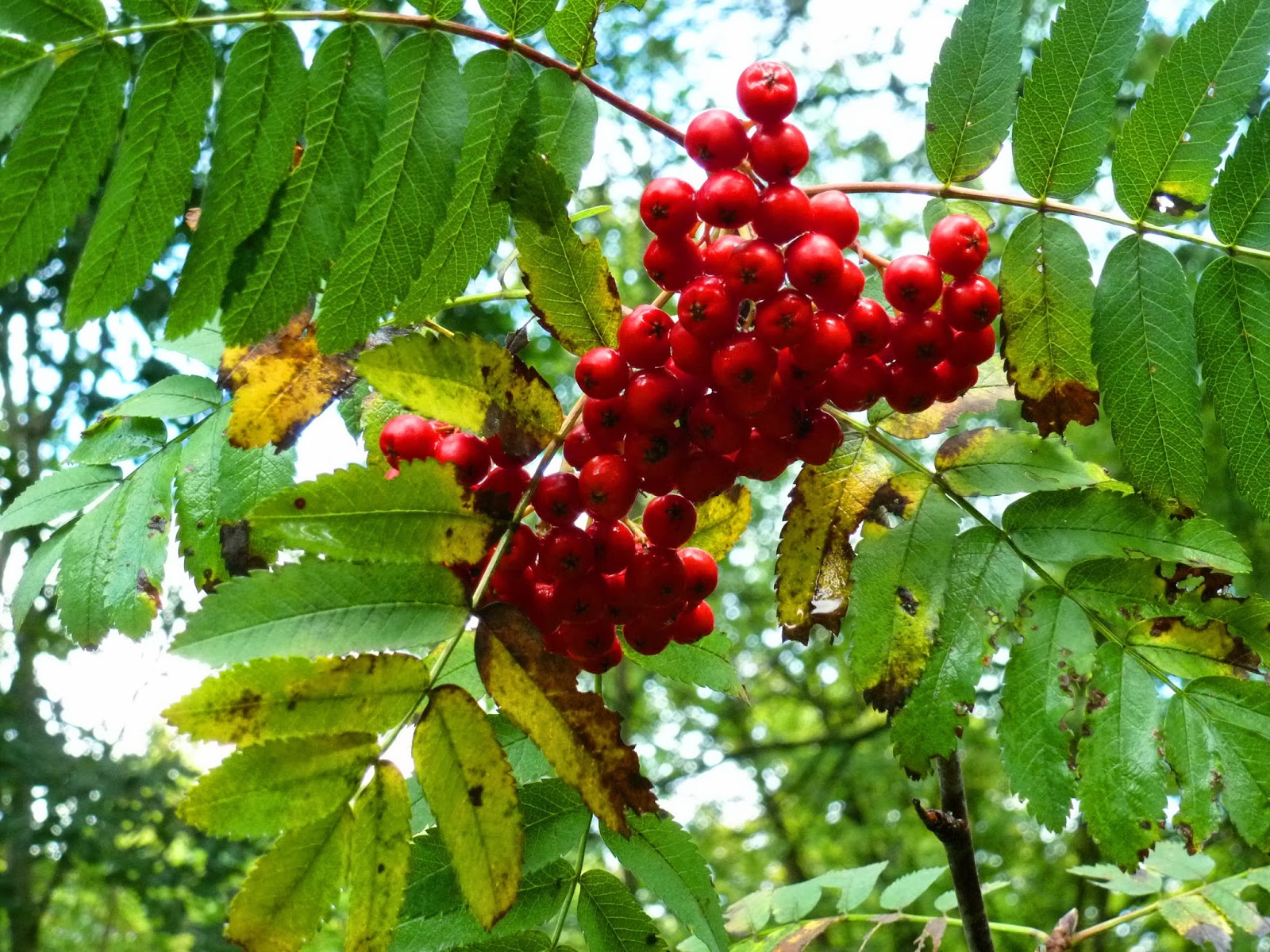
People keep commenting on how green everything is in my photos. Regular doses of rain is how it's done. But when the rain ceased for a while this afternoon I took up my camera and went for a stroll in a little wood, by a little stream, for a little while. Then it started raining again!


Take care.
(and take an umbrella!)


Sunday, 13 October 2013

Down Among The Beach Huts

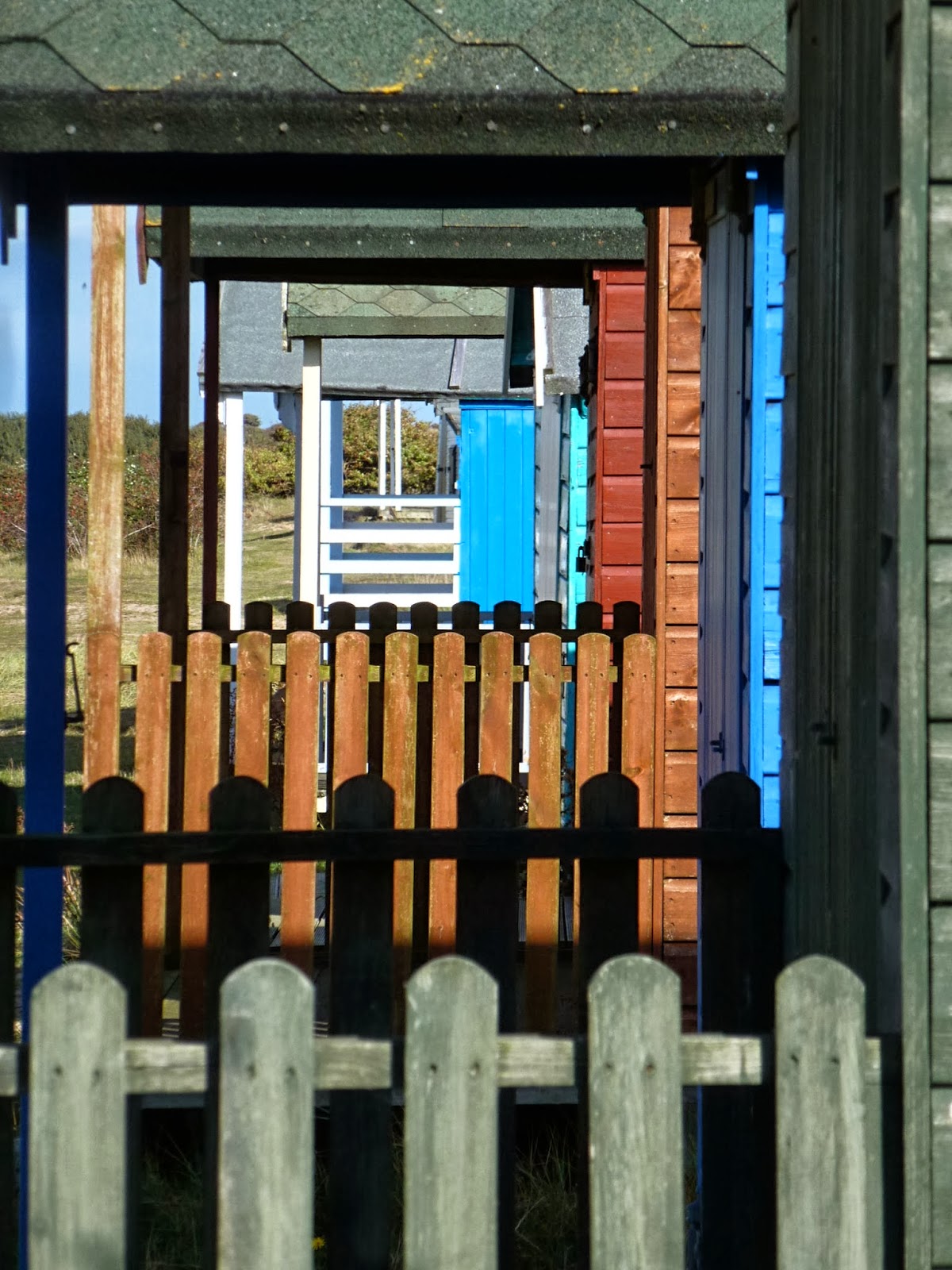
Some go to paddle in the sea, some to eat fish 'n' chips, some to relax on the beach. But I rarely go to the seaside without some time at least being spent photographing the beach huts. These little wooden shelters provide a place to stow all the things you might need for your time on the beach - buckets, spades, deckchairs, towels - as well as a place to change your clothes and brew a cuppa.  


They are often brightly coloured but here at Hunstanton they are more natural shades whether because of some by-law or just the inclination of the owners I don't know. Locally Hunstanton is pronounced Hunst'on, by the way. The poet SirJohn Betjeman insisted upon it, though with his pompous, plummy intonation he could scarcely be taken for a local. 


A little landscape in the lee of a hut.


Odd compositions pop up unexpectedly as the huts jostle side-by-side along the shore.


Cross the dunes for a view of  mysterious landscape-or-is-it-seascape of The Wash.


Take care.

Saturday, 12 October 2013

The Village Below The Castle

Huddled in the shadow of its mighty Norman castle stands the lovely little village of Castle Rising. The neat cottages are constructed of local stone and locally produced bricks and tiles which all have a warm russet tone giving the village a sense of architectural harmony.


In the background of the photo above stands the village church with its distinctive saddle-back tower. Lets start off by having a look in there.


The church was built in the middle of the twelfth century, probably just after the castle and with the same skilful masonry and view to permanence. It has been added to over the centuries and needed extensive renovation during Victorian times but even so much of the original work can still be seen. 


Right in the centre of the aisle stands a large and ancient font, though the lack of carving on two of its four sides suggests that it may have once stood in a corner with the undecorated sides against the walls. But what on earth are those three carved faces on the font anyway?


Grinning cats!!!

Don't ask me why. Maybe someone was just fond of cats. But there's also a rather nice stained glass window with a more usual Biblical theme.


Shepherds encountering the Angel, a memorial to Fulk Greville Howard who, along with his wife The Honourable Mary Howard, supervised the Victorian restoration. Out in the churchyard there's what looks like a Celtic cross....


but it's just a bit too perfect and well preserved to be really ancient. And indeed, closer inspection reveals it to date from 1880 and to have been erected to the memory of Greville Theophilus Howard.


The Howard family name crops up all over the village (they owned the castle too in case you hadn't guessed) and the building above, "The Hospital Of The Holy And Undivided Trinity", was built by Henry Howard between 1609 and 1614 as almshouses to accommodate widows who lived in the local area. 


And to this day the building fulfils the same function. But lets have a bit more of a wander and enjoy some more of the village and its gardens...


Just one more thing to show you...


...in medieval times life was rather different from today and trade took place not in shops but at outdoor markets and annual fairs which were held even in small settlements like Castle Rising. All that's left today is the old Market Cross standing in a green space which is where the market and fair were once held.

Take care.


Wednesday, 9 October 2013

Three Hundred (At Last)

Ain't it just like me to stop blogging when only two posts away from my 300th! Some posts have been visited over 1,000 times while others loiter friendless and alone. So here are some of the pictures which have been largely unseen - if "Stats" are to be believed.


 Meldreth Open Gardens - a very early outing.


Paxton Pits Nature reserve.
If those daisies look familiar it's because they're part of the title banner at the top of the page.


Berry Fen - with a bit of a tweak on the computer.


Bressingham Gardens in Norfolk - one of my Dad's favourite places.


The sky as I left off work one evening.


  And finally some death-defying snails...


What more can I say!

except
Take care