Sunday, 19 November 2017

The College That George Built


The George who built the college, or at least paid for it, was Sir George Downing who we found out about in the post "Two Families". He died childless in 1749 and left a will that named his cousins as beneficiaries, but only if they had children. If there were no heirs then the money was to pay for the new college. Since these cousins died before Sir George there should have been no argument, but others thought they might have a claim so litigation dragged on for decades and the college wasn't founded till 1800.


Apart from Downing no new colleges were founded in Cambridge between 1596 and 1869. Is it the youngest of the old colleges or the oldest of the young ones?


The architect William Wilkin drew up grand and ambitious designs for the college, however the funds had been much depleted by the arguments of the Downing family, who all thought they had a right to Sir George's fortune. In the end the only people to profit from the disputes were the lawyers. So the plans were abandoned when the money threatened to run out.


Part of the site was sold off and it wasn't till 1951 that the college got its chapel, which completed three sides of the huge court which was originally planned. It never has got its fourth side. The open, spacious design gives the site a much different feel from the more enclosed courts of other colleges.


Wilkin designed the college in neo-Classical style and a similar approach has been used for later buildings on the site. This is unusual for the colleges of Cambridge University who tend to build in the fashion of the day, making for interesting though sometimes jarring juxtapositions.


Irony Number One: I'd come here to photograph the college buildings because I'd temporarily tired of taking pictures of autumn colours, but that's what I ended up taking pictures of anyway!


Irony Number Two: Despite all the legal wrangling, where the money spent on lawyers threatened the founding of the college, it lists many leading judges amongst its alumni.


Above is part of the Howard Building, the most recent addition, though in very traditional style.


Famous people who went to Downing: Michael Winner (film director), John Cleese (comedian), Howard Jacobson (Booker Prize winning author), Michael Atherton (England cricket captain), Thandiwe Newton (actress), Hamish Henderson (Scottish folklorist and poet), Andy Hamilton (comedian), Aitzaz Ahsan (Pakistani politician), Quentin Blake (illustrator), Trevor Nunn (film and theatre director), Clive King (author of "Stig Of The Dump"!), Annie Vernon (World Rowing gold medallist), Jim Wallace (deputy First Minister of Scotland), Tom Udall (US senator) and so on and so on......


Who knows what the students of today will go on to achieve. It looks an idyllic place to study, though only one person was brave enough to be sitting outside in November!


The grounds of Downing College are usually open to the public (outside of examination times). In common with many of the colleges it does nothing to encourage you to have a look around, but no one ever stops you either.


Take care.


Saturday, 18 November 2017

Granta Valley Stroll

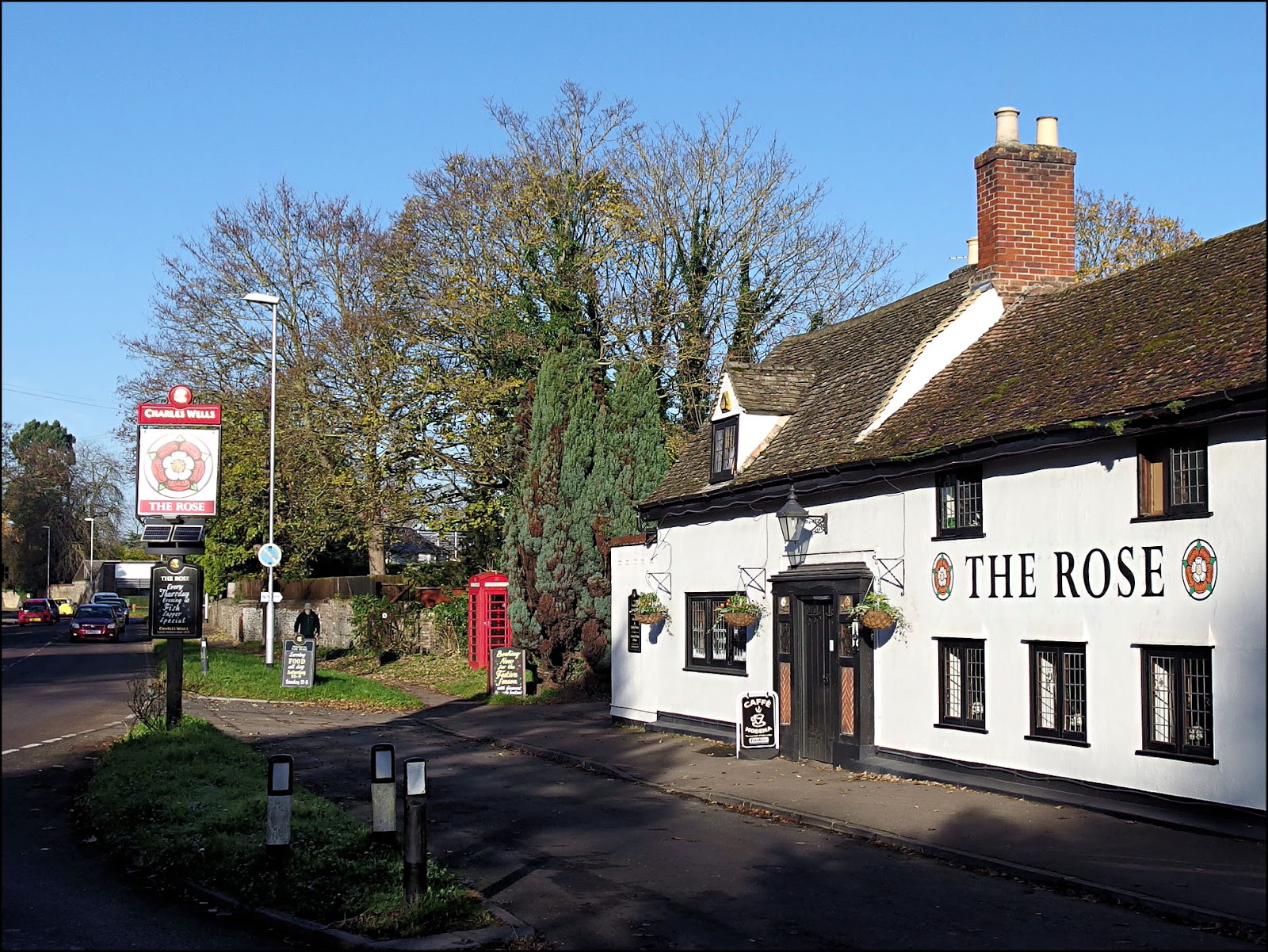
Despite starting and ending at hostelries this is not a pub-crawl but a country walk on a fine sunny November day.
I jumped off the bus at Stapleford
which is just a couple of miles from Cambridge. I know two things about the village:

Barack Obama is a direct descendent of one Thomas Blossom who left Stapleford some time in the 16th century.
The pub has very low beams which made it impossible for anyone of average height or above to hit double 20 on the dart board. 


After a mile or so between wide arable fields which didn't provide much interest for the camera, I found myself among meadows and plantations. The helpful landowner had provided several additional footpaths to explore.


Although the sun was shining down there were still signs of the overnight frost in a few shady places. 


Here's the River Granta, such as it is. Don't worry, it will be bigger when we've travelled upstream a bit. I know that sounds wrong but, trust me, it's true. You'll notice that there's not much of a valley either, just flat like most of Cambidgeshire. Which makes you wonder if there can be any hidden beauties here. Lets go and see.


As we approach the village of Babraham the landscape takes on a pastoral feel. 


This is Babraham Hall, part of the campus of The Babraham Institute which is a research and development facility for molecular biology. The river here has been straightened as part of the landscaping of the Hall grounds. There are also weirs across the river to hold back the flow and create the wider, more scenic watercourse we see today.


There is more to tell about Babraham (and the other villages on today's route) which lack of space precludes me from writing about here. No doubt it will turn up in later posts for those who stick with me. Now lets move on to the Abingtons.


Great and Little Abington are strangely quiet villages being off the modern through-routes. Little Abington in particular is very leafy and secluded; even the modern houses appear to have sprung up between the trees rather than standing in the open.


Above is just one of the photos I took of Great Abington church. The two churches, Great and Little Abington, both dedicated to St Mary, stand less than a quarter of a mile apart on opposite sides of the Granta.


We're on our way now across grassy meadows to Hildersham where there's an interesting church which you will of course see, by and by. But for now we'll just make do with......


.....a picture of the river which was taken, not with me standing in the river or even hanging down from the bridge, but from the place where the ford crosses the stream....


....and a photo of one of the many attractive old cottages.


Then we pass between paddocks and fields on our way to Linton. This patient little Shetland pony was interested in the strange man with the camera, but not enough to come over and investigate.

And here's the pub at the end of our travels, the Dog & Duck at Linton. I'd timed my walk rather too well - the next bus was due in just eight minutes - so I didn't have time to pop in and see Sam and Julie who run the establishment and serve some wonderful food and excellent beer.

I'm informed that next time I do this walk my brother's coming with me and we're going on a Wednesday, when the Dog & Duck do a special deal on their fish and chips!


But that's not quite the end of the day. As I made my way across the football field to my house I saw this....


Walker's Log:

    Start: Stapleford, Cambridgeshire 10:20
    End: Linton, Cambridgeshire 14:50
    Distance walked: 8.5 miles (13.7 Km) 
    Notable birds: Buzzard, Green Woodpecker, Kestrel, Jay, flocks of gulls and wood pigeons feeding on fields, Meadow Pipit, Yellowhammer, Linnet. 
    Mammals: Grey Squirrel.
    Farm animals: Sheep, Cows, Horses, Pony. 
    Churches: Babraham (locked), Little Abington (locked), Great Abington, Hidersham.
    People with dogs: 3
    Dogs with people: 4
    People just enjoying a walk: a group of 12 ramblers.
    Cyclists: 0
    Horse riders: 0

Take care.


Tuesday, 14 November 2017

A Morning Watching The Birds

My brother Les and I spent Monday morning at Lackford Lakes Bird reserve near Bury St Edmunds in Suffolk. It was bright and sunny but only a few degrees above freezing when we arrived. Here are  few photos:

Ducks and geese on the islands.


Footpath leading through woodland.


Shoveler,
a duck with an absurdly large beak
which it passes from side to side in the water
filtering out food particles.


A bit of autumn colour in places.


Sunlight on reeds and grasses.


The Lakes are another area of old gravel pits
returned to nature.


Oaks with a touch of autumn.


Regular readers will know
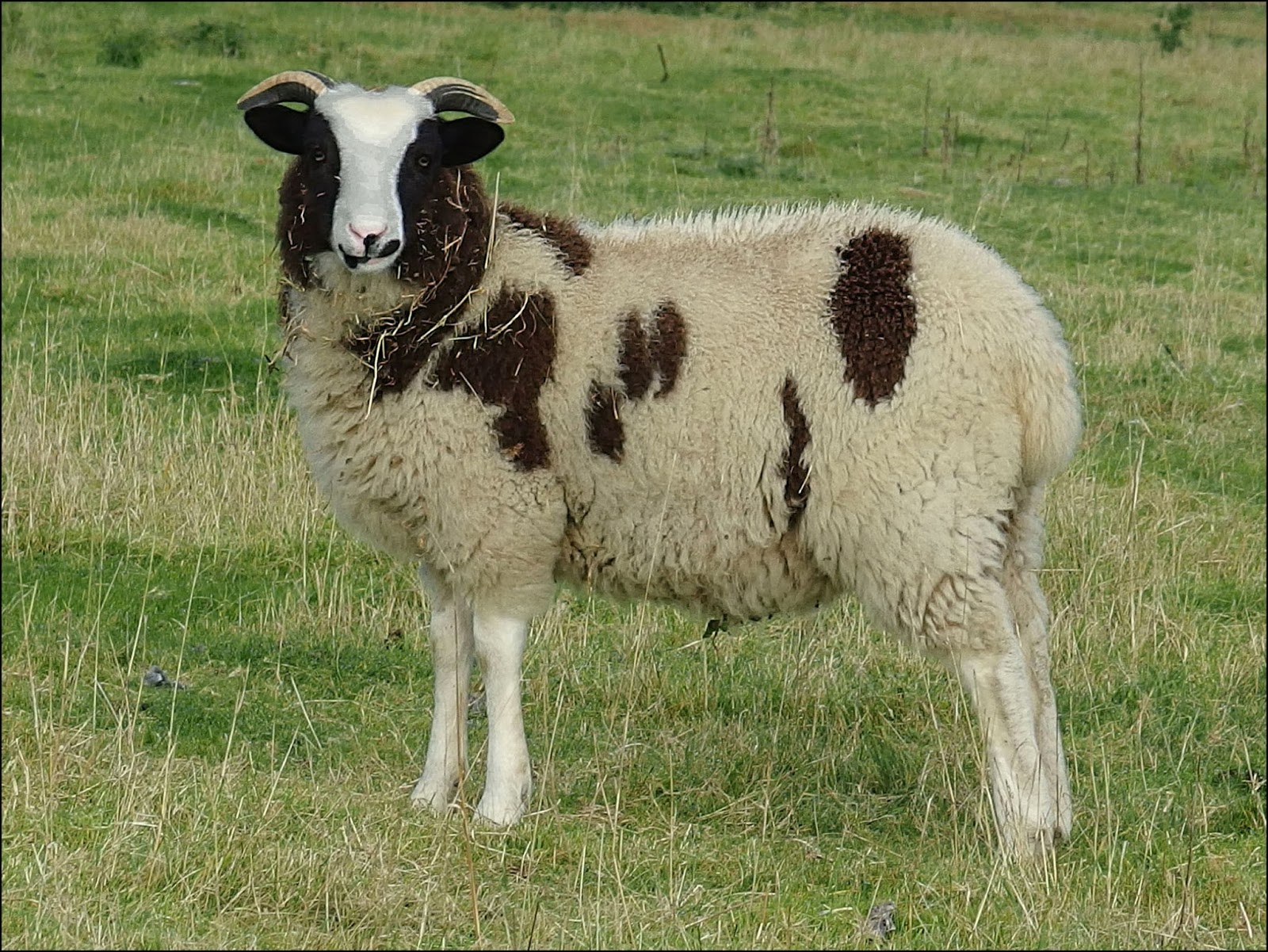
that these are Jacob sheep.


Would you like a list? Well, here's a list of what we managed to see: Blackbird, Robin, Dunnock, Wren, Blue Tit, Great Tit, Starling, Long-Tailed Tit, Rook, Magpie, Jay, Jackdaw, Wood Pigeon, Black-Headed Gull, Lesser Black-Backed Gull, Lapwing, Cormorant, Heron, Mute Swan, Greylag Goose, Canada Goose, Egyptian Goose, Gadwall, Wigeon, Shoveler, Goldeneye, Teal, Tufted Duck, Pochard, Mallard, Little Grebe, Great Crested Grebe, Coot, Moorhen, Pheasant, Snipe, Green Woodpecker, Kestrel, Chaffinch, Kingfisher.


Take care.


Sunday, 12 November 2017

Meet The Gang

Meet some of the more civilised and courteous citizens that I've encountered on my walks in the English countryside. Like their human counterparts they're a mixed bunch, some industrious, some more relaxed; some exotic and unfamiliar, others who can trace back their ancestry through the centuries; but all with their own stories to tell.


Konik Pony
These rough, tough little characters can be found at Wicken Fen Nature Reserve in Cambridgeshire. Hard-working and uncomplaining they munch the coarse vegetation and do a grand job for conservation on the fen. They're not locals though, coming originally from Poland where "konik" is the diminutive word for horse. They are a primitive-looking breed and are thought to be similar in appearance to the extinct Tarpan, the last of which died about a century ago. On cold misty days when the east wind blows across the flat landscape, tangling their long manes and tails, a more primordial scene would be hard to imagine.

Lincolnshire Longwool
Despite the hairstyle, which reminds me of Beyonce rather than anything from the English farmland, the Longwool's ancestry can be traced back to medieval Lincolnshire. In the eighteenth and nineteenth century, when many experiments in cross-breeding of different sheep were conducted, the Longwool became a valuable animal and breeding stock were exported to New Zealand, Australia and South America. One ram was sold in 1906 for the staggering sum of 1,450 guineas. By 1960 the popularity of the Longwool had declined to such an extent that it only survived through the perseverance of just three farmers. Nowadays there are only about 1,000 breeding ewes and the breed is considered "at risk".


Berkshire
I like Berkshires. With their turned-up snouts, alert ears and white markings about their face they always look active and intelligent. Although they're a rare breed today they were extremely popular in the early 1900s for their firm, juicy meat. Surprisingly, for a pig breed, they are well represented in literature. The very fat sow, known as the Empress Of Blandings, features in several of P G Wodehouse's tales from Blandings; Beatrix Potter's Pig-Wig is a Berkshire sow, while Napoleon in Orwell's Animal Farm is described as a Berkshire boar. A mixed reputation then.


English Longhorn
English Longhorns originate from "oop north" in the Craven area of North Yorkshire where they were first of all used as draught animals, pulling carts and ploughs. As with sheep a lot of improvement of the breed took place during the industrial revolution, motivated by the need to provide food for the increasing urban population. Longhorns were found to be suitable for milk and beef as well. Unlike Texas Longhorns the horns of the English variety tend to curve around, framing the face.


 Bluefaced Leicester
Did you ever see such a noble, aristocratic profile as the Bluefaced Leicester sheep? Unlike the others we've met these are not a threatened breed, even though their numbers are not great. They were developed by the sheep-breeder Robert Bakewell in the eighteenth century and are used mainly today to crossbreed with various hill ewes to produce what are known, confusingly, as "mules". Looking after the Blueface is notoriously tricky so they tend to exist in small herds kept to produce the rams to father the "mules" which are so hardy and useful.


Tamworth
If you meet with a ginger pig it's almost certainly a Tamworth. They're quite a primitive breed, not at all close genetically to modern pigs but having more in common with the wild boar. As you might expect they're more hardy than most breeds but usually only have small litters of 6 or 7 young rather than the 10 to 12 you'd expect from commercial breeds. There are about 300 Tamworth breeding sows in England today.


Jacob Sheep
Some people, including the Jacob Sheep Society, think this is the oldest surviving breed of farm animal in the world and believe them to be descended from the speckled and spotted sheep that Jacob selected from Laban's flock in Biblical times. From there they were imported into Spain and some folk even claim that they arrived in this country having swum ashore from wrecked ships of the Spanish Armada. (Did they really take live sheep with them?). In recent years the Jacob has been much improved by selective breeding making them a better commercial proposition so that they are no longer an endangered species. They are unusual in that they can have four or even six horns. The word for having lots of horns is "polycerate" - a useful addition to anyone's vocabulary, I'm sure.


Take care.