Sunday, 9 February 2020

Frosty Morning, Cosy Evening

You've probably realised by now, if you read this blog regularly, that I love a frosty morning. And if there's a little early morning fog to leave a rime on the branches then so much the better. We had a couple of mornings like that during the last week.....


******
The rest of my day was less picturesque - a walk to the farm shop and the Co-op shop in the next village and some cleaning and tidying up. In the evening I made myself a cup of tea and listened to some music.

One of the things I liked about work was that my colleagues were such a varied lot; most of them younger than me as well as several from different countries. Between them they introduced me to a lot of music that might otherwise have slipped by unnoticed. Here's a singer-songwriter from Manchester called Josephine Oniyama.....


As far as I know she's only made one album, "Portrait", which was released in 2012. It's a very classy recording and it would be a pity if there are not several more to follow. Since then there's been a collaboration with the band Travis and she provided vocals on a nu-jazz album by trumpeter Matthew Halsall. Lets hear the title song from her own album, but heard here with just her acoustic guitar in the unlikely surroundings of EMI's old vinyl record factory in Hayes.....


Then I went to bed.


Take care.

Thursday, 6 February 2020

Down In Deepest Suffolk

The Suffolk Coast and Heaths is an area which is poorly served by public transport, so it remained relatively unknown to me, till my brother retired from work and now occasionally drives the two of us to the RSPB bird reserve at Minsmere for a day's walking and birdwatching.


Many would say that this is the best spot for birds in England and it certainly has a wide range of landscapes with something to please most birds. Reedbeds, damp pastures, shingle banks, heathland, shallow scrapes and woodland are all represented in a fairly compact area. At this time of year there are many different species of duck to be seen.


This elegant fellow is a Pintail (I'll let you work out how it got its name). It's all style and grace - a duck that's been to finishing school, for sure! A few pairs nest in the UK but mostly they just come here for the winter - and welcome visitors they are.


And these shallow bodies of water are just right for them. It may surprise you that this is a man-made landscape, but one that's designed specifically with birds in mind. Before the Second World War this land had been drained for agriculture, but it was hastily returned to marshland to make any invasion along this stretch of coast more difficult. The Nazis didn't come but the birds did!


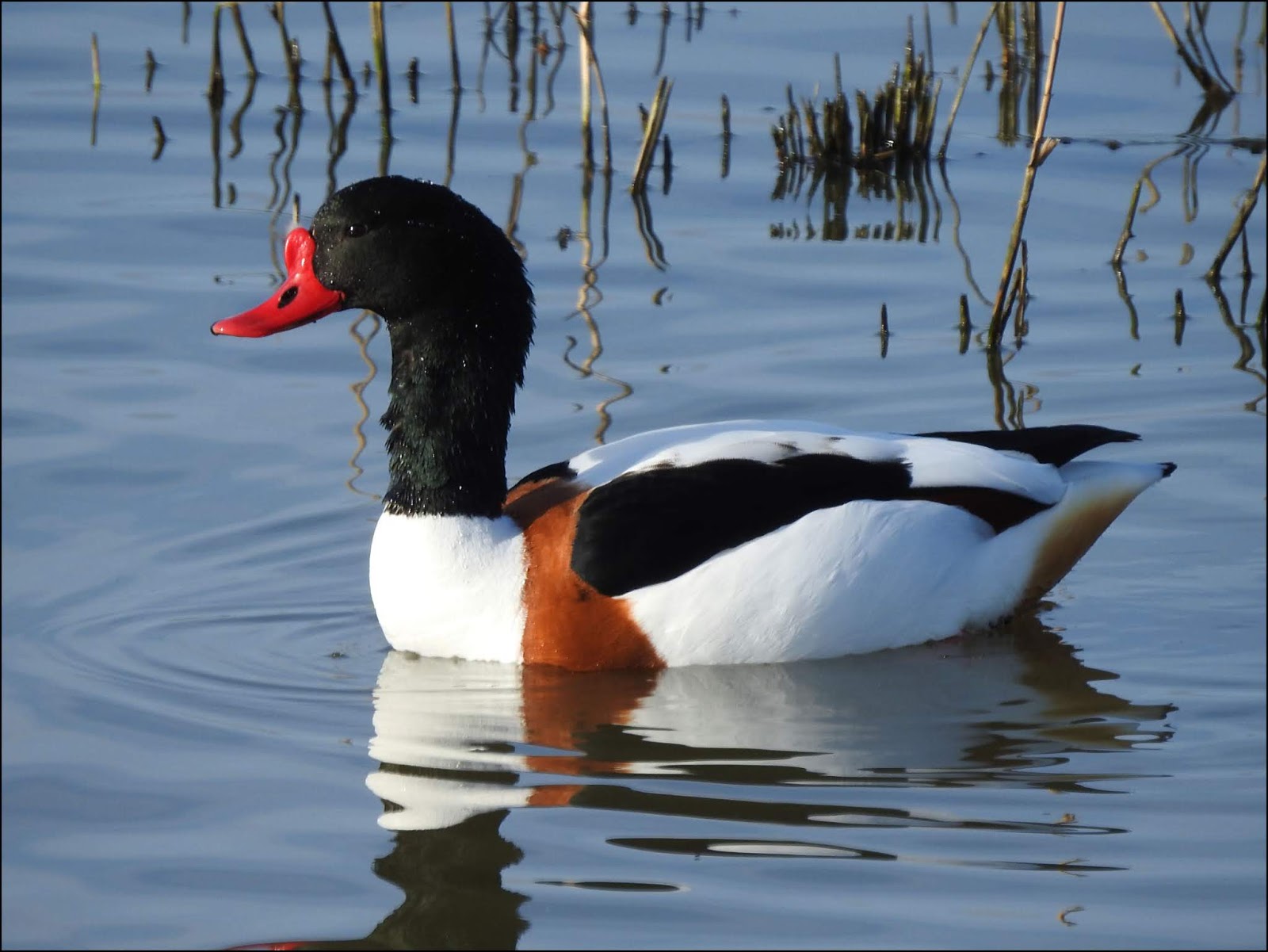
The Shelduck is a big, handsome duck - as large as some geese - and is the novice birdwatcher's friend as it can hardly be mistaken for anything else. There were ten species of duck on the scrapes yesterday, including one Green Winged Teal, a visitor from North America. Not a very entertaining guest though; it spent the whole time we were there sound asleep as far away from the hides as it could get. I dutifully focussed the scope on it and ticked it off on the year-list, but I can't say it was particularly exciting to make its acquaintance.


There were plenty of gulls on the scrapes too and luckily there was an expert on hand to point out the more interesting ones.


This, I'm reliably informed, is an immature Caspian Gull. People who are experts on gulls are a special breed indeed, telling gulls and all their immature variations apart is a seemingly impossible skill to master. And every few years they make it harder by sub-dividing the various species into more and more subtle distinctions. Shelducks are a lot easier!


One of the few waders on show yesterday were Lapwings, familiar farmland birds during my childhood but less numerous these days. We always called them Peewits, from the call they make, while the bird guides of the time told us that we should call them Green Plovers. Now everyone seems to have settled on Lapwing.


There's so much to see that you can almost forget that you're on the coast and actually there was very little wildlife on the ocen wave. A few Cormorants were fishing and every now and again a seal popped its head up for a quick look around. Around lunchtime we went to the nearest pub, the Eel's Foot at Eastbridge for a meal and a pint.


(Photo from Les's phone)
On the ceiling above us was a reminder that the BBC's Springwatch nature programme was based here in 2014. All the team involved in the filming have signed their names.


After lunch we explored the reedbeds but the Bitterns which we'd hoped to see were hiding deep among the reeds. A couple of Marsh Harriers made the odd hunting sortie but prefered to just sit and watch from the tops of distant bushes. You'll just have to believe me that that's a Marsh Harrier!


But I really don't care; I just like taking photographs of the elusive beauty of reedbeds. Over on the horizon though was the looming shape of Sizewell B nuclear power station and, while I'm dreaming of reedbeds, EDF Energy are dreaming about their plans for Sizewell C, a development which the RSPB fear will have a negative impact on their conservation work.


Sorry, I can't help myself! Earlier in the day, as we passed a smaller reedbed, we'd heard the unmistakable sounds of Water Rails - these secretive birds make a noise just like a squealing pig, it really can't be anything else (unless there's an actual pig in there of course!).


Making our way back through the wood we spotted a Blue Tit taking a drink from a puddle. They are one of our most familiar birds as they turn up anywhere that you hang out a bird feeder.


A Grey Squirrel was sunning himself on a branch.


Back at the café at the visitor centre we sat and watched the birds on the feeders, mostly Blue Tits, Great Tits and Chaffinches (below).


A birdwatcher's list:

Magpie, Carrion Crow, Rook, Jackdaw, Wood Pigeon, Pheasant, Chaffinch, Goldfinch, Robin, Blackbird, Starling, Great Tit, Blue Tit, Long-Tailed Tit, Coal Tit, Wren, Water Rail (heard), Pintail, Gadwall, Teal, Shelduck, Green Winged Teal, Shoveler, Mallard, Tufted Duck, Wigeon, Moorhen, Coot, Snipe, Lapwing, Grey Heron, Little Egret, Marsh Harrier, Buzzard, Kestrel, Cormorant, Stonechat, Reed Bunting, Mute Swan, Black-Headed Gull, Caspian Gull, Lesser Black-Backed Gull, Herring Gull, Common Gull, Greylag Goose.

Animals: Rabbit, Muntjac, Roe Deer, Grey Squirrel, Grey Seal.


Take care.


Wednesday, 5 February 2020

Frontages

I got rather carried away photographing the various shop fronts along Mill Road. As you'll see, many nations of the world are represented and there's plenty of competition to sell you a bicycle! It was a Sunday afternoon so the street was relatively quiet - during the week the traffic (vehicular and pedestrian) makes it difficult to get clear views across the street.


Take care.


Monday, 3 February 2020

Cambridge's Forgotten Heritage

If we'd walked here a couple of hundred years ago we'd be on a narrow track passing between fields on our way to the village of Cherry Hinton. We'd have passed a windmill that would eventually give this busy modern road its name - Mill Road. Things started to change when the railway reached Cambridge and this land was used for cheap housing for those who worked on the railway and in its associated industries. 


You might think that no one would want to live in these small, cramped houses today and that the shops here would not survive in this modern world. Maybe it's time to tear it all down and start again. But you'd be wrong on several counts.


These houses are some of the most expensive in the city - in terms of price per square foot at least. Although they were very cramped for the large families of the Victorian era, they are now snapped up by young professionals who value their nearness to the city centre and the vibrant multi-cultural atmosphere. They also support many of the small alternative shops and international cafes and restaurants along Mill Road.


However, although the future of this historic area looks healthy for the time being, there are problems with some of the public buildings. You see, there are only four listed buildings in this whole area. So while some buildings, like St Barnabas Church (above) are protected by planning laws, there are many others which are part of our history but have no such protection.


There are a number of industrial buildings like George Bolton's Warehouse which are surely worth keeping as part of the cityscape. Bolton moved to Cambridge from Hertfordshire in the mid 1800s, initially to work as a porter on the railway but soon set up in business as a general carrier (someone who took goods from the railway station to their intended destinations). Bolton and his sons expanded into building and owning a brickworks, but they were mainly known as furniture removers. The warehouse was used for storing furniture and is now converted to offices.


This fine red-brick building, on the corner of Mill Road and Gwydir Street, was once the public library. It was used for 20 years by the Hindu community as a place of worship until they were unable to fund the necessary repairs. The city council plan make the building some kind of community centre once it's been repaired.


The building above however now provides a mixture of accommodation for elderly people. But for many years it was Cambridge's maternity hospital. Wikipedia will tell you that Douglas Adams, author of The Hitchhiker's Guide To The Galaxy was born here, though it doesn't mention that I first saw the light of day there just a few months later. Its original purpose, when it was built in 1838, was as the Cambridge Union Workhouse to house the poor of the town.


Above the door of this building it says "Lifecraft", which is the name of a user-led organisation to help those with mental health problems. But above that it says "The Bath House" and that's what it was built as in 1927. It provided baths for those whose homes lacked the necessary facilities and, perhaps surprisingly, it still operated into the 1960s.


Right down at the far end of Mill Road we find Brookfields Hospital. This was built as a Hospital for Infectious Diseases from 1885. At the time "germ theory" was not fully understood and most diseases were thought to be caused by "bad air". For this reason it was built at the eastern edge of the town so that the miasma was not blown back into the town.


This building looks a bit sick and neglected too. It's known as The Romsey Town Labour Club and reminds us of a time when this area of Cambridge was nicknamed Little Russia because of the strong left-wing views of many of the people here; the union movement being very strong amongst those employed on the railway and its affiliated industries. These workers lacked funds but had many expert builders among them and the Labour Club was built entirely by voluntary labour. The beautifully carved crest above the door, presumably the work of one of Cambridge's many stone-masons, shows all the different tools used by the craftsmen who worked on the building.


The man responsible for much of the organisation of the Club was Billy Briggs, a local man who had left school at the age of fifteen to work on the railways. He held all kinds of voluntary and political posts and reckoned he knew everyone in Cambridge. He went on to become Cambridge's first Labour mayor. He was a man of firm opinions and demanded that there should be a bar in the Club so workers could get a drink after a hard day's labour. There were many Working Men's Clubs set up around this time, but Romsey Labour Club was perhaps unique in that it always allowed women to join too - you've guessed it, it was at the insistence of Billy Briggs. How sad that this building is so neglected.


Just along the road, the Conservative Salisbury Club is also in need of a facelift, though it is still an active club with snooker and pool tables as well as a function room.


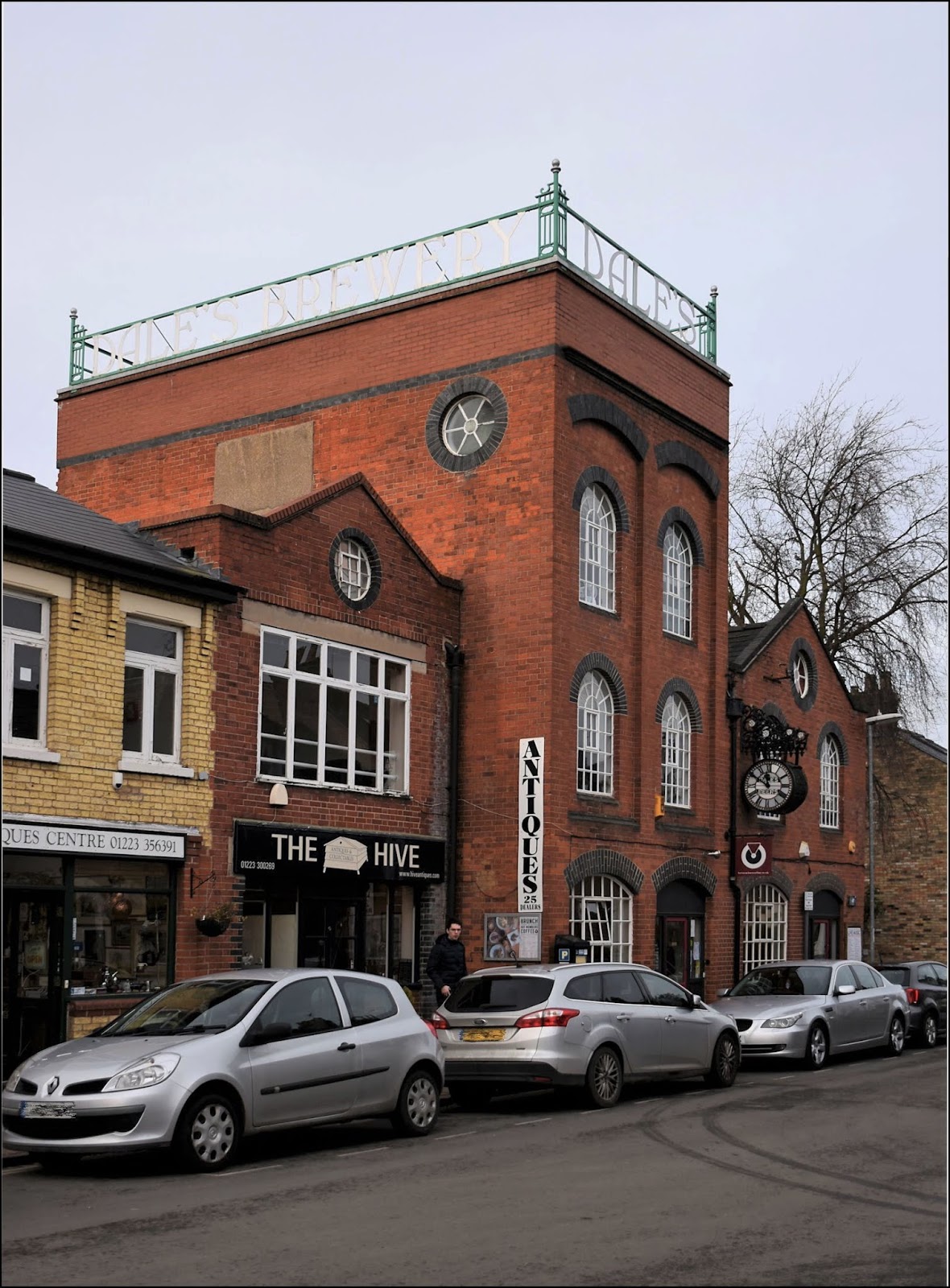
I could go on, for there are many more interesting buildings of similar vintage along the length of Mill Road and its many side turnings. Above is the old Dales Brewery building which seems to be thriving as an antiques shop and a coffee bar. But are there any new buildings being built round here?


Yes, indeed. The golden dome is Cambridge's new mosque which now stands proudly near the far end of Mill Road. You can visit it at any time when prayers are not in progress and I intend to take a tour there later in the year. 


Take care.


Friday, 31 January 2020

A Country Churchyard


A wander around a graveyard on a gloomy day. You could be forgiven for assuming that I'm in a low mood at the moment, but you'd be wrong. Photography doesn't work like that. Whereas painters project their thoughts on to the canvas and manipulate the light, colour and composition to express their feelings, photographers have to be sensitive to their environment and make pictures from what is there. So here is my response to the melancholy that seemed to pervade this morning's damp, chilly air.


Now lets find some music for what's left of Friday.....

The Music Maker Relief Foundation is a US charity which helps ageing and impoverished musicians, finding them gigs, grants and sometimes recording them too. There's a whole batch of videos on YouTube but this is one of my favourites. Here is the laid back Captain Luke accompanied on upside-down left-handed guitar by Cool John Ferguson....


As the good Captain says "YeeeeeaaaaAAH!...…......…...that's it"


Take care.