Saturday, 29 June 2019

The Cool Of The Morning

As the weather man was threatening a hot afternoon today, I was out for my walk at six this morning. For those of you who weren't around (I didn't see anyone at all for the first hour) here is what it looked like.

There was an early mist over the fields but the sun was soon burning through.


Spiders had been busy constructing their webs in the fields. 


I photographed this thatched cottage back in January when 
there was frost and a little snow around. 
The red garage doors are inscribed "Melbourn Fire Engine", 
it was built in 1862 to house the firefighting equipment for the villages of 
Melbourn and Meldreth.


I made my way to Stockbridge Meadows. 
There were dozens of rabbits grazing, 
though none were willing to have their photos taken.


A Muntjac Deer was only slightly more bold.


Delicate webs on the Teasels.


This is usually a busy road, 
though not as busy as it was before the village was by-passed.


It was already getting warmer
so I walked through the wood in the shade.


The roadside verges are growing luxuriantly.


A crop that's turning gold and some fieldside poppies.
That midsummer feeling.


The distant row of poplars give a Provençal feel to a Cambridgeshire field.


It's just half-past eight
 and already the bees and other insects are collecting nectar
 from these poppies growing alongside the railway.
Look closely and see how many insects you can find!


Take care.


Monday, 24 June 2019

Chalk And Cheese

Just south-east of Cambridge are a couple of small nature reserves and they made a pleasant jaunt for me on a rather warm and humid Sunday morning. The two reserves have a very different history and look completely different too. Lets go and investigate...

Cherry Hinton Chalk Pit


Just inside the present city boundary lies an abandoned chalk quarry. Material from the quarry was used to build the colleges and other buildings in Cambridge and also to make lime for agricultural use. Nothing has been extracted from these works since the 1980s and the quarry is being allowed to return to a more natural state.


The site gives botanists an opportunity to study how plants colonise what was originally bare chalk. As you can see there's already quite a floral show, though with a fairly limited range of species. Most of the yellow in the scene above is Bird's-Foot Trefoil, or Eggs-and-Bacon as it's sometimes known from the colour of its flowers. It's a naturally occurring plant in England whereas elsewhere it can be a troublesome invasive species. But there are other yellow flowers here too.....


Above is Yellow-Wort, a plant often found on chalky soils.


The chalk itself was laid down when this area was underwater, about 100 million years ago. It consists mainly of the microscopic remains of algae and unsurprisingly it took a long while to accumulate - about 1cm every 1,000 years, it's been calculated! Chalk is usually white, but here it contains layers that are tinted yellow or pink by impurities too. You can just about make out these in the photo above.


Various Dandelion-like Hawkweeds are also colonising this unpromising environment. And those cliffs around the quarry edge are home to nesting Peregrine Falcons. They are also sometimes spotted on the University's buildings in the centre of Cambridge as they await their lunch, a nice fat pigeon perhaps, to flutter into view.


One part of the reserve has not seen any quarrying activity for a couple of centuries and has, over the years, developed into an area of woodland. It was here that I came across a stand of St John's Wort (below).


Then it was time to pedal on to....

Fulbourn Fen

Nothing could be more different from the recovering landscape of the chalk-pits than the unimproved meadowland of Fulbourn Fen. Although I couldn't resist calling the post "Chalk And Cheese" I don't really know if cheese was produced from the milk of the animals that have grazed this area for centuries, but it seems likely.


These traditionally managed hay meadows have retained their original glory, having never been ploughed or "improved" by the application of chemical fertilizers or pesticides. Although they are still privately owned, they are managed with the help of the Wildlife Trust and the public are allowed to roam around on the network of paths and enjoy the scenery.


Wildflowers grow here in abundance and there are plenty of bees and butterflies taking advantage of the nectar supply.


In summer the fields are reasonably dry with just a few small ponds to supply water for livestock.


In one of the wetter parts Wild Iris or Flags were blooming, but these are not the flowers that attract the human visitors...


Orchids, particularly the Southern Marsh Orchid, grow in hundreds in one of the meadows. And there are smaller numbers of at least five other species of orchid.


There are still several large trees spreading their shade for the benefit of the cattle that graze here in the heat of summer. On Sunday there were a couple of families picnicking here - young naturalists in the making perhaps. And there by the fence was my faithful "horse" waiting to take me home.


Take care.


Thursday, 20 June 2019

Turned Out Nice Again

England's capricious weather suddenly decided to be friendly and obliging for a while this morning. Therefore my brother and I set out to walk part of a route I'd completed back in early November 2018. You can, should you so desire, check out that post here, or else you might like to just it back and enjoy the stunning greenness that ensues after a few days of English rain.


setting out from Lilley


farm track
and farm machinery


fieldside poppies


ascending Warden Hill


Les enjoying views over the town of Luton


more views of lovely Luton, innit?


view with two poppies


view with a distant line of well-spaced trees


Meadow Brown butterfly


dark clouds gathering once more


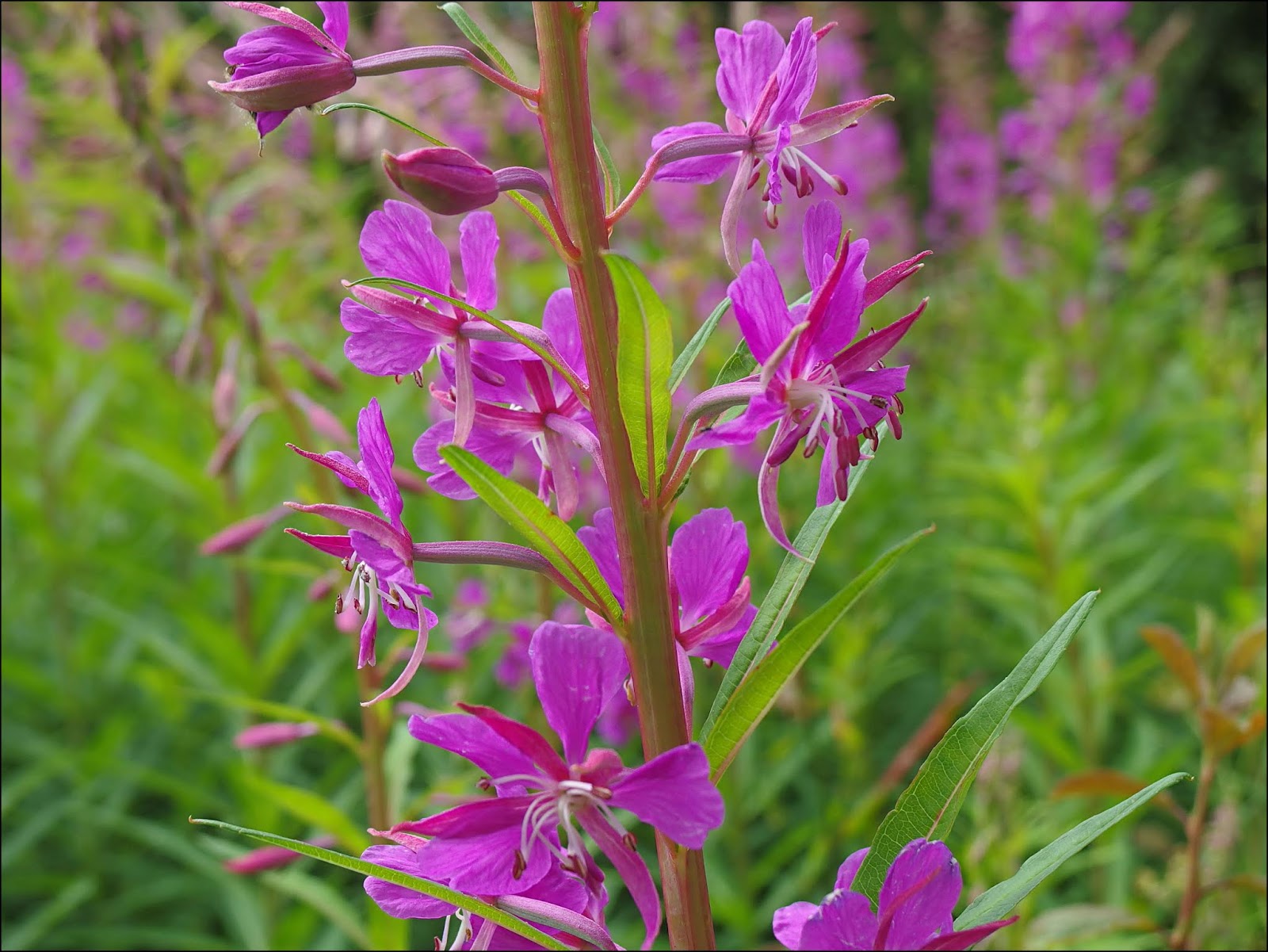
a patch of Rosebay Willowherb by the side of the track


wonderful garden as we re-entered Lilley.

Take care.


Tuesday, 18 June 2019

June's Garden

Like any other garden, the University's Botanic Garden in Cambridge would be nothing without the tireless efforts of an army of workers.


No, not the human workers, though they are certainly busy at this time of year too, but the countless thousands of bees who slave away from dawn till dusk, collecting nectar and pollinating the plants.


And they were certainly out in force yesterday - making honey while the sun shines, I suppose.


All along in front of the Glasshouse Range, in one of the most prominent positions on the site, are the specially created Bee Borders, full of the plants that are most attractive to the busy insects.


And there are hives full of honey bees right in among the flowers; accommodation on the job, so as to speak.


The borders are not only ideal for the bees, they look very pretty too, and the hope is that visitors will be inspired to plant up their own gardens with similar flowers. There's even a list of suitable plants which you can pick up on your way out.


The flowers you'll see here vary throughout the summer, but there is a constant supply of nectar for the bees. At present the borders have a strong vertical emphasis created mainly by the towering spikes of foxgloves and delphiniums.


As well as the important research carried out by the University, the gardens also provide information boards to enlighten less knowledgeable visitors.


Although many of these boards are clearly designed with children in mind, grown-up explorers can learn a lot too. Well, did you know that plants like foxgloves have a lower lip specially designed as a landing-pad for bees? Not only is it a convenient perch, but it has cone-shaped cells which give the bee a better grip as it alights on the plant.


Yes, there are lots of other plants too; I just got rather carried away with photographing foxgloves.


All in all it's a paradise where bees and other pollinating insects can live out their brief but important lives - and it's an extremely pleasant place for us less industrious individuals to while away an hour or two.


Human visitors come here from all over the world and yesterday there was also an insect that had made quite an impressive journey on beautiful but delicate wings...


It's a Painted Lady butterfly, the first I've seen this year, looking rather washed out and tatty after flying over from mainland Europe. Apparently there's been quite an influx of them along the coast in the last week or two. Maybe we'll have another bumper year for them during 2019.


Take care.