In order to locate this Anchor you need to head towards the village of Sutton-In-The-Isle, then turn off a street with the unlikely name of The America and trundle down Bury Lane. Here you will find The Anchor, a traditional pub which nowadays, I believe, also operates as a cafe and guesthouse. Last time I passed this way the place had closed down, but it appears to have been rescued.

The building dates from the seventeenth century, when it was constructed to house workers who were digging the New Bedford River, which was part of the scheme to drain the Fens. We can set off on our walk southwards along the top of the flood bank that those men built, alongside the river.

Over most of its length this man-made river follows a ruler-straight line, but here it's forced to curve around the slightly higher land which is the most westerly edge of the Isle Of Ely. The lands over the other side of the waterway are the Ouse Washes, a large area which is allowed to flood in times of high rainfall. The road beyond The Anchor is often under water in winter.


Over on the arable fields on our left there was a large flock of Whooper Swans (only part of which is shown here). Sorry about the rather misty picture but that's how conditions were, though I hope it gives you some idea of the Fens in winter. Have pity on the poor bird-watcher who has to scan through the entire flock, trying to find the rarer Bewick's Swans, which are only slightly smaller and have less yellow on their beaks. There weren't any!

Above is a fine example of a Fenland footbridge - no wonder that in times past the fenmen used to prefer to vault across the drains and ditches on long poles!
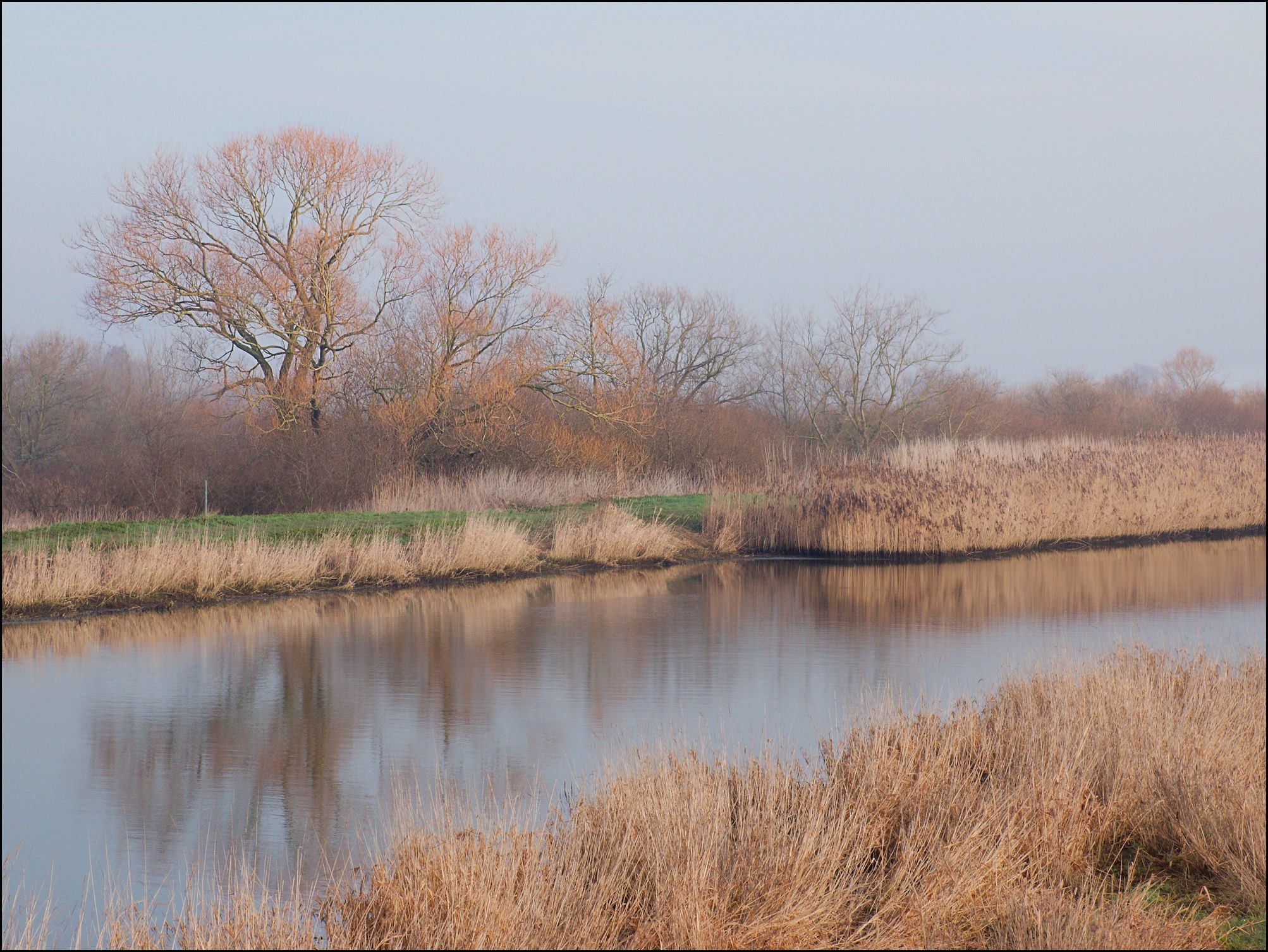

As long as it's not too muddy, which it wasn't, the floodbank makes for excellent walking - dead flat, no need for a map and raised up enough to see over the surrounding countryside. And plenty of excuses to stop to look for birds - whether they're there or not!

A long, narrow pit beneath the floodbank is used for fishing and the "scarecrow" you can see is, I imagine, an attempt to keep Herons from stealing the fish. The fishing platforms look to me to be both unnecessary and unsafe.

The Washes here appeared to us to be exactly the same as those we'd seen earlier, but not to the birds, who shunned these soggy meadows as being distinctly inferior.
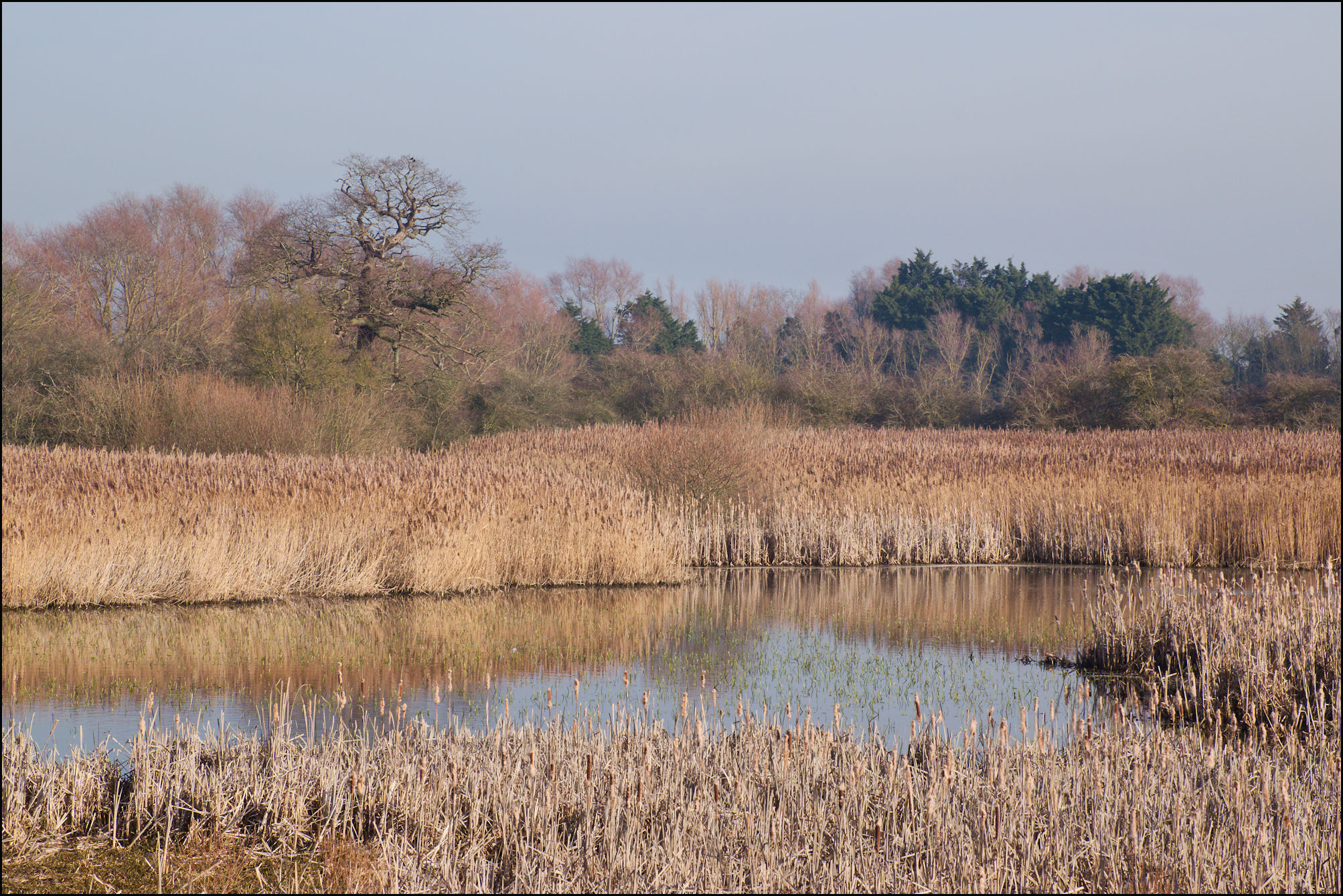


Another view of the reeds at the Gault Hole. I just can't resist photographing reeds in winter.

Someone asked recently whether I carried the big tripods and telescopes so adored by proper birdwatchers. The answer is no, just binoculars, and the small 'scope and cheap monopod that Les is using above. I think he'd just found a Grey Wagtail.

And here we are, as if by magic, back at The Anchor. No, we didn't go in as it showed no sign of being open and, besides, we still had some of that hot chocolate left in the flask.
Take care.