Friday, 27 October 2017

When The Gravel's All Gone

A glorious, bright day.
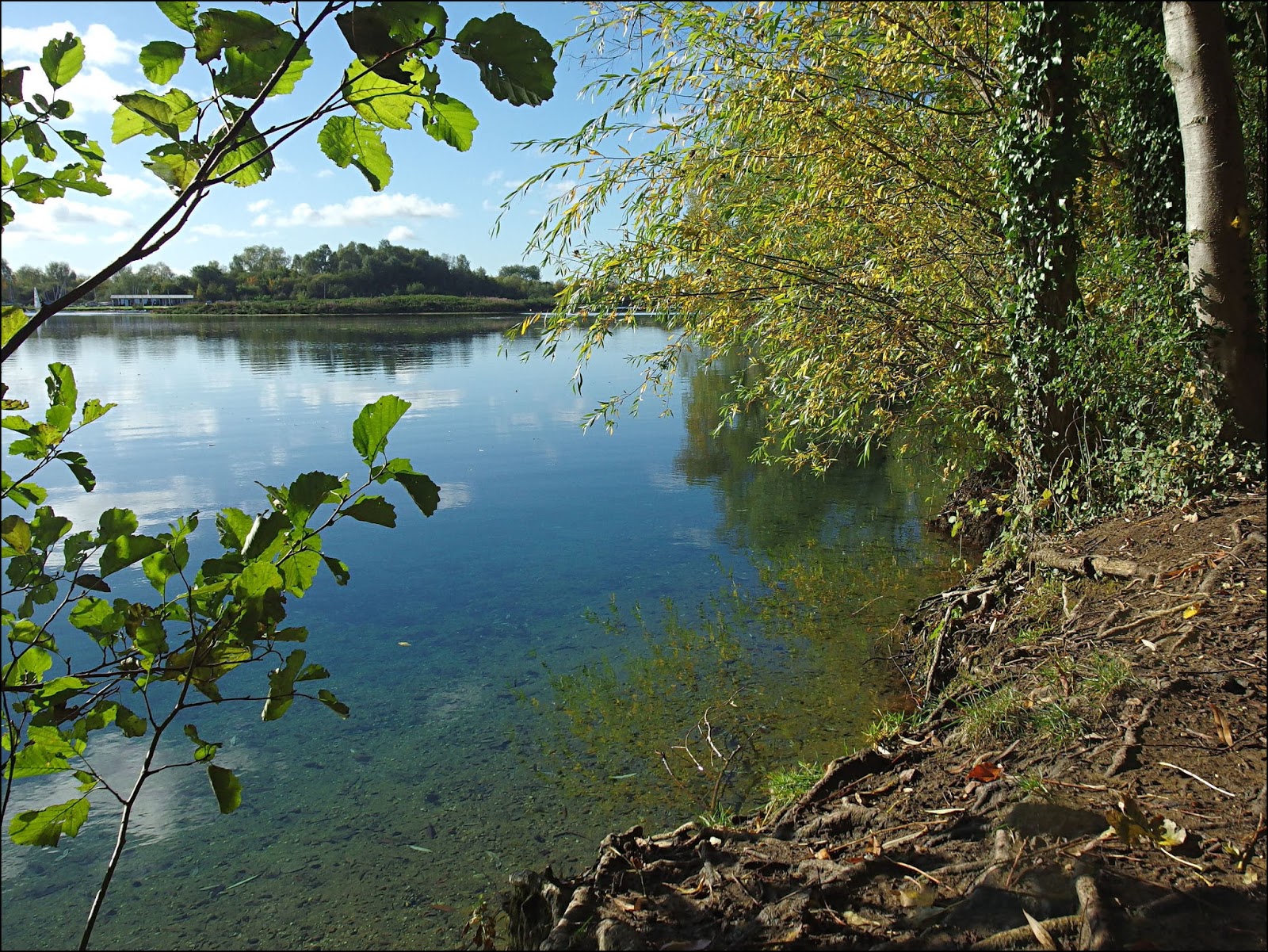
Lets have a wander around Paxton Pits Nature Reserve.


Yes, I said "Pits",
these are not natural lakes but old gravel pits
in the valley of the River Great Ouse.


Now the gravel and sand have been extracted
they've been allowed to flood and provide a great home for wildlife,
even if today the birds were mostly Greylag Geese, Mute Swans,
Wigeon, Gadwall and assorted gulls.


The Silver Birches know that it's Autumn
though most of the trees haven't realised yet!


The whole valley is riddled with old workings,
now taken over once more by nature.


There are even woodlands
along the lake margins.


Gravel and sand extraction is still going on nearby
though a peacefuller scene is hard to imagine.


A few late flowers 
including Crown Vetch,
a straggling, untidy plant but with attractive flowers.


The gravel company partly finances the environmental work here,
compensation to the community for having to put up with 
the quarrying.


A cracking good place to walk
even when, like today, the birds were not co-operating.


That's not one of the pits,
that's the River Great Ouse itself.
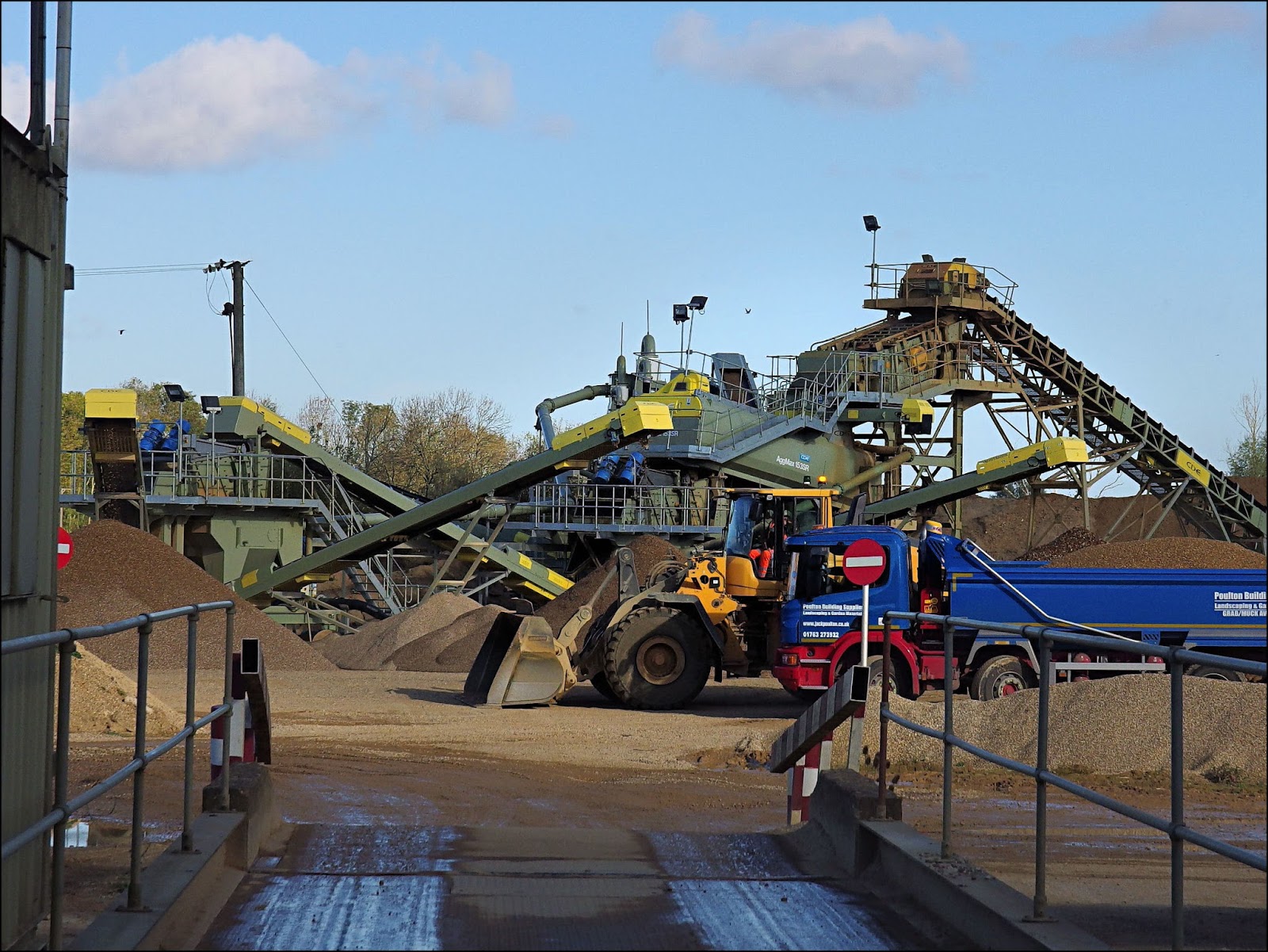

And finally...
I used to care for a young man who was very fond of "diggers".
If he knew I'd been out walking and birdwatching he always used to ask if I'd 
photographed any for him - I usually had.
Though he sadly passed away when he was just sixteen
I still find myself photographing the diggers whenever I come this way.


Take care.


Monday, 23 October 2017

The Inquisitive Traveller

More bits and pieces that I've collected on my recent travels:

The Village Pump


The village water pump used to be the central meeting place in many English villages, the place where news and gossip was shared while the collecting buckets of water for the family's use. This rather elaborate one stands in Watton-at-Stone in Hertfordshire and dates from the nineteenth century. It's rather grander than most with its own little shelter. The ornate pump is said to have started life as the barrel of a cannon, so has completed the transformation from killer to saviour.


For The Good Of The Community


The shop and Post Office in the village of Houghton proudly announces that it is "Community owned". In these days when everything has to make a profit many villages are losing many of their amenities. Although it's OK for those who can jump in their cars and shop in the nearest town, many people, especially the elderly, rely on local services. In another village the church has taken on running the Post Office and a tea-room. In the next village to mine the villagers have worked together to keep their local pub open.


The Day Who Played Many A Game


The grave of George Game Day is a rather grand affair standing in the churchyard in St Ives. Back in the days when only landowners could vote in parliamentary elections Mr Day hit on an ingenious scheme. He bought a small farm and then sold it off as 35 separate pieces of land, thereby creating 35 new landowners who would join with him in voting for the Whig candidate. Such shenanigans landed him in court but the scandal did not impede his political career and he became one of the most influential men in the town.


A Footpath Runs Through It


Visitors to these shores are often surprised at the number of footpaths and rights of way which are available to the walker. Although rules about diverting paths have been relaxed a bit lately it is still very difficult to legally prevent people from going where they've been going "since time immemorial". In the case of the building above, they got permission to build over the path but had to leave a convenient passage to allow walkers to go through.


The Village Blacksmith 


Just outside Houghton Church  is the grave of the village blacksmith, Thomas Garner, inscribed with a suitable rhyme:

My sledge and hammers be declined
My bellows too have lost their wind
My fires extinct, my forge decay'd,
My vice is in the dust all laid.
My coal is spent, my iron gone,
My nails are drove, my work is done.
My fire dried corpse here lies at rest,
My soul smoke-like soars to be blest


Take care.


Friday, 20 October 2017

The Beauties Of Gloom, Drizzle And Decay

A murky and drab end to the week here in Eastern England. The sensible thing to do would be to curl up with a good book, or even tidy up the house, but I was seized by a sudden desire to go out for a walk. Once outside I realised that, because I'd been busy looking after my late mother for the last year or so, it was a long time since I'd been out on such a day. Strange to say I really enjoyed myself and found several small beacons of beauty shining through the mist and drizzle.

The old shed down by the River Mel is still there


Little fun guys climbing up on each other's shoulders
to climb up the tree


Leaves like red tears


A small bridge being gobbled up by the vegetation


Trees joining hands in a country dance
(or poles which have grown up around a tree-stump cut off at ground level)


A tiny yellow parasol
throws up a little sunshine


Field edge


Polished tree trunks and golden flakes


A small but determined backpacker


A feast for winter-visiting birds


Richness and variety


Better late than never! A buttercup bravely blooming in late October down on Shepreth Moor.


Take care.


Thursday, 19 October 2017

Ebenezer's Answer

Any empathetic, socially-aware person living in England back in 1900 could see that there was something going seriously wrong with our towns and cities. Now anyone could say that today of course, but that doesn't mean it's easy to put it right. And it wasn't any easier then, but one man grappled with the problem and came up with a possible answer - Letchworth Garden City (!), a whole new town, built from scratch, according to more enlightened principles.


That man was Ebenezer Howard. He was not a town planner and he was not an architect, in fact he was a failed farmer and newspaper reporter who found work as a shorthand typist. But in his spare time he mixed with socialists, reformers and intellectuals. And, also in his spare time, he wrote a book called "Garden Cities Of To-Morrow" in which he set forth his vision for a better way of urban living.


Within a few years his ideas gathered momentum and his prototype new town began to be built. Most of the key features still remain - provision of public spaces, low density housing, separation of traffic and pedestrians, ideal population of around 30,000, decent housing free of slums. It also seems to be supplied with more fountains than any other town* of comparable size! (*Although it likes to refer to itself as Letchworth Garden City it's not really a city at all).


Other ideas have faded over the years: initially the project was heavily funded by the Quakers who wanted the town to be alcohol-free. There was even a temperance pub, The Skittles Inn, though the idea never really caught on and many residents went to nearby villages for alcoholic refreshment. The Skittles is now an adult education centre. There are also a few pubs in town, but not as many as in other similar sized places.


The Spirella Company Of Great Britain, manufacturer of corsets, was one of the firms which was attracted to the new town. As you can see it doesn't look like a traditional factory from the outside, but more like a country house. Even so new methods like re-inforced concrete and steel frames were used in the construction (of the buildings, silly, not the corsets!)  And inside  it was even more revolutionary, offering baths, showers, a library, gymnastics classes, free eye-tests and even bicycle repairs for its workforce.


The most interesting feature of Letchworth today is its wide variety of architectural styles from the early part of the twentieth century. Although it hardly rates as a tourist attraction at the present time I can foresee a time when it will. I'm old enough to remember when we ignored or, worse, destroyed Victorian architecture, though now we cherish it - these things go in cycles. Above is the Art Deco cinema which still has many original features despite being largely refurbished inside.


And below is the Town Hall...


....built in 1935.
.

And that's a detail from roof of The Arcade, a pedestrianised indoor shopping area. The kind of thing you can find in any town today, though at the time a radical innovation.

But you won't find anything like this anywhere else in the world...


It's called The Cloisters and was built for the Quaker, Miss Annie Jane Lawrence, who founded a college for the study of psychology in the building - or rather around the building for Miss Lawrence was an advocate of outdoor living and insisted that her students had healthy bodies and healthy minds. Her motives for founding the school were that her students should go out into the world and effect the social change which she thought desirable. 

She also organised concerts and organ recitals on a grand scale to enrich the lives of her students and the people of the town.

The whole building was constructed according to the principles of the Arts and Crafts movement and cost her a fortune. The building was taken over by the army at the outbreak of WWII and Miss Lawrence's health was too frail to ever resurrect her dream again.


In a slightly less ambitious way the town still promotes the outdoor life through its parks like Norton Common and many of the main thoroughfares are still like walking through forest glades...


But one person's dream.....


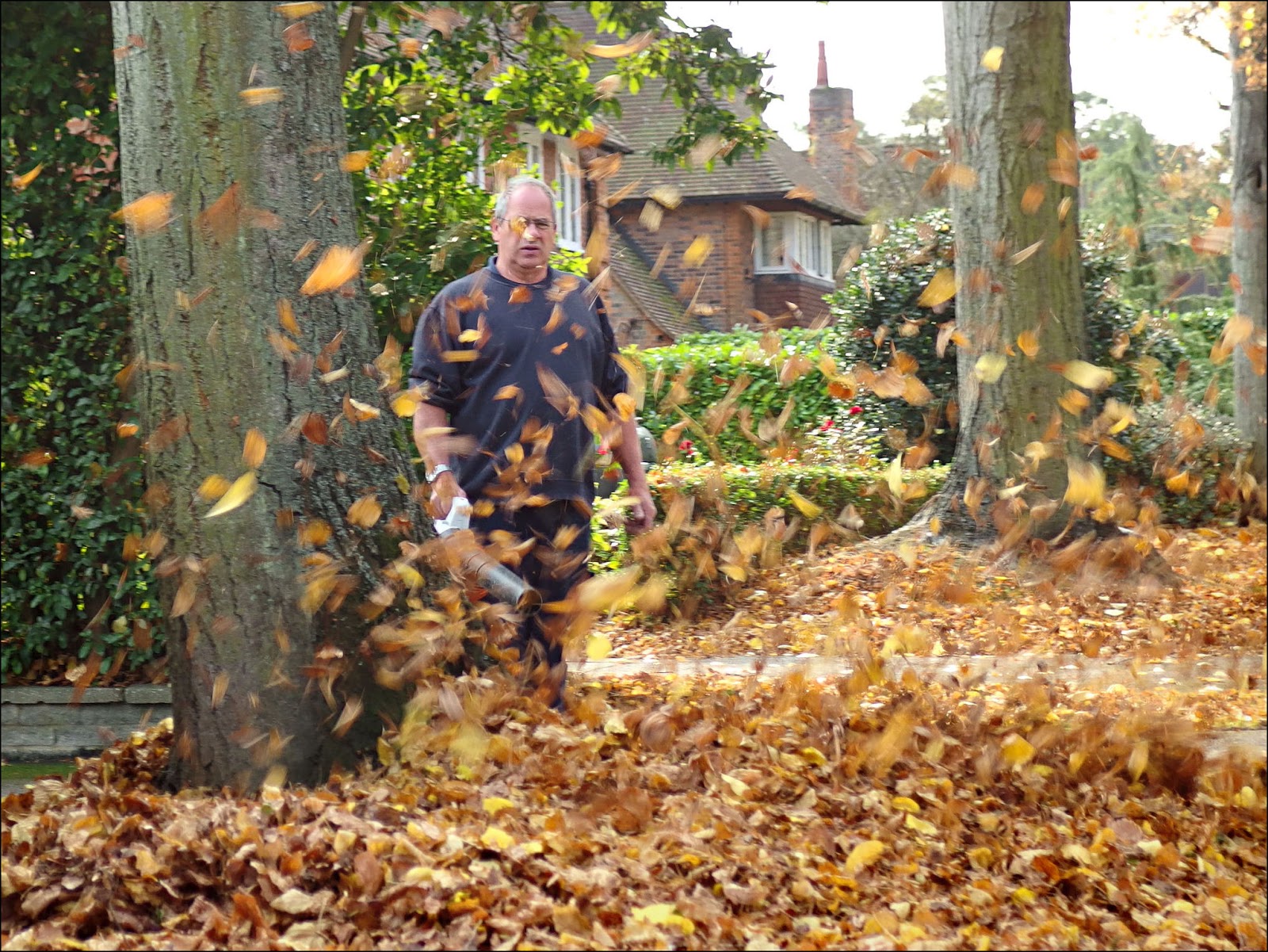
...can be someone else's nightmare! There are plenty of leaves to clear up each Autumn!


There's a lot of very stylish houses built in the manner favoured in the early decades of the twentieth century. And at very stylish prices too; I didn't find out where the poorer folk live.


But this unassuming dwelling....


....was for a time the home of Ebenezer Howard himself. I'm sure a lot of modern planners and architects would benefit from living in the buildings that they create.


Now this you might be forgiven for thinking is an old cottage that existed before the town was built - but you'd be wrong. This is the drawing office which Barry Parker, one of the chief architects responsible for building houses in the town, had built for himself. To me it seems an absurd anachronism, but it shows the traditional ideas which underpinned the building of the town.


I always like to show you historic sites of cultural significance. So here, my friends, is the UK's oldest gyratory traffic flow system or roundabout, dating from 1909 (circa). 


And finally, for no real reason other than to demonstrate that the town is not without a sense of humour, is the wonderfully-named outlet for re-cycling of antique furniture, "Mackay's Junk & Disorderly"!


Take care.


Tuesday, 17 October 2017

A Man Called Potto

In the village of Houghton, which we passed through in the last post, stands a bust to the memory of Potto Brown.


Potto Brown 1797-1871

With his upright posture, severe countenance and facial whiskers he looks like the head of a powerful Victorian family, which in the context of a small village he was. 


We'll get on to who he was and what he did in a moment, but first....the statue.

When it was decided on his death that the community wished to preserve his memory in bronze it faced a problem. You see, in his long life he was far too busy to ever sit for a portrait and no photographs were thought to exist either. All they had was a quick pencil sketch. At this point a farmer called Albert Goodman, a man with no artistic pretensions, took a lump of clay and made the model on which the statue was based.


Cottage in Houghton with a step made from an old millstone


Potto Brown was the son of the miller who ran the mill at Earith and who later moved to Houghton to run the mill there. His odd name came from the maiden name of his paternal grandmother, Sarah Potto. He was educated at good schools but "That which is conventionally called education left strangely few traces upon him" as his biographer put it.


Houghton Mill today, covered in scaffolding!

So on leaving school Potto went to work for his father in the mill. When his father retired, having taken it into his head (rather late in life) to study medicine, Potto took over the running of the mill. He was a strongly religious man and a non-conformist. He was a lay preacher and is said to have prayed that God should make him rich and successful in his business ventures. And to help matters along the way he took along his business ledgers and prayed that his debtors should be able to pay him. This form of shaming meant that most people learned to pay him before the service commenced!


Houghton village.

He expanded his milling operations by building state-of-the-art steam-powered mills in St Ives and Godmanchester. Once the business was established and he'd become a wealthy man he set about spending the money on good causes. He was tireless in his philanthropy - "I don’t want to have a poking hut in heaven. I mean to have a large mansion and a park", he is supposed to have said. He'd been born into a Quaker family but after an argument became a Congregationalist. One of his first projects was to build a chapel in his home village so that non-conformists would have a place to worship.


The Chapel

He also founded two schools where the children of non-conformists could be educated, founded the St Ives Friendly Society and bought land for allotment gardens for the poor. He gave money for lifeboats, contributed to the building of a Free Church in Huntingdon and served as a magistrate too.

When the Free Church was being built in St Ives he gave £3,000 to the project, though he refused to contribute to the building of the steeple which he considered an unnecessary embellishment. As you can see in the photograph below, the townspeople managed to raise the extra £2,000 required for the steeple. You can also see that it's another building which is giving employment to scaffolding contractors at the moment.


St Ives Free Church on the Market Square

Potto entertained all kinds of guests at his house, from American anti-slavery campaigners to French Catholics. One imagines there must have been some lively conversations around the dinner table. Although he was a strict tee-totaler he would serve beer and wine to his guests - but only if they were over sixty!

His grave is in the yard of the little chapel which he built in Houghton, alongside other members of his family.


Take care.