Saturday, 11 February 2023

Beside The River Cam

There are two maps which overlie the countryside. One is a road map and the other a chart of the footpaths, bridleways and tracks which we take when we are walking. Occasionally these two impressions of the landscape meet up unexpectedly. It's always a great surprise when a feature like a ruined church, which I've only known as a place reached by muddy field paths, appears on the horizon from a main road. And it's equally discombobulating when an ancient walking track suddenly deposits you right beside a much-travelled highway.


How many motorists and lorry-drivers know what lies beyond the litter-strewn embankments that confine the busy M11 motorway near Cambridge? Not even people who have spent a large part of their lives in the area it turns out, as my brother and I discovered recently.


It begins like this. Long ago there was a small piece of woodland that flanked Byron's Pool, a well-known beauty-spot on the River Cam. It was here that we came as boys to ride bikes, walk and fish. We'd often sat at the very point where the above picture was taken and wished that we could explore further, but there was a fence which made it clear that we weren't welcome.


We did manage to outflank the landowners eventually by the simple expedient of getting our punt up above the weir and to "boldly punt where no punter had punted before"!


What has changed since our pioneering expedition is that a housing company wanted to develop a piece of land nearby and erect some houses and apartments. In order to ease their way through the planning rules and the expected local opposition, they agreed to also transform the area between the projected new development and Byron's Pool into a nature reserve to be known as Trumpington Meadows. Mostly it's meadowland which has been sown with wild flower seeds. 


But beyond the motorway it also takes in a strip of rougher land alongside the river and it was this part which came as a pleasant surprise to us - an area of countryside which we had never imagined was there. It took a while to figure out exactly where we were.


This long, narrow pond, a notice informed us, was a trench left from the digging of "coprolites". These phosphatic nodules were thought to be dinosaur dung and were exploited for their mineral content; ground-up they made excellent fertilizer. Within a few decades the value of coprolites fell, as guano (sea-bird droppings) began to be imported from tropical islands. The notice had a helpful illustration to help you imagine the once-industrious scene....


It also went on to explain that this trench was not part of the original "coprolite rush", but a revival in the trade when the Great War disrupted supplies of guano. However before the project got into full swing the war ended and the trench was abandoned.


Part of the work of transforming agricultural land into a nature reserve involved the planting of many native trees, including hazel and alder.


And, of course, it's almost compulsory these days to have carvings of the wildlife that you might or might not see when you visit. I'm all for promoting any artistic endeavours (with just one or two exceptions) but I admit that there are times when I curse these sculptures for getting in the way of my photos! I think these are (clockwise from top-left) Skylark, Brown Trout, unidentified birds feeding on berries, and Otter.


There's a pond too to attract more wildlife. We were surprised to see a Stonechat here perching among the reeds. And this fellow was on duty as well...


A Black-Headed Gull - one of those hopeless names which doesn't tell you that in winter the head is mostly white and even in summer it's not really black but chocolate-brown. I hope he was OK; it made no attempt to fly as I approached with my camera, though I wasn't as close as the photo makes it look.


We hadn't really expected much from this outing - the picture above is how I remember much of our punt trip some fifty years ago! But it really provided a pleasant walk and, despite the noise of the motorway, it felt as though we were in an entirely different world.


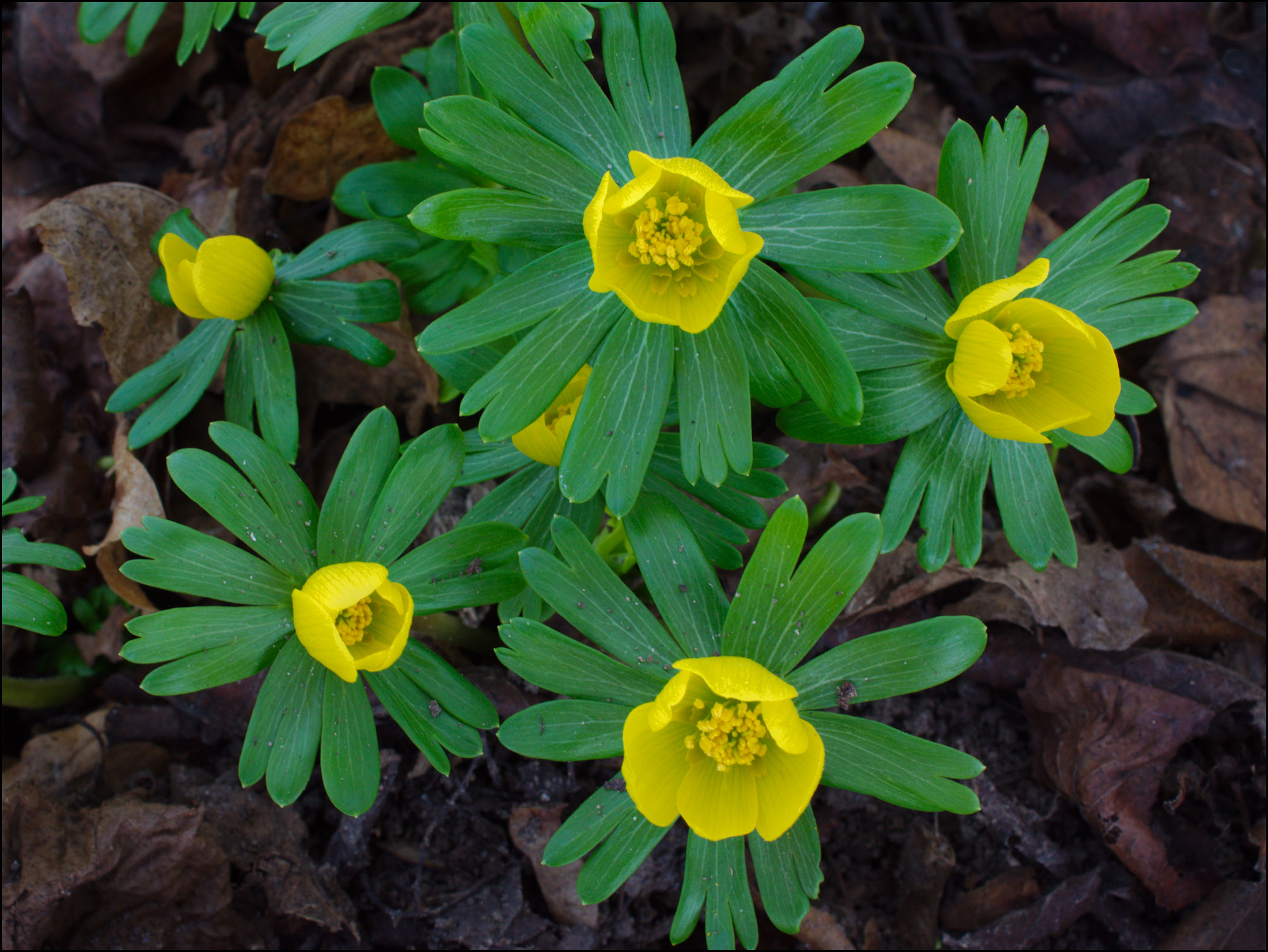
And who can resist when the low winter sun lights up the first colourful signs of spring growth?


Take care.


Wednesday, 8 February 2023

A Camera At The Coast

As we travelled up to the north Norfolk coast I was considering how I might take photographs that were a little different from my normal approach. What I had in mind was a more "documentary" style, showing you what it was like to visit the RSPB's flagship bird reserve at Titchwell Marsh. It all started very well....

A good start


....I overcame my usual reluctance to take such pictures to show you inside the visitor centre shop where you can buy books about birds, gifts featuring birds, food for birds, equipment for watching birds.....you get the idea. They'll also tell you of any particular birds you should watch out for.


Then you proceed along the footpath past reedbeds, marshes and lagoons which are normally teeming with birdlife. Big problem: but not today. The lagoons were comparatively deserted and as a result so were the hides. I've no idea where the birds were this morning, but, as an old-timer birdwatcher once remarked to me, "They got wings - they can go where they like! Tha's your job to find 'em!"


Lets walk along the beach


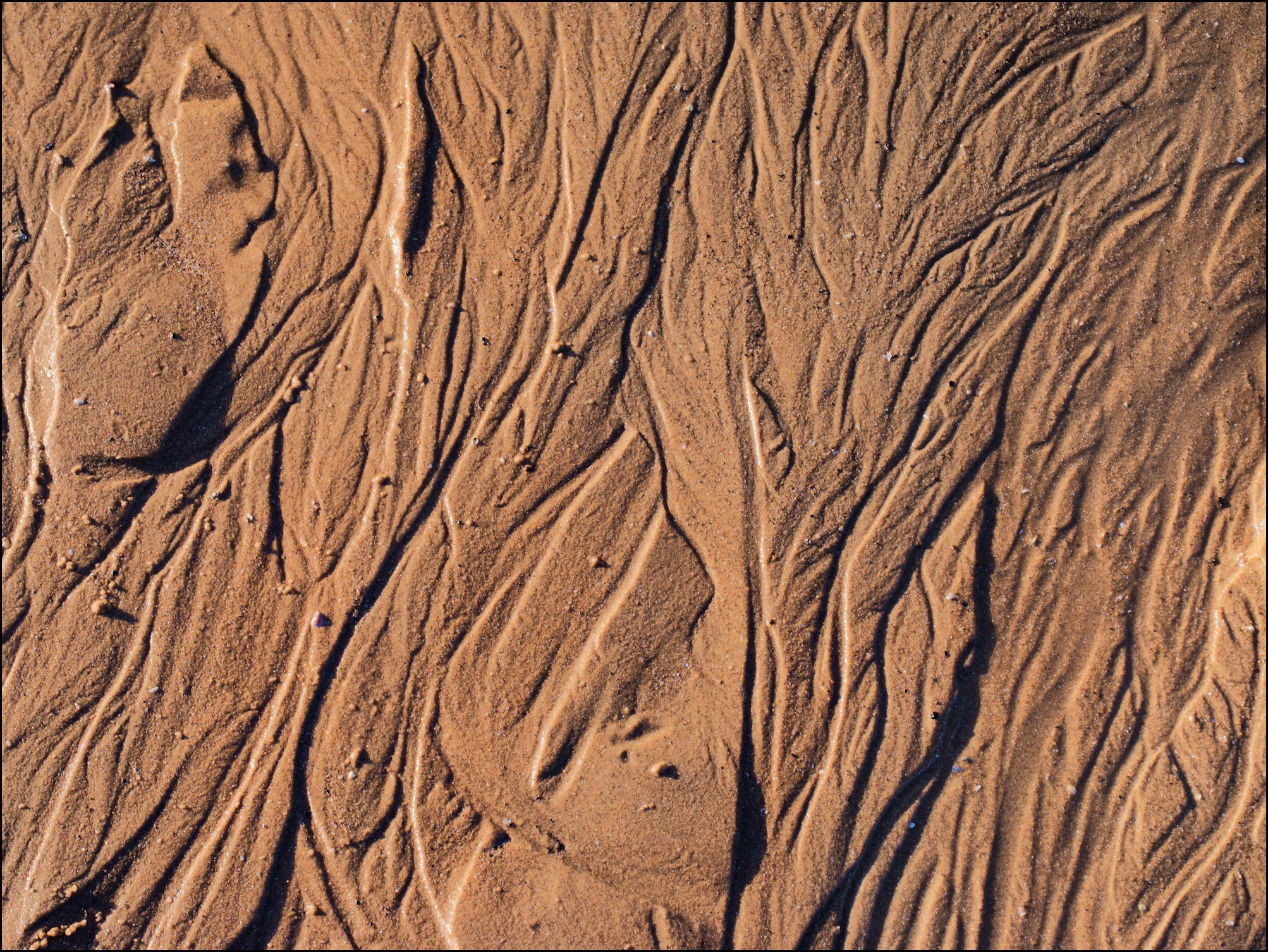
There were some birds down at the sea's edge and one particularly enthusiastic soul was commando-crawling across the wet sand carrying a camera with a howitzer of a lens attached - but that man certainly wasn't me! I preferred to amuse myself with the patterns in the sand.


I can't help it; I love these wide open spaces.


That's the clubhouse of Royal West Norfolk Golf Club up ahead, a real seaside "links" course which gets cut off at high tide. 


Unusually, the tide seemed to have washed in something looking like coal-dust which made some strange patterns on the beach.


I'm always mesmerised by the alternating sandbars and inlets that stretch away towards the horizon along this bit of coastline. But we're heading up alongside a small stream that's making its way out to sea.


"Seal Creek"


I don't think Seal Creek is its proper name - it doesn't even have a name on
 my maps - but regular visitors to Titchwell will know where I mean. There are nearly always a few seals hauled up on the sand, just taking it easy. There's a sign to prevent you going too close, but that doesn't matter, the seals will come to see you.


What a privilege it always is to see these wonderful creatures.


Back to Titchwell

By the time we'd walked back along the beach there were definitely some birds at Titchwell and, judging by the cacophony they were creating, they were geese.


These small, dark geese are Brent Geese. They are not much bigger than the familiar Mallard and are only seen around these shores in winter.


While I was happily snapping away at these welcome visitors I glimpsed a small flock of dazzling white birds flying overhead. I quickly raised my camera and took a single picture.


It wasn't till I got home and looked at the pictures on the computer that I realised that we'd seen some Avocets, the only ones we'd seen all day.


Whatever had spooked the Avocets also put up the geese.


Where next?

I know, lets go to Hunstanton cliffs and see the Fulmars. Surely they will be there.


Fulmars hang around these cliffs nearly all year, nesting here during spring and summer. 


The low, late-afternoon sun was throwing beautiful golden light on the patterns in the sand.


It had been a great day, if rather different from what I'd expected. Then, safely back home and having sorted through these photographs during the evening, I glanced out of the kitchen window...


Take care.


Tuesday, 7 February 2023

One Morning In February


If you're passing along the minor road towards the hamlet of Frog End on an early spring morning, and you happen to spy a bike leaning against a tree, right beside a gate where a footpath leads through a tiny wood, you can be sure that it's reached that time of year once again. A time when an aging man from a neighbouring village pedals laboriously this way to take a few photos to try to lift hearts and perhaps raise a little tide of jealousy among a handful of people scattered across some of the world's less temperate climes. Yes, it's snowdrop time in Southern England!


Take care.


Friday, 3 February 2023

Six At Daybreak

We had a beautiful dawn earlier this week and I went out on a short village walk to enjoy the spectacle, take some photos and share them with you. I was hoping that our local geese might overfly the recreation ground as they do most mornings, but that was not to be.


That seems a rather short post. Lets find some music....

....so....

....from February to April, and from the dawning of the day to perhaps the dawning of a musical career. This popped up unexpectedly on YouTube the other day. If you click on the image below it will take you to the music on YouTube. That will allow you to click on the "thumbs up" icon below the video to let a young lady know that you like her music.


When this was recorded she was just ten years old. (As if you needed me to tell you, she won the competition).


Take care.


Saturday, 28 January 2023

The Best-Laid Plans...

Earlier in the week my brother Les and I visited Lynford Hall and its arboretum. We've been there before, of course, but we were tempted by the forecast of better weather in that part of Norfolk.


The Hall, which is now a hotel, is set in the Breckland, an area of sandy soils that is largely given over to forestry these days, though the area around the Hall has a variety of habitats - a small lake, the mixed trees in the arboretum and the gardens, a few meadows, a bit of surviving heathland. The sandy soils mean a lot less mud to tramp through at this time of year.


The beautiful, untouched landscape above looks a true haven for wildlife. You can't go there however; it's a military training area and the sound of gunfire rattled away in the distance. Despite this - and the rumble of tanks and low-flying helicopters - nature much prefers this area to what would seem more peaceful places.


These Mallards were as wary of slipping on the ice as I am these days. They were not the birds we had come to see however.


Those Hawfinches are back again this year (allegedly) but we failed to find them this time. We've seen them a couple of times before, which is a reasonable strike-rate for this elusive species. (Incidentally, I've recently begun putting links on birds I mention, for those of you who want to know what they look like - remind me if I forget).


Luckily neither Les or I are the kind of bird-watchers who get upset if we fail to make contact with the birds we seek. There are always things to enjoy about even quite familiar birds like Yellowhammers, Marsh Tits and Siskins, which were all much easier to locate.


The weather did not play fair with us this time and, although we had occasional splashes of sunshine, showers became increasingly heavy and frequent. As we sat in the car eating our sandwiches the rain lashed down on the windscreen, we could only reminisce about the times we'd visited in the past:

*******


When swans cruised among the lily-pads....


....sunlight beat down on the forest tracks.....


....baby Highland cows grazed in the meadow....


....and flowers bloomed.


In Autumn the Arboretum is so colourful....


....fungi appear beneath the trees....


....the low sun angles through the branches...


....and a Nuthatch grabs some of the food left on the parapet of the old bridge.


Till we start to approach winter once more.


Take care.