Saturday, 23 October 2021

Berry, Barley and Bandy

"Berry" as in Berry Fen, "Barley" as in Barleycroft Lake, which is nearby. And "Bandy"? We'll get to Bandy by and by.....


Berry Fen, or Bury Fen as it's sometimes spelled, is an area of low-lying riverside meadowland between the villages of Earith and Bluntisham, ten miles north-north-west of Cambridge. Along with Barleycroft Lake, which we'll visit later, it's an area touched by a magical beauty.


The flooded grassland has a special appeal to waterbirds. Those five little black dots in the foreground turned out to be Glossy Ibis when viewed through a telescope. If you remember some of the stuff I write here, you might recall that we saw three of them earlier in the year. Maybe they've bred somewhere on the many wetland areas around here. Many birds "commute" between summer breeding grounds and wintering areas, but Glossy Ibis are more like tourists than commuters and can turn up almost anywhere and stay if it suits them.


The River Great Ouse flows through a large area of water-meadows and disused gravel pits, so birds are constantly flying in and out. Those brick pillars you can see are what remains of the old St Ives to Ely railway, which was never the busiest of lines. They say that when Earith Bridge station opened, one Friday in May 1878, nobody used a train till the following Monday, which was market day in St Ives! 


During the next few weeks large flocks of Wigeon will assemble here. These smart little ducks graze on the grasslands, many are already here.


Rooks also gather around this time of year, but they are after the worms and other creatures brought to the surface as they flee the rising floods.


There followed a short section right alongside the River Great Ouse before turning north towards Barleycroft Lake.


A few decades ago Barleycroft Farm stood right here, before it was sold to the St Ives Sand And Gravel Company, as it was known in those days, and they set to work digging for gravel. Gravel extraction carries on to this day, but as each pit is exhausted it is returned to nature.


The project, which will cover 700 hectares by 2030, is being carried out by the Hanson Group who are then handing the further management of the site on to the RSPB, Britain's foremost bird conservation charity.


Although both Berry Fen and Barleycroft Lake are officially in the hands of the RSPB, they have not so far put in any visitor facilities other that one or two signs. Elsewhere on the project new trails, picnic tables and small carparks have been built. 


Our main purpose in coming here was to see the American Wigeon, (mareca americana) or Baldpate, which has somehow made its way here this winter. Unfortunately our honoured visitor was keeping itself well-hidden and we failed to find it amidst the hundreds of ducks on and around the lake. Never mind, we did see three Red-Crested Pochards, which are almost as rare, as well as the Glossy Ibises and a Cattle Egret.


Then we need to turn back and retrace our muddy, slithering steps beside Berry Fen. In winter this can flood right across and sometimes freezes. In the colder winters of the nineteenth century skating was quite a sport on the Fens. Speed skating races were the main attraction and men with such unlikely names as Turkey Smart, Fish Smart, Gutta Percha See and Larman Register competed for prize-money. And yes, there were a few women who competed too, the most celebrated being Jane Winters.


But here on Berry Fen the main sport was Bandy, a forerunner of ice-hockey, played outside on a large, flooded, frozen field with a ball rather than a puck. The game is still played today, mainly in Nordic and East European countries, but the first rules of the game seem to have been drawn up here by Charles Goodman Tebbutt and the Bury Fen Bandy Club (unbeaten for a century). This proud history is commemorated by a small sculpture on the village pond at Earith. 


So we make our way back along the river.


Take care.

Wednesday, 13 October 2021

Four Foggy Ones And A Frank Reply

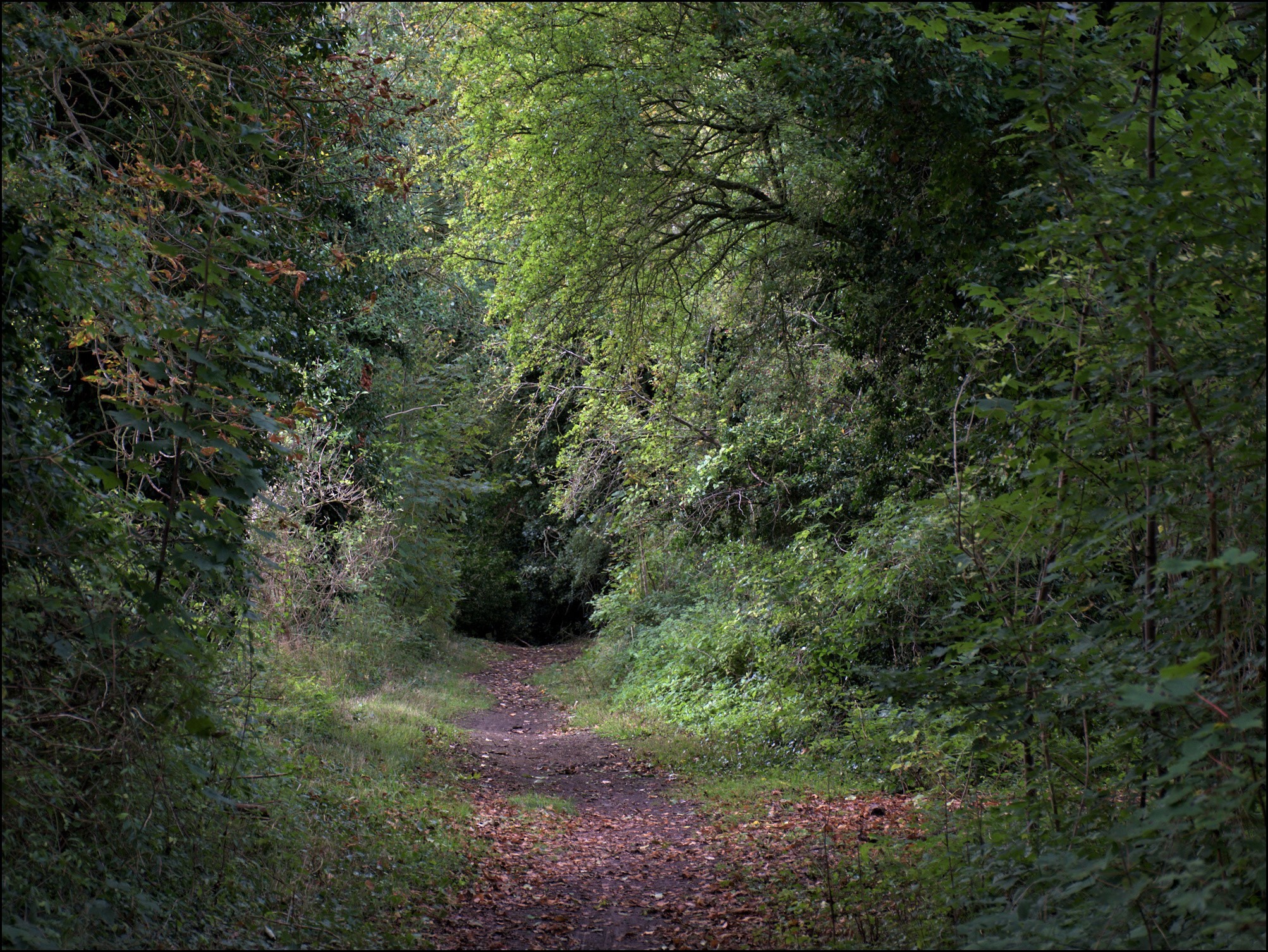
Just four pictures taken on a recent foggy morning, all within a few hundred yards along a local footpath:


We haven't had much music on the blog lately, but we'll remedy that right now. Chris Wood is one of the quiet men of English folk music. He sings new songs and old traditional ones too, but this is a poem by Frank Mansell, the Cotswold poet, which has been set to music. Lets listen to "The Cottager's Reply"....


Take care.


Sunday, 10 October 2021

The Long Road Into Autumn

So just when does Autumn begin? It's a subject which has vexed and perplexed mankind for centuries. "September 22nd!" shout the traditionalists. But if that's so, and the seasons are each just three months in duration, then Summer begins on Midsummers Day. That won't do. The Met Office make a claim for September 1st, but that's only so they can lump together the figures for September, October and November together and call them "seasonal averages".


But, after a lifetime of observation and research, involving walking down many long and half-forgotten by-ways, I can tell you exactly when Autumn begins every year......


....which is when it's good and ready!


My latest voyage of discovery, as you shall see, unearthed a few hints of Autumn, some shades of Summer, a suggestion or two of Spring and fleeting omens of Winter. A couple of days ago the chill wind brought news of change, but then it turned pleasantly warm, which is what tempted me outside in short sleeves.


Such glimmers of gold as were around were like little Sparklers in the hands of children as they await the main firework display of colour which will come later. Will it be the finest show ever, or will it fizzle out in an untimely downpour and destructive winds? And speaking of destruction....


....many of the trees in this little scrap of woodland have been browsed by deer at some time in the past, though I saw no evidence of recent damage. The tree above seems to have been fashioned into an impressive entrance for a mouse's residence. 


Sometimes only past trauma can reveal the beauty within.


But despite a scattering of yellow leaves we are still a long way from the golden glory that everyone hopes for.


There's plenty of evidence that squirrels have been feasting royally on the beech nuts and an empty snail shell may be the work of a Song Thrush.


I'd really come out expecting to find a few fungi springing up after the recent rain, but this is all I could find and it looked as though it had been around for a good while.


As I've shown you before much of this little woodland is covered in ivy - and that will stay green all through the winter. Although it may overwhelm trees eventually, it only uses them for support, gaining all its nutrients from the soil. And it certainly doesn't strangle anything, climbing straight up the tree in its search for light. It also flowers around this time of year, providing nectar for insects when little else is around.


But if you want to see bright autumn shades at this time of year you could do worse than peer into gardens and parks.

As ever humankind is in a hurry and desperate to move things along more quickly; we like the earliest spring flowers and the earliest autumn colours, the bar-b-q things come out way too soon and Christmas goods are probably in the shops already. Hurry, hurry.


Maybe that's the last rose of summer blooming in front of a background of ripe berries.


Take care.


Tuesday, 5 October 2021

Footnotes

A few curiosities that I've encountered on my travels:


The Suffolk Chainsaw Masterpiece


We don't perhaps have so many murals in this part of the world, but our nature reserves and public parks are increasingly playing host to wooden sculptures like the one shown here. They seem to appear without much fanfare and most seem to be uncredited. A search on the internet has persuaded me that this magnificent owl at RSPB Minsmere is the work of Norfolk-based woodcarver Luke Chapman. What's more it appears that this detailed and delicate work was achieved using a chainsaw. You can sometimes see these artists displaying their talents at country shows where you can also buy some of their work.


Fire Plaques


I often find these attached to buildings throughout East Anglia. They are fire plaques and date from the time when the only fire brigades were in the hands of fire insurance companies. The lead plaques announced that the occupant of the building had paid their insurance premiums and the relevant fire fighters would then attempt to put out the fire. I think the ones shown here have been bought from elsewhere; they often turn up on eBay. I wrote about the history of fire insurance here: A Little Bit Of History


Help On The Way


The small wildlife park just down the road from me also operates a Hedgehog Hospital, which tends to the needs of sick or injured animals brought in by members of the public. The local MG car dealership recently donated an "ambulance" which is used to pick up the casualties and also visits schools and other groups to spread knowledge about these delightful, prickly individuals.


A Sign Of The Times


I spotted this on my recent travels. Theft of lead from our church roofs is a constant problem for many villages, particularly when the church is in an isolated position. It's just one reason why many churches are keen to be open to the public; a stream of frequent visitors is a strong deterrent to thieves.


The Wives Of Francis Rowly

These two small brasses on the floor of Brent Pelham church commemorates the lives of the two wives of Francis Rowly; Mary, who died in 1625, and Ann who passed away just two years later. Sadly in those days many young women died in childbirth. The two brasses appear to be almost identical, maybe they were just a standard design, or perhaps they really were similar.


Scots In The Fens


On the Summer Walk at Welney a series of small signs have sprung up this year. They tell the story of the thousands of Scottish prisoners of war who were put to work digging the twenty-one mile long Hundred Foot River in the early 1650s, part of the drainage scheme designed by Cornelius Vermuyden. They lived in appalling conditions and any who tried to escape were shot by firing squad. Despite the terrible hardships, when those who survived were finally released, many stayed in the area and occasional Scottish names turn up in old records.


Nocturnal Visitor


The other day my neighbour informed me that a badger was coming to the area outside our houses and clearing up under the bird feeders which he's hung on the tree. The normal visitors include many Starlings and Grey Squirrels who make a good deal of mess. So when I happened to wake up at 01:45 I couldn't resist peeping through the curtains. Sure enough there was not one, but two badgers busily feeding. 

I thought I'd try to take a photo despite it being very dark, with just one streetlight providing a little illumination. For the technically-minded here are my camera settings: 1/13 sec, f 4.5, 210mm (equivalent), ISO 25,600. I'd always wondered why the ISO went up so high (!) and it accounts for the grainy look of the picture. I knew badgers were in the village because I'd seen the little pits they dig while looking for food but this is the first time I've seen them in years.


Take care.


Friday, 1 October 2021

A Break In The Clouds

Staying much closer to home this week as fuel supplies remain uncertain. There's plenty I could say about that, but I'd rather get out for a walk in the fields. Are you coming?


As it happened there was just one day when the relentless rolling rainclouds paused for a few hours in their westward progress, though to judge by the strength of the breeze it won't be long till normal service is resumed.


I'd better tell you where we are: we're on the chalky hills to the west of the town of Royston. They are not very high hills but they do give extensive views to the north and west. We're following the Icknield Way long-distance path from the village of Wallington, westwards towards the small hamlet of Clothall.


There are a few sunflowers growing along the edges of some fields, they will provide cover and food for game birds during the winter; the other birds will also benefit.


Because of the general flatness of the landscape distant panoramas are a rare subject for the camera in East Anglia so I always make the most of this little bit of hillier country. And some of the best viewpoints are around Clothall.


I've visited the little church at Clothall in the past and wrote a whole post about it: "A Special Place". This time the weather's too good to go poking around in old medieval buildings so we'll make a turn around little streets of Clothall and head back by a different route.


The path we're following on the return journey is part of "The Hertfordshire Way" and leads you through some of the best scenery in that county. Like most of these designated routes it's merely a linking together of the existing public rights of way into a longer route.


That's not to say you'll find a paved way to follow, but the local authorities do cut back the vegetation once a year or so and there'll be little arrows nailed on to posts where there's any doubt as to where the path goes.


It's all very pleasant. Very pleasant indeed.


And before you know it we're back on the edge of Wallington, passing by the farm.


There are even a few sheep around here, though most of the land is under the plough.


Wallington today is prosperous and well cared for, with several quaint cottages, but it wasn't always so scenic. Long-time readers might recall that it was once the home of the writer, George Orwell, when he was writing "The Road To Wigan Pier".


He rented the little cottage above, which at the time was in a very tumbledown state. If you want to know more about Mr Orwell at Wallington you can read about him in this post from 2015: "A Writer's Residence".


Take care.